Selecting a Comfortable Sofa: What to Look For in Singapore
A display sofa is useful for judging colour, texture and proportion, but sitting on it tells you almost nothing about comfort. A showroom piece may look generous while offering shallow seat depth, firm edges and an upright back. For Singapore homes, where many living rooms in HDB flats and condos must handle compact lift corridors and carefully planned furniture layouts, the practical questions matter more than the silhouette.
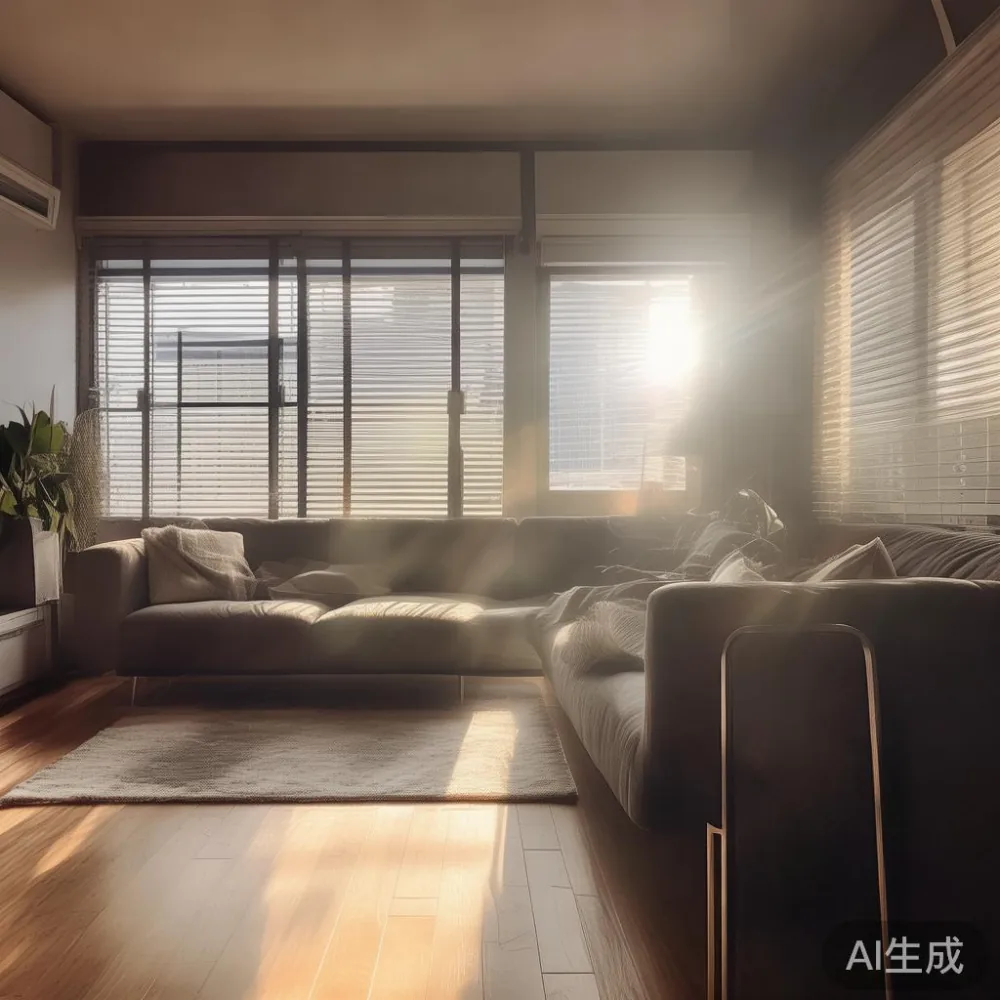
Industrial style adds another layer: a low profile, exposed structure or metal details can make a sofa appear deeper, wider and more relaxed than it measures. Before buying, measure the sofa, the room, the lift and the route to the living room. Then test the seat with your body, your usual posture and the length of time you expect to spend on it.
Why does a display sofa feel so different from a sofa at home?
Showroom sofas are often arranged to create visual impact rather than daily comfort. The seat may be positioned high to suit standing visitors, and the cushions can be overfilled so they look full in photographs. Lighting also exaggerates depth: a dark cavity beneath a loose cushion can make the usable sitting surface appear 5 cm deeper than it is.

I tested one industrial-style sofa last month at a supplier in Foshan. It measured 220 cm wide, 92 cm deep and 82 cm high, with a 48 cm seat height. The listing showed a broad, sinking cushion, yet the seat felt noticeably harder once I removed the loose back cushion. That difference explains why a 30-minute showroom test may not predict two hours at home.
Check whether the sofa has been designed around a seated posture or a decorative pose. Remove extra cushions if they are not included with the product, sit upright, lean back and cross your legs. If your thighs feel cramped after 15 minutes, the depth or pitch is wrong. For a proper lounging position, the seat should support most of your thigh without pushing the knees upward.

Useful reference points are a seat height of 40–45 cm for adults who get up easily and 43–47 cm for those who prefer support. A usable seat depth of 55–60 cm suits average adults, while a deeper seat of 58–63 cm may suit taller users. Back height of 38–45 cm is generally more supportive than a low 30 cm back. These are ranges, not guarantees; body size and mobility remain individual.
What dimensions should I measure before ordering a solid wood sofa?
Begin with the space, not the catalogue. Leave at least 75–90 cm for a main walkway in an HDB living room and 60 cm where the sofa faces a coffee table. Allow another 30–45 cm between the front of the sofa and the table for legroom. A sofa that fits the floor plan but blocks a frequently used route should be rejected.
Measure the sofa frame, including arms and cushions, rather than relying on a styled render. Common living-room widths in Singapore are 180 cm, 200 cm and 220 cm, but the available wall space may be narrower. A 205 cm sofa placed in a 180 cm recess can intrude by 25 cm once side tables and door swings are considered.
For the industrial style look, check the frame and feet as closely as the upholstery. Exposed rails and metal legs should have adequate clearance beneath the body; a design with only 9–10 cm of floor clearance may collect dust and make vacuuming harder. If you want the same visual language elsewhere, compare how a solid wood sofa coordinates with a solid wood bed frame, dining table or wardrobe before choosing a metal-heavy design.
Will the sofa fit through my HDB flat or condo lift?
Measure the lift doorway, lift car and turning space, then compare them with the sofa’s packed dimensions. A sofa may pass through the entrance but still be unable to turn inside the lift car or emerge around a landing corner. Photograph the lift plate and keep the property management rules in mind, especially for delivery windows.
A useful calculation is packaged width + 5 cm on each side for protective wrapping and handling clearance. Ask for the packed length, width and height, as well as the largest separated component. If the seller quotes only the assembled size, delivery may fail on the day.
Old lift doors can have clear openings near 70–80 cm, while modern condo lifts may provide larger openings, but internal dimensions can still be restrictive. A long 3-seat sofa might measure 215 cm as one piece. If it can be separated into two modules of 105 cm each, the lift journey is much easier. Do not assume upholstery can be removed unless the manufacturer confirms that the pieces detach safely.
Plan for the corridor too. HDB corridors may narrow near the staircase or unit entrance, and a condo may have a lobby turn requiring an angled carry. In Singapore, a blanket delivery service can be less useful if the final 20 m includes stairs and tight turns. Confirm whether the quote includes carrying, unpacking and removal of packaging.
How do I test seat depth, cushion feel and back support?
Test each sofa in at least 3 positions: upright, reclined and side-sitting. Sit for 10 minutes before deciding, then repeat the test with the cushions arranged as they would be after delivery. A new foam seat may feel firmer than the showroom sample because some showroom cushions have been conditioned over time.
Press the seat centre with your palm. It should compress without feeling bottomless or taking several seconds to return. Then sit with your back against the frame. If the lumbar area is unsupported, place a small cushion behind your lower back and note whether that solves the problem. A decorative lumbar cushion should improve the fit rather than compensate for a poorly proportioned frame.
Check the arm height too. Arms around 58–65 cm support the forearm but can make getting up difficult for a user with limited knee strength. Lower arms of 50–58 cm ease transfers but offer less lateral support. Also inspect how the cushions meet the arms: deep gaps can trap small items and create pressure points, while tight seams can rub during extended use.
This body test also helps when comparing categories. In a light luxury bed vs Nordic bed comparison, the same principle applies: do not choose by visual style alone. A room-scale decision should follow support, dimensions and construction. The same applies when examining a light luxury sofa vs Nordic sofa, where one design may prioritise soft relaxation while another uses firmer, upright support.
What should I ask about foam, suspension and upholstery?
Ask what is under the cushions, not merely whether the foam is “comfortable”. A practical sofa may use 35–45 kg/m³ foam for a firmer seat and softer foam in the back, supported by webbing, springs or a combination. These figures provide context, but workmanship still matters: the webbing should be evenly tensioned, springs should sit in their pockets, and the frame joints should show no movement when the sofa is pressed from side to side.
For a solid wood sofa, inspect visible timber for dryness, splits and loose joints. Kiln-dried hardwood or stable engineered wood may be used for internal parts, so ask the supplier to identify each material. Finishing systems differ: a water-based coating may be easier to repair, while lacquer or hardwax oil requires its own care routine.
Upholstery should be tested for colourfastness and abrasion performance. Request the fabric composition, rub count and cleaning code. Martindale results around 20,000–30,000 cycles indicate suitability for many residential settings, but performance in the laboratory does not remove the need for care. Request samples and keep them away from direct sunlight for several days before comparing them under the room’s evening lighting.
Is the frame strong enough for daily use in Singapore?
Check whether the frame is assembled with dowels, screws, corner blocks or another mechanical method that resists loosening. In a humid climate, solid wood can move slightly as humidity changes, so stability should come from sound construction rather than forcing parts extremely tight. Look for close-fitting joints, even gaps and protected connection points. Avoid frames with exposed nails or screws inside the seating area.
Confirm the load rating and warranty terms. A residential use rating of 100–120 kg per seat is common, but the manufacturer should state how it was tested. A 10-year structural warranty is more useful when it covers frame failure, not only replacement parts, and when the conditions for claims are clear.
MIDHILL, established in Foshan in 2008, frames its furniture with a 10-year structural warranty and lifetime refinishing for eligible solid wood products. Those policies do not make every sofa suitable for every home, but they give buyers defined points to verify in writing. Since MIDHILL exports to more than 15 countries, Singapore customers should still confirm the exact warranty coverage for their delivered configuration.
What delivery costs and timings should I compare?
Obtain a written quotation showing the product price, GST, delivery charge, installation and any stair or access surcharge. Singapore prices should be stated in SGD with GST identified separately where applicable. A 9% GST rate applies to standard domestic supplies, though the total treatment should be confirmed by the seller.
Compare actual delivery windows rather than vague “2–4 weeks” statements. Allow roughly 14–30 days for a made-to-order Singapore order, plus 1–3 days for regional delivery after customs clearance where relevant. Built-in pieces and complex upholstery can require another 7–14 days. Ask whether the stated production time starts after deposit approval, and request photographic updates before packing.
Check the return policy. A 14-day return period should state whether the sofa must be unused, whether custom dimensions are excluded, and who pays return freight. A custom sofa that has entered a lift may be difficult to resell, so a correct first measurement and a seat test are more practical than relying on a return.
How do I match the sofa to the room’s other furniture?
Industrial style often works with a solid wood bed frame, dining table, nightstand or wardrobe that combines visible grain with dark metal accents. Keep the material story controlled. A marble table beside a warm timber sofa can add contrast, but its veining, colour and reflectivity should not compete with an already detailed sofa frame.
Post-modern light luxury can provide another route: clean lines, restrained detailing and a mixture of textures. French light luxury may introduce softer curves and upholstered forms, while American light luxury often leans towards generous proportions. These are stylistic distinctions, not comfort standards. The seat dimensions must still suit the person using it.
For coordinated rooms, ask whether a light luxury bed vs Nordic bed comparison has been considered through matching wood tones rather than bedroom labels alone. A related question, is Mid-century modern wardrobe worth it, depends on storage needs, door clearances and the existing furniture palette. For the living room, you can also explore how to style Japanese sofa in room arrangements by focusing on floor clearance, textile contrast and restraint rather than adding many objects.
What should the final checklist include before payment?
Before paying, record the exact sofa dimensions, seat height, usable depth, back height, arm clearance and weight. Take photographs of the fabric, frame, cushion labels and delivery notes. Ask the seller to state the foam specification, suspension type, load rating, warranty period, delivery lead time and return exclusions in the order confirmation.
For an industrial style purchase, inspect the metal finish for exposed edges, uneven coating and rust-prone contact points. Check that every foot is included and that the frame has enough stability to prevent wobbling. In a Singapore home, ask how the finish handles humidity, spills and daily cleaning. For a pale fabric, request a care kit and confirm whether cleaning costs are covered.
Do a final room rehearsal with cardboard on the floor. Mark a length of 220 cm and a depth of 92 cm, then test the walkway, coffee-table gap and lift route. If it does not work in tape, it will not improve on delivery day.
Some seasonal buying guides use phrases such as best Vintage bed for 2026 or best Modern light luxury bed for 2026, but a sofa should not be selected from a trend label. Review the actual frame, cushions and access route. A visually striking industrial style sofa still has to support your body, pass through the building and fit the life of the room.
What are the warning signs that I should walk away?
Walk away if the seller cannot provide packed dimensions, refuses a seated test or describes comfort only with vague adjectives. Other warning signs include unstable legs, uneven cushion heights, sharp frame edges, an unexplained warranty exclusion or a delivery quote that omits access charges. A “same as showroom” statement is not enough when the showroom cushion differs from the delivered one.
Also reconsider the sofa if it leaves less than 60 cm for a main route, forces an awkward lift turn or makes the coffee table unusable. The cost of replacing a poorly planned sofa is higher than 15 minutes of measurement and testing.
The right sofa is not simply the one that photographs well. It is the one whose seat supports your posture, whose frame remains steady, whose fabric suits Singapore conditions and whose route into your home has been checked. Measure first, test properly and put every promise in writing.