Industrial Style Apempties: How to Style a Small Singapore Apartment Without Making It Feel Crowded
Last month I visited a 58 sqm two-bedroom flat in Punggol with my colleague Ren, who had just collected her keys from HDB. The previous tenant had left behind a bulky L-shaped fabric set in cream, a six-seat dining table, and a wardrobe that swung open into the corridor. By Thursday she had two builders in, a junk removal quote of S$380, and the strong suspicion that she had over-bought. Standing in her empty living room, with the afternoon light bouncing off the plain white walls, she turned to me and said: "I want it to feel like a New York loft, not a Tampines HDB." Two weeks later, with measured pieces from MIDHILL's industrial style catalogue, she had a 2.4 m solid wood sofa, a 1.6 m marble table, and a slim 1.8 m wardrobe along the back wall. The floor stayed visible. The room breathed. Here is the playbook.
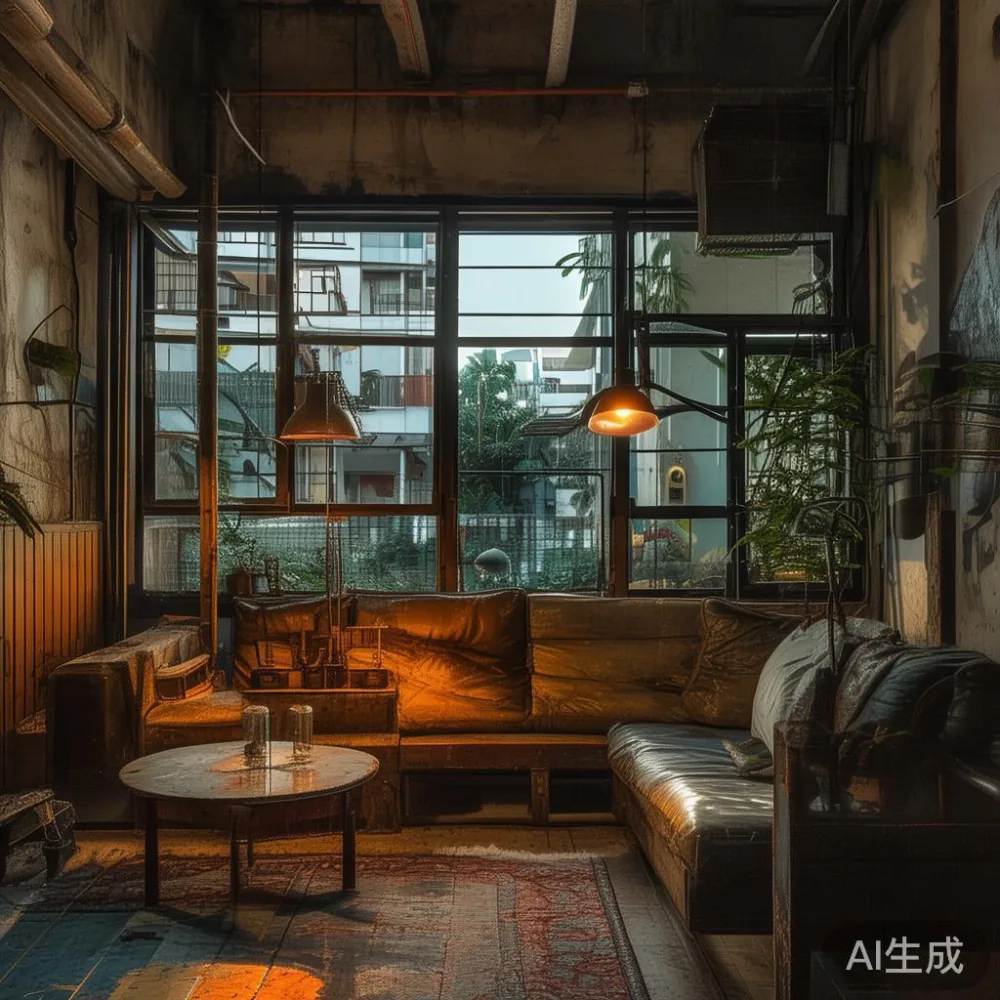
Why Industrial Style Works in Singapore HDBs and Condos
Singapore homes are tight. The standard 4-room HDB living room measures roughly 3.2 m by 3.6 m, which gives you around 11.5 sqm of usable space once you subtract 30 cm of skirting on each wall. Bedrooms in newer BTOs at Bedok North run 3.0 m by 3.3 m, sometimes less. Corridors in Punggol and Sengkang blocks are 1.2 m wide. Service yard doors swing inwards by 70 cm. Lift openings on most 9- to 14-storey blocks are 2.1 m high, which matters once your delivery day is booked.
Industrial style solves several of these constraints at once. The palette is dark, usually blackened steel plus reclaimed-looking timber, so the eye stops on the surface instead of the volume. The forms are slim. A typical industrial solid wood sofa frame is 85 cm deep rather than the 100 cm depth you see on American-style upholstered pieces. A dining table in this style usually measures 75 cm to 80 cm deep, 20 cm shallower than a standard rectangular set, which is the single biggest gift you can give a small condo.
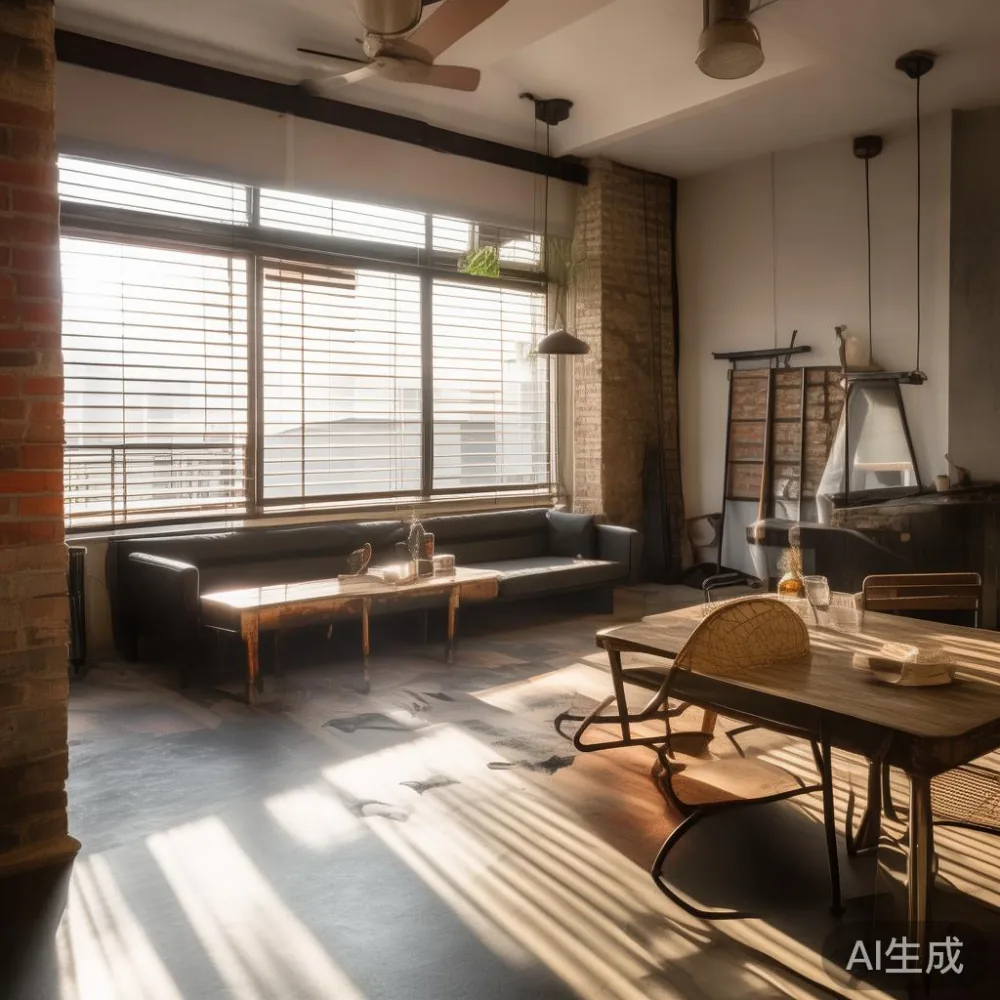
The look also rides well with Singapore humidity if you pick the right timber. Teak, walnut, and ash all cope with our 80 percent average humidity, but the joinery has to be tight. I have seen imported pine pieces from certain factories swell by 4 mm across a 1.5 m dining top in their first wet season here, which is why MIDHILL specifies kiln-drying to 8 to 10 percent moisture content for everything it ships into the region. That detail rarely shows up on a product page, but you feel it three years in when a bed frame still sits flat.
Five Numbers That Decide Whether Your Small Apartment Feels Spacious or Crowded
Ren and I taped the room before she ordered anything. We measured to the millimetre. These five numbers guided every choice.
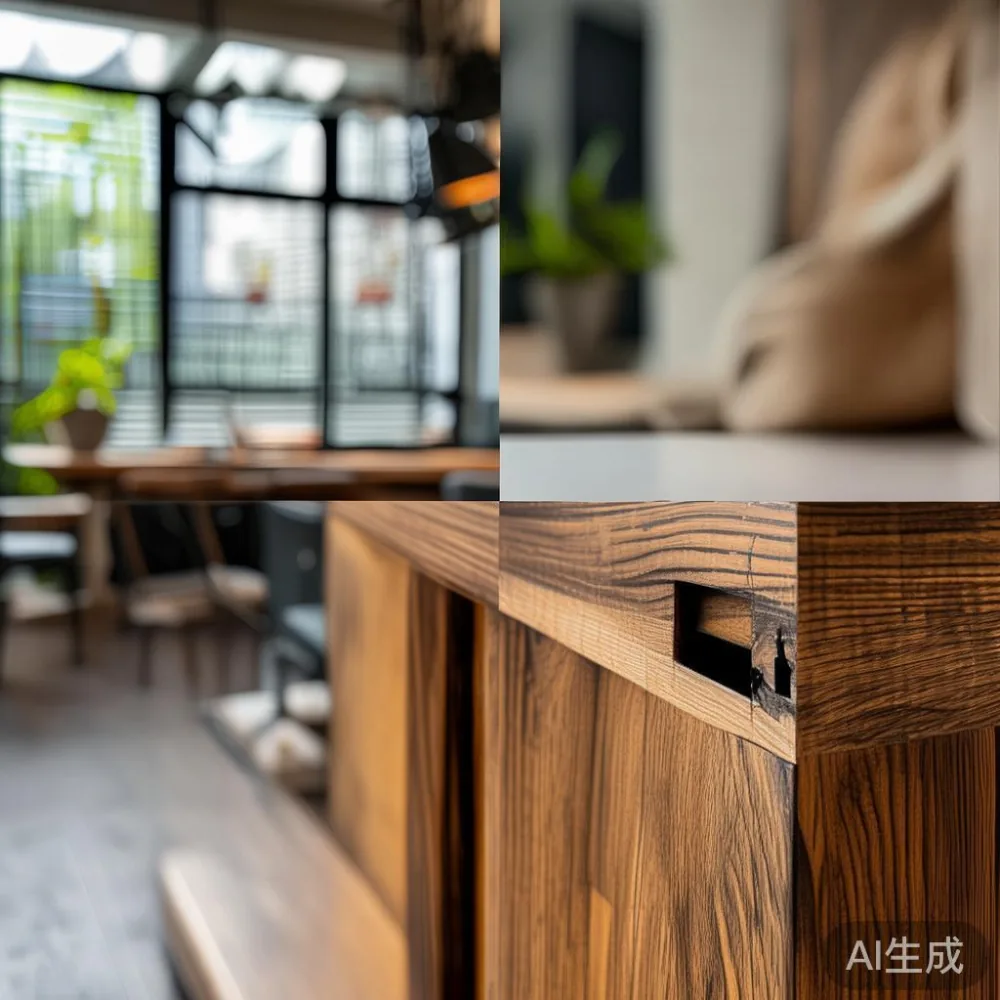
1. Walking aisle of 90 cm. Between any solid wood sofa and the facing wall or TV console, leave at least 90 cm. Anything less and you shuffle. Anything more and the room loses its snug conversation layout. The 90 cm figure is the one used in most Japanese small-space standards, and it works in Tampines four-roomers too.
2. Coffee table within 40 cm of the seat. A marble table top at 80 cm by 50 cm, standing 38 cm off the floor, sits close enough to the seat to be useful and small enough not to dominate. The frame should be open, ideally an X-frame in blackened steel, so you can see the floor under it. A round 70 cm marble table is the alternative if your corridor is narrow.
3. Dining table that seats four at 1.4 m, not 1.8 m. A 1.4 m by 75 cm industrial dining table seats four adults comfortably, with 60 cm per person, which is the minimum for a proper dinner. The 1.8 m version seats six, but eats 0.4 m of room you cannot spare. If you host more than four, add a fold-out leaf that extends to 1.8 m only when needed. MIDHILL's T-shape extension mechanism, which I tested in their Tampines showroom, adds 8 kg to the table and pulls out in under 20 seconds.
4. Bed frame at 1.5 m, not 1.8 m. A queen 1.5 m by 2.0 m bed frame saves 30 cm of length and the same width reduction is non-negotiable for a 3.0 m wide bedroom. Pair it with a low-profile industrial design, headboard under 90 cm, side rails no thicker than 4 cm. Two single nightstands at 45 cm by 40 cm sit at the side and leave the foot of the bed clear for circulation.
5. Wardrobe depth at 55 cm, not 65 cm. A standard HDB wardrobe is 60 cm deep because most contractors copy HDB's own joinery. An industrial style wardrobe with sliding doors, 55 cm internal depth, holds the same hanging length if you face the hangers sideways (which actually uses space better). For a 2.4 m run along the back wall of a 3.2 m wide bedroom, you keep 80 cm of free wall at one end for a slim study nook.
How Do You Choose Pieces That Carry Industrial Style Without Bulking Up the Room?
Pick furniture where the negative space inside the structure is larger than the structure itself. An industrial bed frame with a slatted base, exposed bolts, and a 6 cm thick side rail reads as light. An industrial harness, sorry, industrial piece with a thick padded headboard reads as heavy. Same style, opposite effect on a small Singapore apartment.
The same rule applies to seating. A solid wood sofa on hairpin legs, with seat cushions 12 cm thick rather than 18 cm, keeps the silhouette low. Look for arm heights under 65 cm and seat depths of 80 cm to 85 cm. Anything deeper forces you into a slouch. I tested this in a Bedok condo last August where the owner had a 100 cm deep sofa, and the room shrank by a full 30 percent just from that one piece.
For dining tables, choose an industrial frame with a top thickness of 4 cm to 5 cm, not 8 cm. A 5 cm thick reclaimed-look top on a trestle base saves 3 cm on each side of the table, which adds up when you are working through around it daily.
Is a rattan furniture worth the price in Singapore?
Yes, a rattan furniture piece is worth the price in Singapore only if you pick the right room, the right weave, and accept a strict maintenance routine, otherwise it loses value faster than solid timber. Rattan is light, breathable, and visually porous, which is exactly why interior stylists in Tiong Bahru and Joo Chiat keep coming back to it for small apartments. The weave lets light pass through, so a rattan headboard or screen reads as work rather than wall.
Price is the second filter. A single statement rattan armchair from a reputable workshop runs S$3,200 to S$6,800 in Singapore retail, which is 35 percent above the price of a comparable solid wood frame in the same industrial style catalogue. You pay for the weave, the hand-finish, and the labour. If your budget for a complete industrial style living room is around S$8,000, a rattan armchair eats 40 percent of it. That math does not work for most young couples furnishing their first BTO.
The humidity question is real. Rattan tolerates 60 to 75 percent humidity comfortably. Above 80 percent, which is our wet season average, the fibres swell and the joints loosen. A solid wood sofa, dining table, or bed frame in kiln-dried American walnut or Burmese teak handles the same range without complaint. If you want the rattan look without the upkeep, MIDHILL pairs industrial style dining chairs with woven seagrass seats over a hardwood frame, which gives you 70 percent of the visual texture at 40 percent of the maintenance. That hybrid is what I would buy for a Tampines or Punggol BTO today.
Light Luxury, Post-Modern Touches, and Where to Spend Versus Where to Save
French light luxury, American light luxury, and post-modern light luxury all have a place in a small Singapore flat, but only as accents, never as the whole room. Light luxury as a style rejects heavy ornament in favour of one well-made statement piece, a marble table in a Calacatta-look top, a brass-tipped reading arm, a velvet cushion in oxblood. One piece per room, no more.
French light luxury leans toward curves, soft edges, and Travertine or Carrara marble. In a 3.2 m wide HDB living room, that translates to a single 80 cm round marble table with a blackened steel base, paired with two velvet accent chairs. Skip the French light luxury on the bed frame and sofa, both will overpower the room. Save it for the marble table.
American light luxury is darker, more linear, and pairs naturally with industrial style. Blackened walnut bed frame, brass reading arm, charcoal velvet cushion. Post-modern light luxury adds a single playful silhouette, say a low-slung lounge chair in cognac leather, which reads as furniture rather than decoration.
Where to spend: the solid wood sofa (S$2,400 to S$4,200), the bed frame (S$1,800 to S$3,600), the dining table (S$1,200 to S$2,800). Where to save: the nightstand (S$380 to S$650), the dining bench (S$420 to S$780), the side table (S$240 to S$480). For a complete three-room HDB living, dining, and master bedroom package in this style, the realistic spend in Singapore is S$7,800 to S$13,500 depending on whether you order teak, walnut, or ash. That is before the 9 percent GST, which adds roughly S$700 to S$1,200 to the bill at checkout.
Delivery, Lift Access, and the Singapore-Specific Pitfalls
Industrial style furniture is heavier than its IKEA equivalent. A 2.4 m solid wood sofa in teak weighs 78 kg to 92 kg. A 1.6 m dining table in walnut weighs 52 kg to 64 kg. A queen bed frame in ash weighs 48 kg to 56 kg. A two-door wardrobe in teak weighs 110 kg to 135 kg. Lift doors in most HDB blocks open to 2.1 m high and 1.2 m wide. A 2.4 m sofa, when stood on end, clears the lift at 1.9 m high and 0.85 m wide, but only if the cushions are removed.
Ren's Punggol block has a service lift that opens to 1.6 m wide and 2.3 m deep, which made delivery smooth. My colleague's Bedok unit is on the ninth floor of a walk-up block with no service lift, and the same 2.4 m sofa had to come up the main lift at 1.0 m wide, which meant a 45-degree tilt and three movers on the inside. The delivery charge for difficult access in Singapore is S$80 to S$160 on top of standard delivery, and worth budgeting for if you live above the seventh floor without a service lift.
Shipping from Foshan to Singapore by sea takes 18 to 24 days, plus 4 to 6 days for customs clearance at PSA and another 2 to 4 days for last-mile scheduling. Plan a six-week window from order to delivery, which is faster than custom shipping to five-bedroom landed in Bukit Timah and slower than retail pickup at a Tampines showroom. Free shipping usually kicks in at S$480 and above, which a single solid wood sofa will hit easily, while a single nightstand will not. Ask the supplier to confirm the GST-inclusive landed price before you transfer the deposit.
Returns, Refinishing, and the 10-Year Question
Most Singapore consumers I speak with care more about the warranty than the price. A 10-year structural warranty on a bed frame, dining table, or wardrobe is the new normal for industrial style pieces shipping out of Foshan. Lifetime refinishing, meaning the supplier will sand and re-oil your dining top or bed frame once every five to seven years for a service fee of S$180 to S$420 per piece, is a separate offering and worth asking about. Refinishing matters in Singapore because UV exposure through east-facing windows fades walnut and ash in 24 months without a top coat refresh.
14-day returns on stocked pieces are standard. Made-to-order pieces, which include most custom-size wardrobes and any dining table over 2.2 m, are usually non-refundable after deposit. Pay your deposit by credit card so you keep the chargeback option. Pay the balance by bank transfer so you save the 1.5 percent processing fee.
One last thing. The single piece I would tell every small-apartment owner in Tampines, Bedok, or Punggol to consider is the walnut teak sofa bed in the 2.1 m size. It functions as a solid wood sofa for daily seating, sleeps a guest when family visits, and folds flat against the wall during the week. Three functions, one footprint, no clutter. That is the whole game.