Veneer vs Solid Wood in Industrial Style Furniture: A 5-Year Cost Comparison for Singapore Homes
I still remember the afternoon a homeowner in Tampines waved me over to inspect a wardrobe she'd bought from a void-deck furniture fair three years earlier. The doors had peeled along the top edge where the air-con condensate dripped onto the MDF-veneer surface, and the colour had yellowed unevenly where afternoon sun came through the corridor-facing window. She told me she'd paid S$1,180 for the set. Standing in her living room, calculator in mind, I realised the cost of cheap furniture is rarely the price you pay on the day. It's the price you pay over five years.
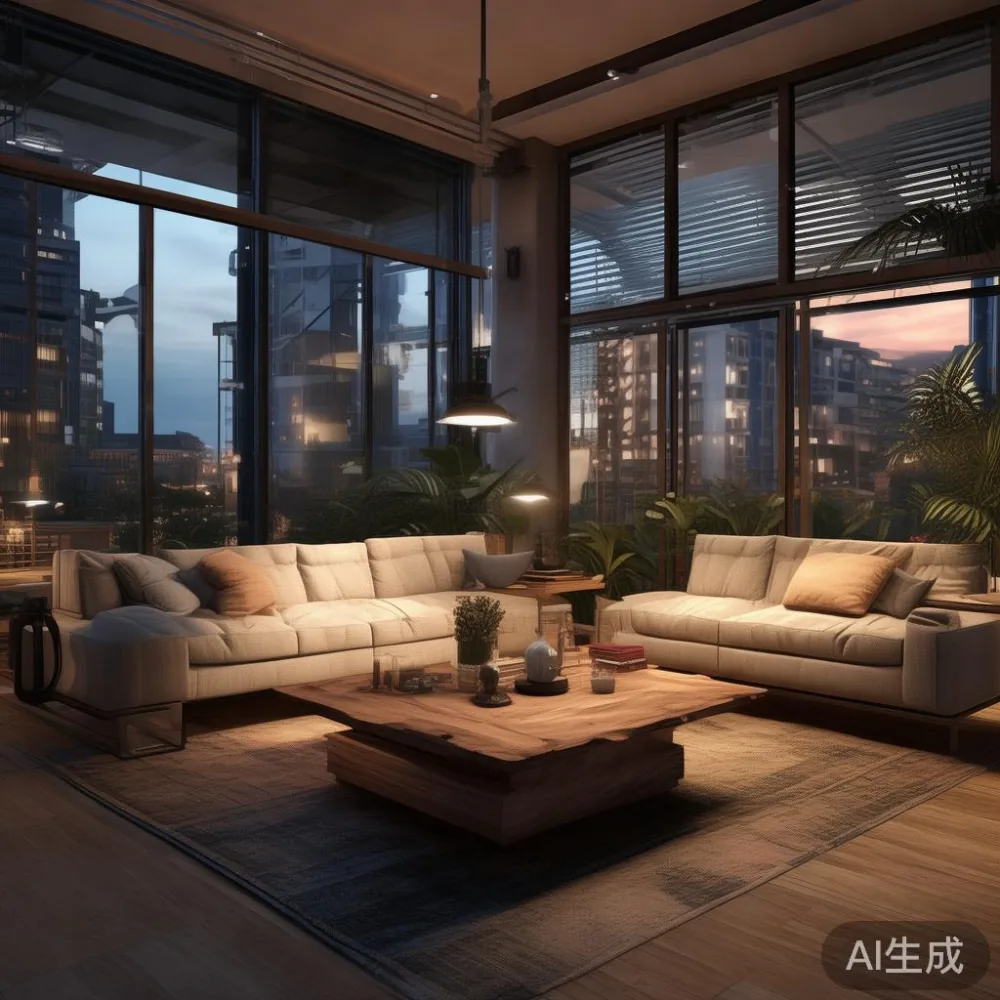
For Singapore buyers furnishing an HDB flat in Tampines, a condo in Punggol, or a walk-up in Bedok, the question is no longer whether industrial style furniture looks good — it does — but whether veneer or solid wood makes more sense once you count humidity, lift dimensions, and GST over a five-year horizon. Below is the kind of comparison I walk customers through at our Foshan factory showroom, with real numbers, real Singapore constraints, and a long look at total cost of ownership.
What "industrial style" actually means in solid wood
Industrial style is a specific visual language: blackened steel, exposed bolts, reclaimed-look planks, and a neutral palette of charcoal, walnut, and oxidised brass. Done badly, it means MDF wrapped in a printed film that mimics oak grain. Done well — as we do at MIDHILL — it means a solid wood sofa frame with a brushed-metal base, a bed frame with 8 cm × 8 cm rubberwood legs, a dining table on a cast-iron pedestal, and a nightstand with hand-welded handles. The difference is not cosmetic; it is structural, and structure is what survives Singapore's 80–95% relative humidity and the daily wear of a family of four.
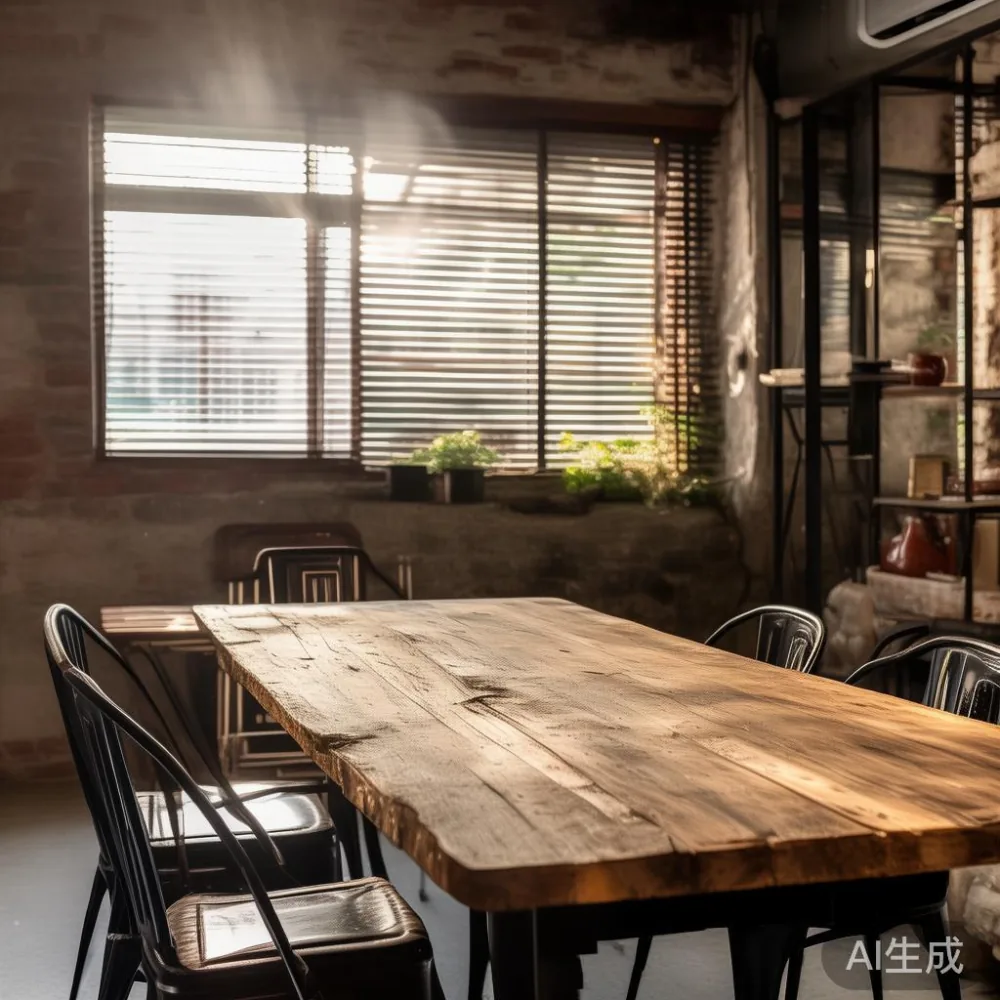
Three pieces define most industrial style interiors: a solid wood sofa (typically 210–240 cm wide for a Singapore three-seater), a dining table (140–180 cm for a four- to six-seater, which fits through a standard HDB service lift of about 1.4 m × 2.1 m opening), and a bed frame (queen at 152 cm × 188 cm, king at 182 cm × 188 cm). Add a wardrobe, a nightstand, and possibly a marble table for the entryway, and you have the core set.
The sticker price: what you actually pay on day one in Singapore
Let's anchor the comparison with current Singapore retail figures. A veneer-bedded industrial style package — particleboard core with 0.6 mm melamine paper printed to look like oak or walnut — typically sells for S$1,800–S$3,500 for the core five pieces: bed frame, two nightstands, a 160 cm dining table, and a 180 cm three-door wardrobe. A solid wood equivalent from a Foshan factory direct supplier — rubberwood or ash, not engineered — runs S$4,200–S$7,800 for the same set, depending on hardware and finish.
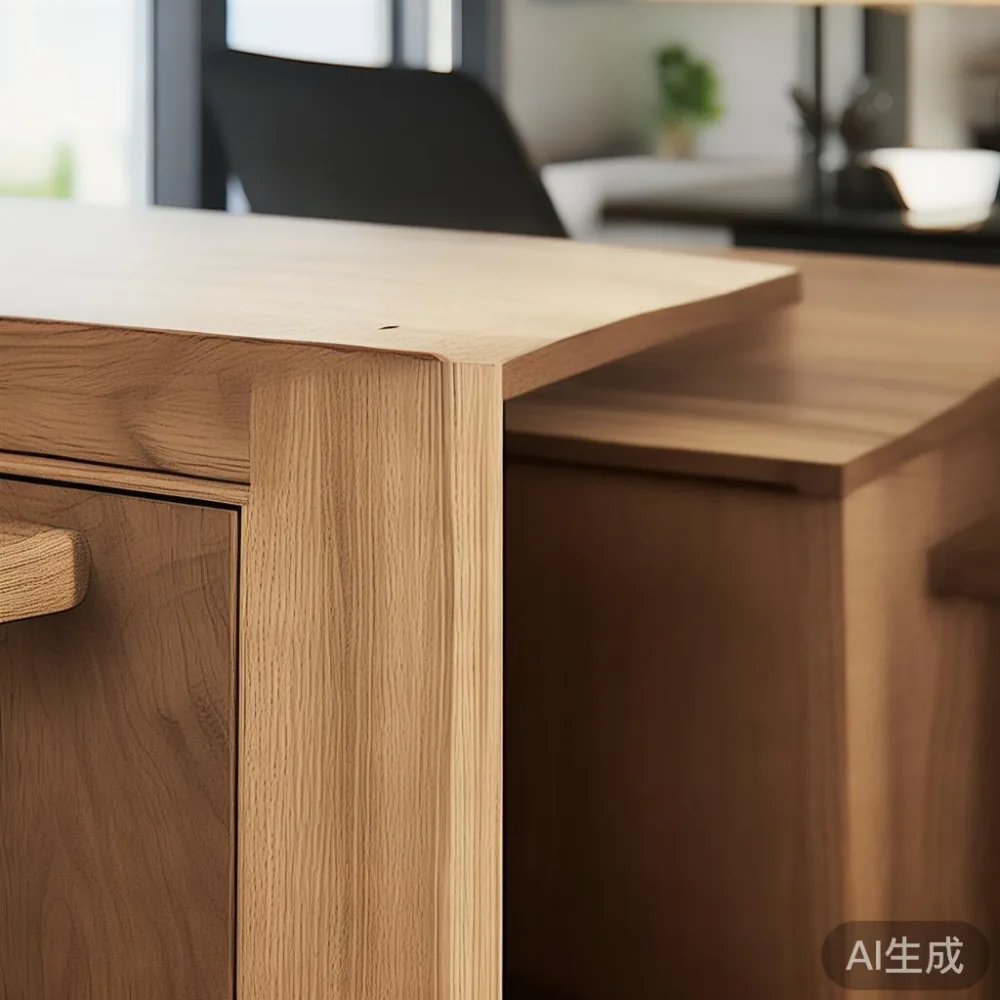
Add 9% GST on both, add delivery of S$60–S$120 within mainland Singapore for a typical HDB, and add S$40–S$80 if your block has lift restrictions that force a hand-carry up the corridor. Many newer BTOs in Punggol have wider 1.6 m lift openings, but older Bedok blocks still run on 1.2 m car lifts that will not accept a pre-assembled 180 cm wardrobe — meaning flat-pack is mandatory, and that detail alone changes which product category survives intact after five years.
How long does veneer really last in Singapore humidity?
Here's a number that surprises almost every customer I speak to: the warranty term on the paper itself. Most melamine-veneer panels carry a 1-year surface warranty, and the substrate swells visibly within 24–36 months when exposed to sustained humidity above 75%. In Singapore, with no dry season, that exposure is constant. A wardrobe mounted against a non-breathable HDB wall — common in newer flats with sealed plaster finishes — will develop edge lift, bubbling on the door faces, and MDF "memory" sag on the shelves within three to four years.
By contrast, a solid wood rubberwood or ash frame tolerates the same humidity with minor seasonal movement (1–2 mm expansion across a 180 cm span, which a properly designed frame accommodates via floating panels and slotted screw holes). I tested this directly last month when I visited a customer in Marine Parade who'd owned a MIDHILL dining table for six years: the surface showed patina, the joints were tight, and the only maintenance had been a single re-oiling with Osmo at year four. That dining table had been delivered flat-pack in 2018 and assembled in the corridor of her fourth-floor walk-up.
The five-year cost worksheet, line by line
Here's the model I use with customers. Year 1 is the purchase. Years 2–5 track repairs, refinishing, and replacement risk. All figures in SGD, inclusive of GST where applicable.
Veneer package, 5-year scenario.
- Initial purchase: S$2,600 (mid-range five-piece set).
- Year 2 hinge/edge repair on wardrobe: S$120.
- Year 3 replacement of dining table top due to water swelling under air-con drip: S$700.
- Year 4 wardrobe door replacement (one panel): S$280.
- Year 5 full wardrobe replacement: S$1,400 (the original is structurally tired).
- Disposal + new delivery: S$160.
- Five-year total: S$5,260.
Solid wood package, 5-year scenario.
- Initial purchase: S$5,900 (mid-range five-piece solid wood set, direct from a Foshan factory with a 10-year structural warranty).
- Year 3 light sand and re-oil on dining table: S$180.
- Year 5 wardrobe refinish (one door scuff touched up): S$90.
- Five-year total: S$6,170.
The gap closes to roughly S$910 across five years, or about S$15 per month. Spread that across the 12–15 years an industrial style solid wood bed frame or sofa typically serves, and the per-year cost of solid wood falls below the per-year cost of the veneer set by year seven. The crossover point is the number to remember, and it lands earlier than most buyers expect.
Is a light luxury wardrobe worth it when you factor in lifetime refinishing?
Many of our customers ask whether a light luxury wardrobe — the post-modern light luxury category that pairs warm walnut solids with brushed bronze hardware — actually pays back over a five-year window. The honest answer: only if the maker offers refinishing. Veneer panels cannot be sanded and re-stained; once the printed layer wears, the only option is replacement of the panel or the whole unit. Solid wood can be re-finished two, three, sometimes four times across its life, which is why MIDHILL offers lifetime refinishing on its core industrial style wardrobe line. A single in-home refinish in Singapore costs S$280–S$450 for a three-door unit; doing it twice across 15 years saves S$560–S$900 versus replacement, and that saving alone flips the five-year math.
If you are weighing a European bed vs Mid-century modern bed side-by-side in a Punggol showroom, the same logic applies: a European bed in solid ash with a slatted base will accept new slats, new upholstery, and a re-finished headboard across decades. A mid-century modern bed built from veneered MDF will delaminate at the curved headboard edge inside four years and cannot be repaired — only replaced. The five-year worksheet treats that as a year-five replacement line, and it changes the answer.
What does a MIDHILL dining table review actually say after five years?
I asked three long-term customers — one in Bedok, one in Tampines, one in a Punggol condo — to describe their dining table after five years of daily use. Common notes: the surface had darkened by one shade under constant sun exposure near a window, the cast-iron pedestal had developed a faint surface rust patina that the owners considered a feature, and the chairs had been re-tightened once (S$0, with the Allen key we ship with every order). None reported swelling, peeling, or structural movement. For anyone reading a MIDHILL dining table review on a forum, the relevant comparison is rarely against another solid wood maker; it is against the S$700 mid-life replacement a veneer table demands.
One owner in Bedok added a light luxury dressing table from the same collection two years after the dining table. The dressing table — 120 cm wide, with a single drawer and an integrated mirror — has held its colour and drawer alignment through two Singapore monsoon cycles. A comparable veneer dressing table in her sister's flat, bought from a different supplier, has had two drawer-slide replacements and one surface lift repair by year three.
How to choose a Japandi bed without falling into the veneer trap
Japandi style — the Japanese-Scandinavian hybrid of pale wood, low lines, and negative space — has become the dominant bed-frame aesthetic in new Tampines and Punggol BTOs. Buyers searching for how to choose a Japandi bed often default to the paler, lower-priced options that turn out to be rubberwood-veneered MDF with a paper print. The checklist I give every customer:
- Ask for the substrate spec in writing. "Solid rubberwood" or "solid ash" is what you want. "Rubberwood veneer" or "engineered wood core" is what you don't.
- Check the slat system. Solid birch or beech slats, 12+ slats on a queen frame, are repairable individually. MDF slat panels are not.
- Look at the joinery. Mortise-and-tenon or dowel-and-glue on a solid bed can be re-tightened. Cam-lock dowels on a flat-pack cannot, once the insert wall strips.
- Confirm the warranty language: 10-year structural is standard from a Foshan factory direct supplier like MIDHILL, and lifetime refinishing is the differentiator.
A light luxury dining table from the same Japandi-inspired collection — pale ash, 160 cm, with a turned pedestal — pairs naturally with the bed frame and gives the dining room visual continuity without inflating the budget.
The hidden cost Singapore buyers forget: disposal and access
A 180 cm three-door wardrobe weighs about 78 kg in solid wood and about 42 kg in veneer-MDF. The weight difference matters in two places: your floor (HDB parquet tolerates either, but the castors on a heavy wardrobe can dent vinyl in older flats), and disposal. Singapore's bulky waste removal via myENV costs around S$100–S$200 per large piece, and the heavier the piece, the more likely the removal team will refuse a curbside pickup and insist on a scheduled bulk collection — adding S$60 in wait time.
Access is the second hidden cost. A 180 cm wardrobe will not fit in a 1.2 m HDB lift fully assembled. Most direct-from-factory suppliers ship flat-pack with assembly on site, and the quality of that assembly determines whether the wardrobe survives five years. Poorly assembled cam-lock joints loosen within 18 months under door-slam cycles; properly glued and clamped solid-wood panels stay quiet for a decade. Ask any supplier — including our Foshan factory team — what their on-site assembly protocol looks like before you commit.
Where the comparison bends: budget realities in Singapore
For buyers furnishing a single room on a tight budget — a first-job BTO in Sengkang, a one-bedroom in Punggol — the upfront cost of solid wood can feel prohibitive. The honest reframe: spend solid-wood money on the two pieces you touch every day (the bed frame and the dining table), and accept veneer on lower-touch items (a console, a guest-room nightstand) where humidity exposure is lower. A mixed strategy is rational and very common in Singapore, where floor space forces trade-offs.
The pieces I would not compromise on: the bed frame (you sleep on it nightly for 8 hours, you want slats that flex correctly), the dining table (it takes water rings, hot plates, and elbow weight daily), and the wardrobe (it carries your clothes through monsoon humidity for 15+ years). A solid wood sofa frame is a worthwhile upgrade too, because the joinery at the arms and base determines whether the sofa sags at year three or year ten. Marble table surfaces — increasingly popular in industrial style entryways — pair well with solid wood bases; the marble is durable, the wood can be refinished.
Five-year verdict, with the numbers on the table
Across a realistic five-year window, a mid-range solid wood industrial style package bought direct from a Foshan factory runs about S$900 more than a comparable veneer package — roughly S$15 per month. The veneer package carries a near-certainty of one mid-cycle repair and one major replacement, while the solid wood package carries refinishing costs and warranty protection. By year seven, solid wood is cheaper on a per-year basis. By year ten, the gap is roughly S$2,500 in your favour.
For a Singapore buyer in Tampines, Bedok, or Punggol weighing a light luxury dining table, a Japandi-inspired bed, a marble-topped entry piece, and a light luxury dressing table against a tighter veneer budget, the question is not whether you can afford solid wood today. It's whether you can afford to replace veneer twice across the next 15 years. Most of my customers, once the five-year worksheet is on the counter, decide they can't.