Unraveling Solid Wood Furniture Pricing in Singapore
I spent an afternoon last month at a warehouse in Foshan watching two carpenters assemble a 2.4 metre dining table out of reclaimed elm. The boards smelled like rain. One worker held a moisture meter against the end grain and showed me a reading of 9 percent — a number, he told me, that decides whether the slab will cup in your Tampines living room three summers from now. That tiny moment explains more about the price of solid wood furniture than any sales catalogue ever will, and it is what I want to walk you through.
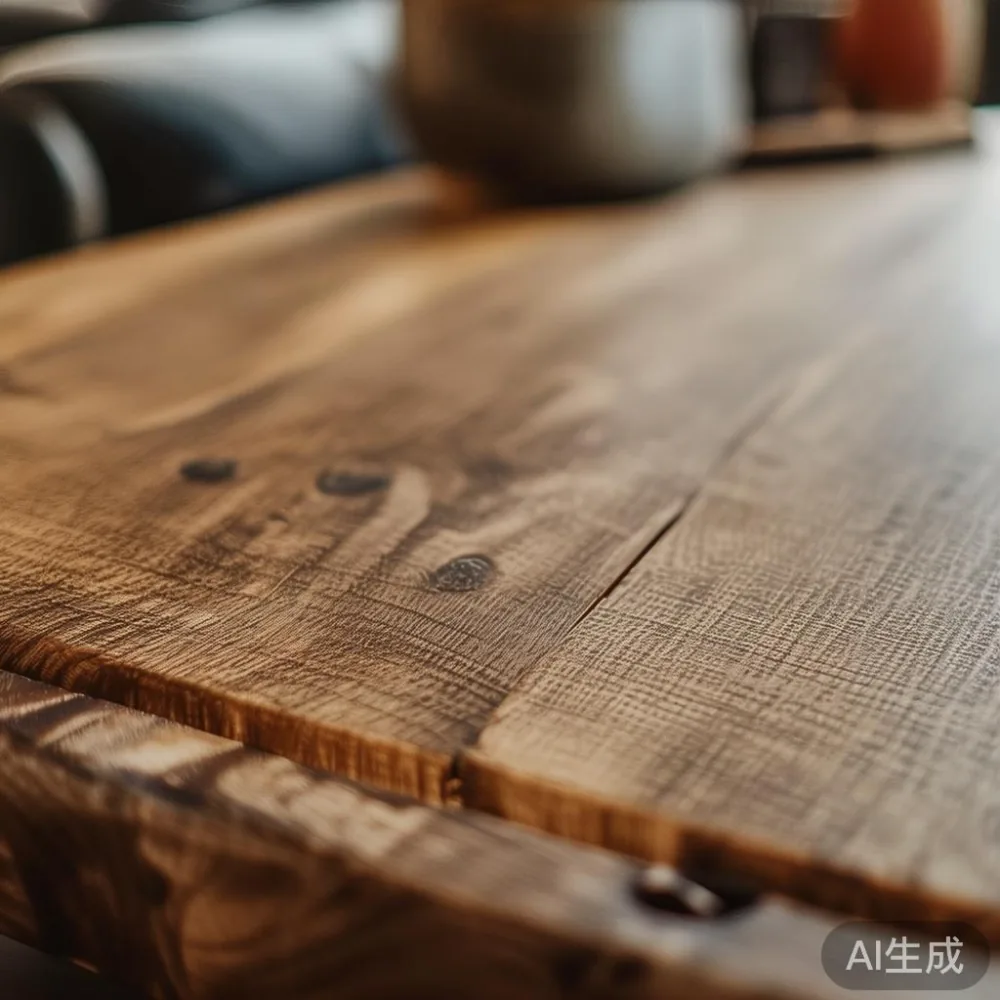
If you have ever wondered why one solid wood dining table in Singapore costs S$1,200 and another, visually similar one costs S$4,800, the answer is almost never the wood species alone. It is the combination of moisture content, joinery, hardware, finishing chemistry, logistics from Foshan to Singapore, and the warranty someone is willing to put in writing. Below is the honest breakdown, written for shoppers in HDB flats and condos across Bedok, Punggol, Toa Payoh and the rest of the island, where lift doors are often 80 cm wide, corridors 1.2 m, and GST adds another 9 percent to whatever you pay.
1. The wood itself: species, drying, and where the log was sawn
Most industrial style pieces on the MIDHILL catalogue are built from FAS-grade American white oak, walnut, or ash, with reclaimed elm and pine as the budget anchors. Oak at 12 percent moisture content runs around S$2,400 per cubic metre wholesale; walnut can climb past S$3,800. Reclaimed pine with nail holes and patina might come in at S$900 to S$1,400 per cubic metre, but it costs more to kiln-dry because older boards hold trapped moisture for months. A 1.8 m dining table in solid oak typically uses 0.08 to 0.12 cubic metres of rough lumber before milling, so the raw wood bill alone sits somewhere between S$190 and S$460.

Where the log was sawn — quarter-sawn, rift-sawn, or plain-sawn — changes both look and waste. Quarter-sawn oak yields only 25 to 35 percent usable boards from a log, while plain-sawn yields 60 percent. That is why a quarter-sawn oak headboard for an industrial style bed frame costs roughly 40 percent more than a plain-sawn equivalent, even though both are technically the same wood. Last month I visited a Singapore showroom and a customer asked me why her friend's "same" wardrobe was S$700 cheaper. We pulled up the cut sheets: hers was plain-sawn ash, her friend's was rift-sawn white oak. Mystery solved.
2. Joinery: dowels, mortise-and-tenon, and the quiet cost of doing it right
Pick up any solid wood sofa, bed frame, or wardrobe and shake it. If it rattles, you are holding dowels and glue. If it stays silent, you are holding mortise-and-tenon, pocket screws, or traditional Chinese master joinery. A pneumatic dowel machine costs a factory about S$8,000 and an apprentice can produce 60 dowel joints an hour. A mortise-and-tenon station, by contrast, requires a CNC plus a finisher, and the cycle time on a single apron joint for an industrial style dining table can run 8 to 14 minutes.
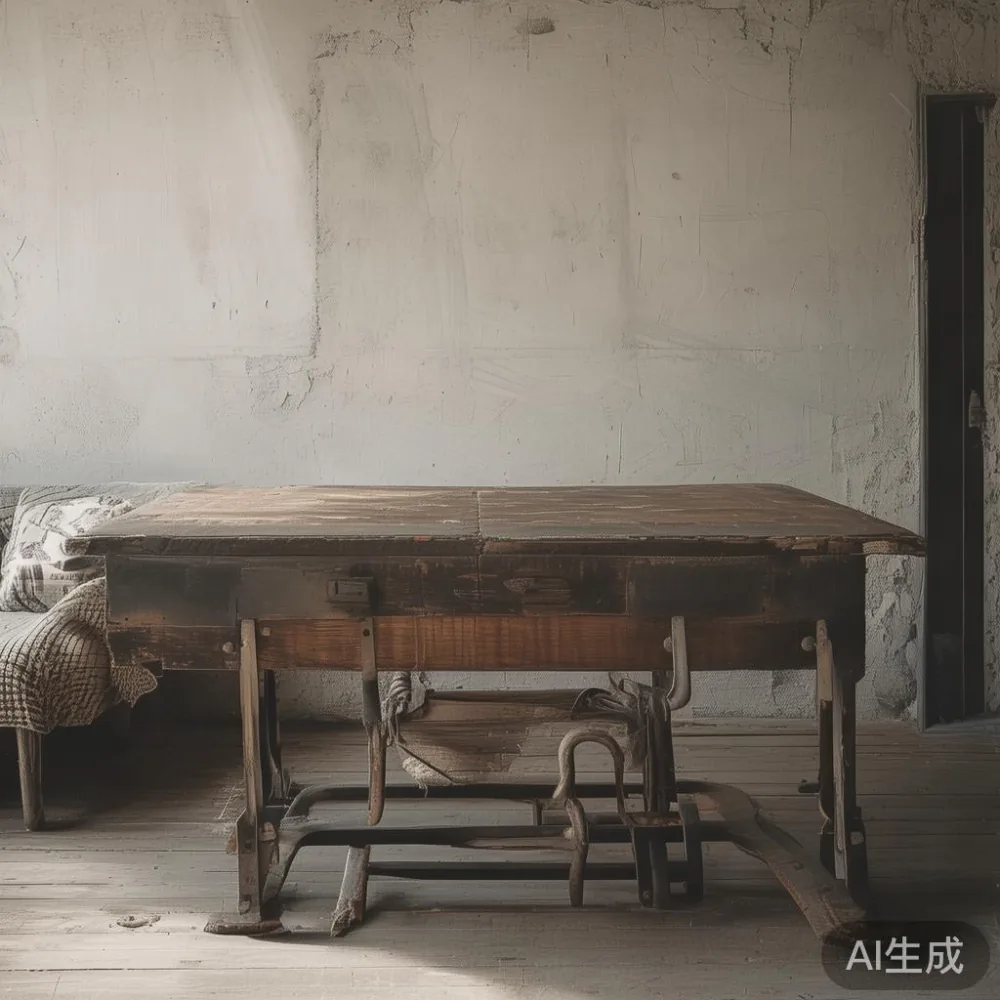
The labour differential shows up in the price. A doweled dining table in Singapore retails around S$1,500 to S$2,200. A mortise-and-tenon equivalent with breadboard ends sits between S$2,800 and S$4,200. For a four-poster French bed vs Nordic bed at the same width (180 cm), the mortise-and-tenon frame absorbs around 28 hours of bench work, the doweled version absorbs around 6. That gap is roughly S$660 in factory labour, before you add finishing.
3. Finishing: oil, wax, lacquer, and what you are really paying for
Finishing is where most customers get fooled. A wax-oiled ash table and a polyurethane-lacquered ash table can look almost identical under showroom LEDs, but their price gap is real. Hardwax oil (Osmo, Rubio Monocoat) penetrates 0.3 to 0.8 mm into the grain and can be spot-repaired. Conversion varnish sits as a film on top, looks glossier, and lasts 7 to 10 years before it starts to cloud or peel. Conversion varnish costs S$45 to S$70 per litre in Singapore, hardwax oil is S$90 to S$140.
Beyond the liquid, the application method matters. Spray-applied catalyzed lacquer requires a downdraft booth with explosion-proof fans, which is why MIDHILL's main line runs oil-and-wax despite the longer cycle. Three coats of oil on a 1.8 m dining table adds roughly 6 hours of cure time between coats. Spray lacquer adds 90 minutes. That cure time is a real factory cost, and it is why slower-finished pieces sometimes carry a 10-year structural warranty while the faster line carries only three.
4. Hardware: the S$40 detail that saves you S$400 in five years
For an industrial style wardrobe, the hinges and slides do more daily work than the wood. A pair of soft-close European hinges from Blum or Grass runs S$18 to S$32 per pair. A no-name hinge runs S$3 to S$6. Multiply by four doors, and you are at S$80 to S$128 in hinges alone. The cheap hinge will sag in 18 to 30 months. The branded one is rated for 200,000 cycles, which is 27 years of opening the wardrobe four times a day.
For a solid wood sofa, the real hardware is the suspension. Eight-way hand-tied springs in a high-end sofa cost around S$220 per seat to install and require a separate station with skilled hands. Sinuous S-springs, the mass-market alternative, cost S$28 per seat and last 6 to 10 years. If you are pricing a three-seater, that gap is S$576 in production cost. The same logic applies to a marble table — the steel sub-frame beneath the slab usually costs more than the slab itself if it is engineered properly.
5. Logistics from Foshan: container space, GST, and the lift you bring it up in
This is where Singapore shoppers feel the price most acutely. A 40-foot HQ container from Foshan to Singapore costs around US$1,200 to US$1,800 in 2026, depending on season. A single 1.8 m dining table in solid oak weighs 90 to 140 kg crated and occupies roughly 1.2 cubic metres. A 40-foot HQ holds about 56 cubic metres of usable furniture volume after crating. Do the maths and your table is sharing a S$2,400 freight bill with about 45 other pieces, which is about S$53 of ocean freight per piece. That is the cheap version.
Then there is the last-mile problem. The lift in most HDB blocks at Tampines and Bedok has an internal cabin of about 1.1 m deep by 1.4 m wide with a door opening of 80 to 90 cm. A 2.4 m dining table will not fit standing up; it has to come in tilted, which means it has to be crated in a way that lets you tilt it. MIDHILL sends all tables above 1.8 m in a knock-down form precisely for this corridor geometry, and the hardware that allows knock-down assembly without weakening the top adds another S$60 to S$120 per piece. Add 9 percent GST, lift-booking fees of S$30 to S$80, and the price of a S$2,800 table quietly becomes S$3,200 by the time it is in your living room .
6. Warranty, returns, and what the paperwork really means
A 10-year warranty on a solid wood dining table is not a marketing line; it is a reserve on the balance sheet. If a factory expects 4 percent of frames to fail in year 8 and 9, it has to price that in. At an average replacement cost of S$1,800, that is S$72 per unit, just for the warranty reserve, before the warranty administrator's salary. A 1-year warranty costs the factory almost nothing to honour, which is why it is so common on cheaper industrial style pieces.
Returns are another quiet cost. A 14-day return window on a S$2,500 sofa means the factory is exposed to return shipping of around S$280 per piece from a Punggol HDB back to the warehouse, plus a 30 percent restocking loss if the piece cannot be resold as new. That risk is priced into every sale. Brands that offer lifetime refinishing are betting that fewer than 8 percent of customers will ever use it; the ones who do usually come back for a second piece. That is the arithmetic behind a real warranty, not a slogan.
7. Does style choice change the price you actually pay?
Yes, sometimes by more than the wood. A French light luxury armoire in solid oak with hand-carved corbels will run 30 to 50 percent above a plain industrial style wardrobe of the same volume, because carving absorbs 14 to 20 hours of skilled labour. American light luxury pieces tend to swap carving for brass-tipped feet and tufted linen headboards — the markup comes from textiles and finishing rather than wood. Post-modern light luxury usually means mixed materials: a solid oak frame married to a marble top, or a solid wood sofa with brushed brass legs. The mixed-media approach means two supply chains and two sets of tolerances, which is why a 1.2 m marble table in this style can cost S$2,200 while a solid oak equivalent is S$1,400.
If you are weighing how to style light luxury sofa in apartment layouts under 90 sqm, the constraint is usually not the sofa itself but the surrounding pieces. A heavy carved headboard reads as cluttered in a compact bedroom; a low-profile industrial style bed frame on cast iron legs reads as airy. The same logic applies when you are learning how to style French provincial sofa in apartment spaces with 2.4 m ceilings — keep the silhouette and let one or two accent pieces carry the period detail, otherwise the room shrinks visually.
8. How do I read the spec sheet without getting fooled?
Five numbers, every time. (1) The exact species and grade (FAS, #1 Common, or "rustic" — each is a 20 to 40 percent price step). (2) The moisture content at delivery — anything above 12 percent in Singapore's humidity is risky. (3) The joinery method (doweled, mortise-and-tenon, pocket screw, or bolt-and-barrel). (4) The finish type and number of coats. (6) The warranty length and who honours it. If a spec sheet hides any of these, the price is hiding something as well.
If you are deciding how to choose Mid-century modern bed, ask whether the headboard is solid wood or plywood with a wood veneer. The latter is fine and lighter, but it should be priced 25 to 35 percent below a solid equivalent. For a shopper eyeing the best Boho bed for 2026, look for low platforms under 25 cm off the floor — they read as bohemian and they also leave more visible ceiling height in a 2.8 m HDB room. And for anyone comparing the best Japanese sofa for 2026, the leg height is the giveaway: under 12 cm with a low back, no cushions over 12 cm deep — anything taller is a western sofa wearing a Japanese label.
9. What is a fair price for an industrial style solid wood piece in Singapore in 2026?
Bands I trust, all in SGD, including GST and delivery to a Singapore HDB or condo: a solid wood dining table (1.8 to 2.4 m) between S$2,400 and S$5,800; an industrial style bed frame (queen or king) between S$1,800 and S$4,200; a solid wood sofa three-seater between S$3,200 and S$7,500; a four-door wardrobe between S$3,800 and S$8,500; a two-drawer nightstand between S$480 and S$1,100; a marble table with steel sub-frame between S$1,600 and S$3,800. Anything below those bands and you should ask what was cut. Anything above, and you should ask what was added.
There is also a quieter middle band worth naming. A solid wood bed frame from a Foshan factory shipping direct, with a 10-year structural warranty and free refinishing, lands in the lower half of those ranges; buying the same construction through a Singapore middleman adds roughly 35 to 60 percent. That is the maths I would carry into a Tampines or Punggol lift lobby before signing anything.
10. So what is the real answer to "what drives the price"?
Wood species sets the floor. Moisture content, joinery, and finish set the next three. Hardware sets another. Logistics from Foshan, GST, and the geometry of your lift door set the last layer. Add the warranty reserve on top, and you have the number on the price tag. None of those layers is a scam; every one of them is a real cost someone has paid so the piece can survive a Singapore bedroom for ten to twenty years.
The shortcut I would offer any neighbour in Bedok or Toa Payoh: pick the two or three layers you actually care about — moisture content, joinery, hardware — and let the rest be average. A dining table that is plain-sawn, mortise-and-tenon, with Blum hinges on the matching sideboard, will outlast a fancier table with bad hinges and 14 percent water content every single time. Spend the difference on a piece you will look at every morning, not on a spec you will forget by next week.