Veneer vs Solid Wood in Singapore: A 5-Year Cost Reality Check for HDB Homes
I moved into a 4-room HDB flat in Tampines seven years ago with a dining table that cost me S$899, glossy, slim, covered in a wood-grain paper that looked convincing in the Jurong East showroom lighting. By year three, the same table had lifted along the edge where my daughter's humidifier sat every night, and a corner had chipped back to reveal MDF underneath. The replacement landed on a Tuesday morning via a lorry that could not fit into my 1.1-metre-wide lift lobby, so two men carried it up six floors by hand. That is when I started tracking real numbers, not brochure numbers, on what a piece of furniture actually costs in a Singapore home across five years. This article is the spreadsheet I wish I had owned before I bought anything.
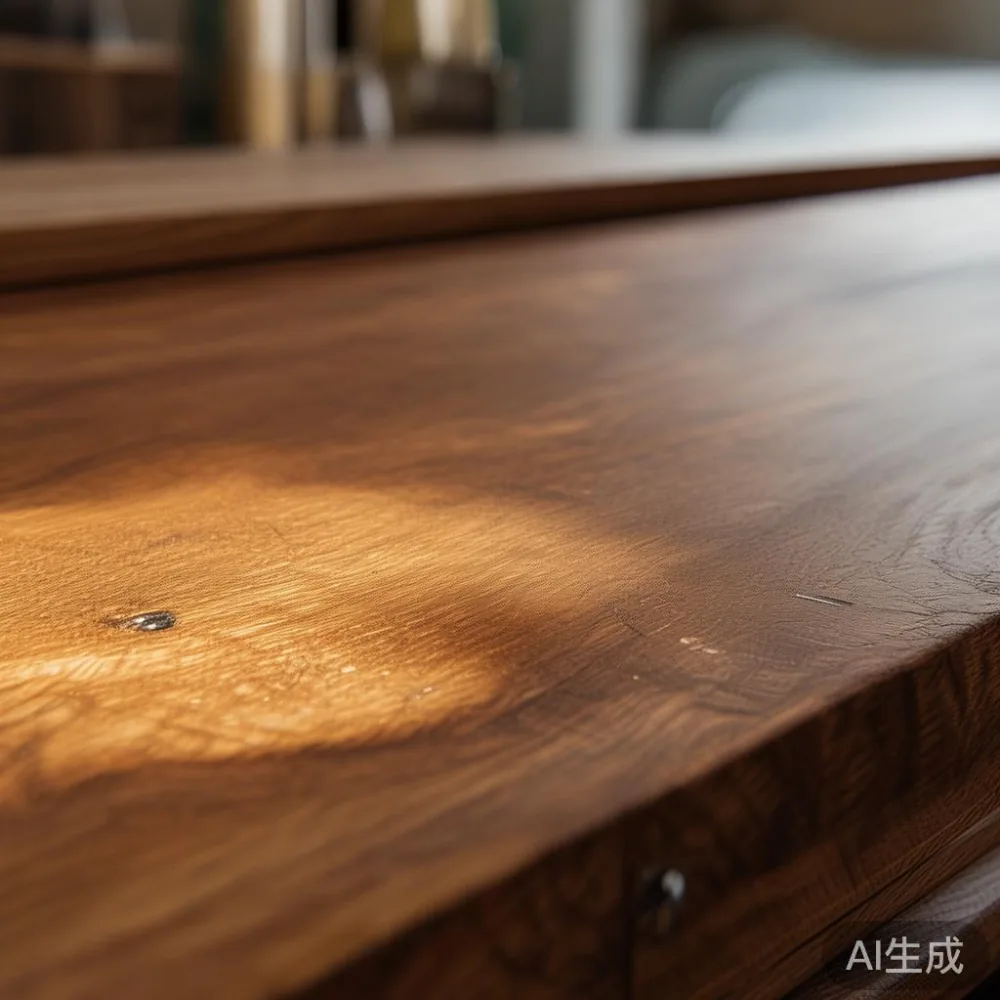
Why Singapore Homes Stress Furniture Differently from a Beijing Loft or a Sydney Terrace
Three physical facts shape every furniture decision here. First, the climate: outdoor humidity sits at 70 to 90 percent for most of the year, and indoor humidity in a non-air-conditioned spare room regularly reads 65 to 75 percent on my little hygrometer. Second, the vertical problem. A typical HDB lift opening is around 1.0 to 1.2 metres wide and 2.1 metres tall. A bulky wardrobe that ships fully assembled from overseas is one of the easiest ways to discover that a 1.8-metre panel simply will not pivot through a corridor. Third, the tax and logistics stack. A S$2,000 dining table from overseas becomes about S$2,180 after 9 percent GST, plus a S$40 to S$120 lift-booking fee if the block has a goods lift, plus often a S$60 to S$150 charge for narrow-corridor carry-up above the third floor. Solid wood is heavier per piece than veneer-on-MDF, which makes those last two line items more painful up front but tells you something real about the material.
My colleague, who lives in a 980 sq ft condo in Punggol, ordered a bedroom set last year, a bed frame, two nightstands, a three-door wardrobe. The shipment arrived in three cartons weighing 180 kg, 95 kg, and 42 kg. The wardrobe carton alone was 2.35 m long, so the delivery crew flipped it diagonally, and it just cleared the lift door. If you live on a higher floor in Bedok or Toa Payoh with a narrow staircase, that one fact will quietly decide your budget before you pick a wood species.
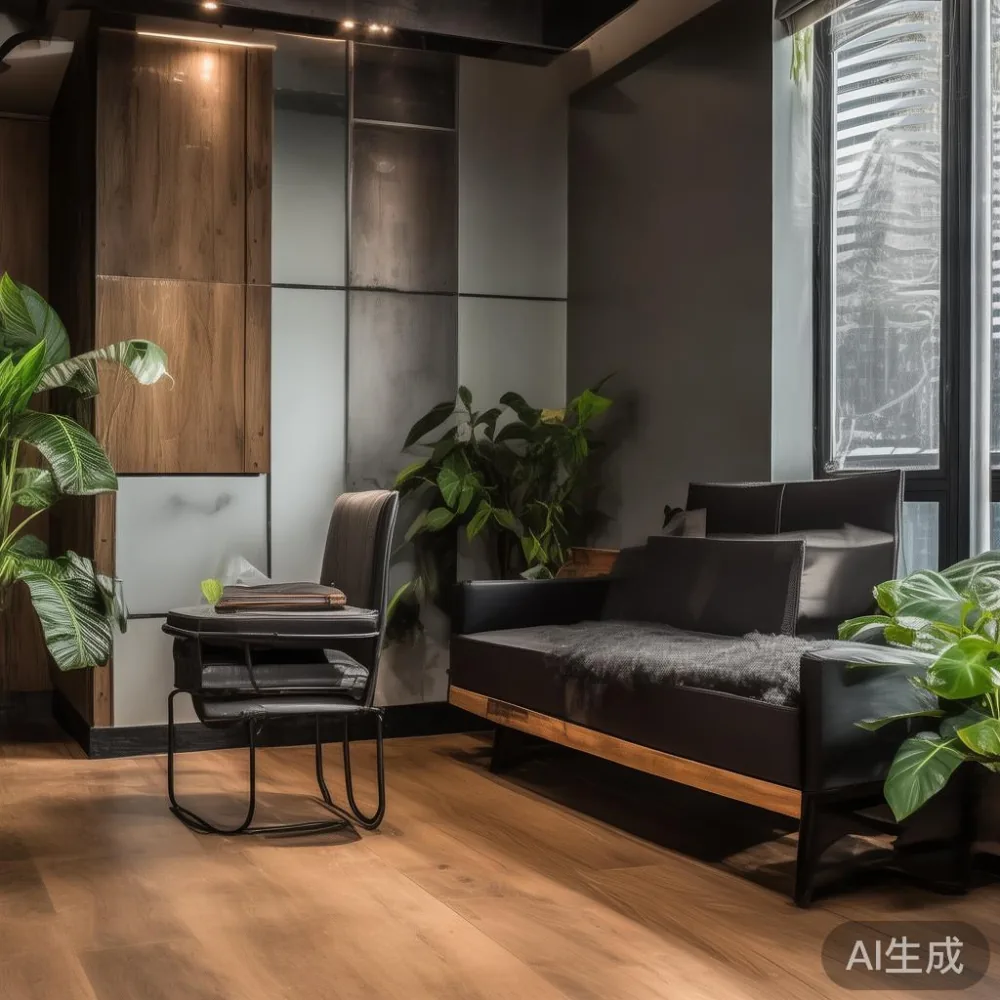
What Exactly Is the Difference Between Veneer and Solid Wood?
Solid wood furniture is cut from a single piece of timber, ash, oak, walnut, teak, rubberwood, and then joined, sanded, and finished. A solid wood dining table, a solid wood bed frame, a solid wood wardrobe, a solid wood nightstand, all share one truth: every visible surface, including edges and corners, is continuous wood fibres. You can sand it, refinish it, repair a 3 mm dent with a wax stick, and it will still look like the same piece in year ten.
Veneer furniture is an engineered sandwich. The core is usually MDF, particleboard, or plywood, between 12 mm and 25 mm thick. The face is a slice of real wood, often 0.3 mm to 0.6 mm thick, glued onto the surface. A marble table in a dining set may pair a veneer cabinet with a real stone top. A solid wood sofa frame is, by definition, not veneer at all, the internal frame is hardwood, even when the upholstery covers everything you can see. The risk sits precisely at the boundary: once that 0.5 mm skin is breached, the inside is a different material entirely. The MIDHILL catalogue I keep on my desk, for one, lists pieces where the structural frame is solid and only the back panel or the drawer bottom is a veneer-on-plywood, which is the honest way most factories actually build, even premium ones.
Is Nordic bed frame furniture worth it?
Yes, a Nordic-style solid wood bed frame is one of the strongest five-year buys in Singapore, because the design strips away ornamentation and leaves only the timber doing the visual work, so any aging shows up as character rather than as defect. A Nordic bed frame in ash or white oak, properly kiln-dried to 8 to 12 percent moisture content, will acclimatise to a 25-degree air-conditioned bedroom in about four to six weeks and stay stable for years, where a veneer-laminate bed frame almost always reveals a visible seam where the headboard meets the frame within 18 months because the two surfaces expand at different rates.
That single quotable line is the practical answer. Now the math. A 1.8 m queen-size Nordic bed frame in solid ash typically lists between S$1,400 and S$2,400 in Singapore retail, depending on whether the slats are solid wood or plywood. An equivalent veneer-laminate bed frame, often labelled engineered wood or oak veneer, lists between S$499 and S$1,099. Over five years, the solid piece works out to about S$280 to S$480 per year if you keep it for a decade; the veneer piece works out to S$100 to S$220 per year. The catch is the replacement cycle. Veneer bed frames in HDB bedrooms, especially in master bedrooms facing the afternoon sun on the west side, tend to need replacement in years four to six. Solid wood bed frames, and this is the part the brochures never print, can be refinished in place. A 2-hour, S$180 to S$280 sanding-and-oil service extends their service life by another three to five years at a fraction of replacement cost.
The 5-Year Cost Spreadsheet: A Living Room Set in Tampines
Let me put real numbers on a representative set: one three-seater solid wood sofa frame with upholstery, one TV console, one coffee table, one dining table for four. All numbers are SGD, inclusive of 9 percent GST, delivered to a fourth-floor HDB unit in Tampines, assuming lift access and no narrow-staircase surcharge.
Veneer / engineered wood path, Scenario A:
3-seater sofa with engineered wood frame: S$1,299 at purchase. TV console 1.8 m in walnut veneer over MDF: S$749. Coffee table with sintered stone top, MDF base: S$299. Dining table 1.4 m for four, oak veneer over rubberwood core: S$599. Total at year zero: S$2,946.
Year two: hot pot incident, steam lifts the veneer at the dining table edge. Estimated spot repair at Tiong Bahru workshop: S$120 to S$180, but matching the 2023 batch colour is unreliable, so we book a full re-veneer at S$350 to S$450. We defer it. Year three: TV console delaminates at the drawer fronts due to humidity in the unventilated service yard conversion. Replacement console: S$649. Year five: sofa frame creaks, microfibre wears thin, full replacement of the living room set. Total spend across five years: about S$5,800 to S$6,400.
Solid wood path, Scenario B, with pieces in the same industrial style language:
3-seater solid wood sofa with washed-linen upholstery: S$2,490. TV console 1.8 m in solid ash with black steel base: S$1,290. Coffee table with marble top and solid oak base: S$890. Dining table 1.4 m in solid walnut, seats four comfortably: S$1,490. Total at year zero: S$6,160.
Year two: small ring mark on the coffee table marble, polishing S$60. Year three: nothing structural required, oil refresh on dining table done in-home for S$160. Year five: still in service. Refinishing quote to extend by another five years: about S$420. Total spend across five years: about S$6,800 to S$7,000.
Read those totals slowly. Across the same five-year window in the same Tampines flat, the veneer path runs roughly S$5,800 to S$6,400, the solid wood path runs S$6,800 to S$7,000. The delta is about S$600 to S$1,200 over five years, less than S$15 a month, for furniture that has roughly doubled in usable service life. If you keep it ten years instead of five, the delta inverts completely. That is the part nobody on a 30-second showroom floor mentions.
Where Industrial Style Changes the Math
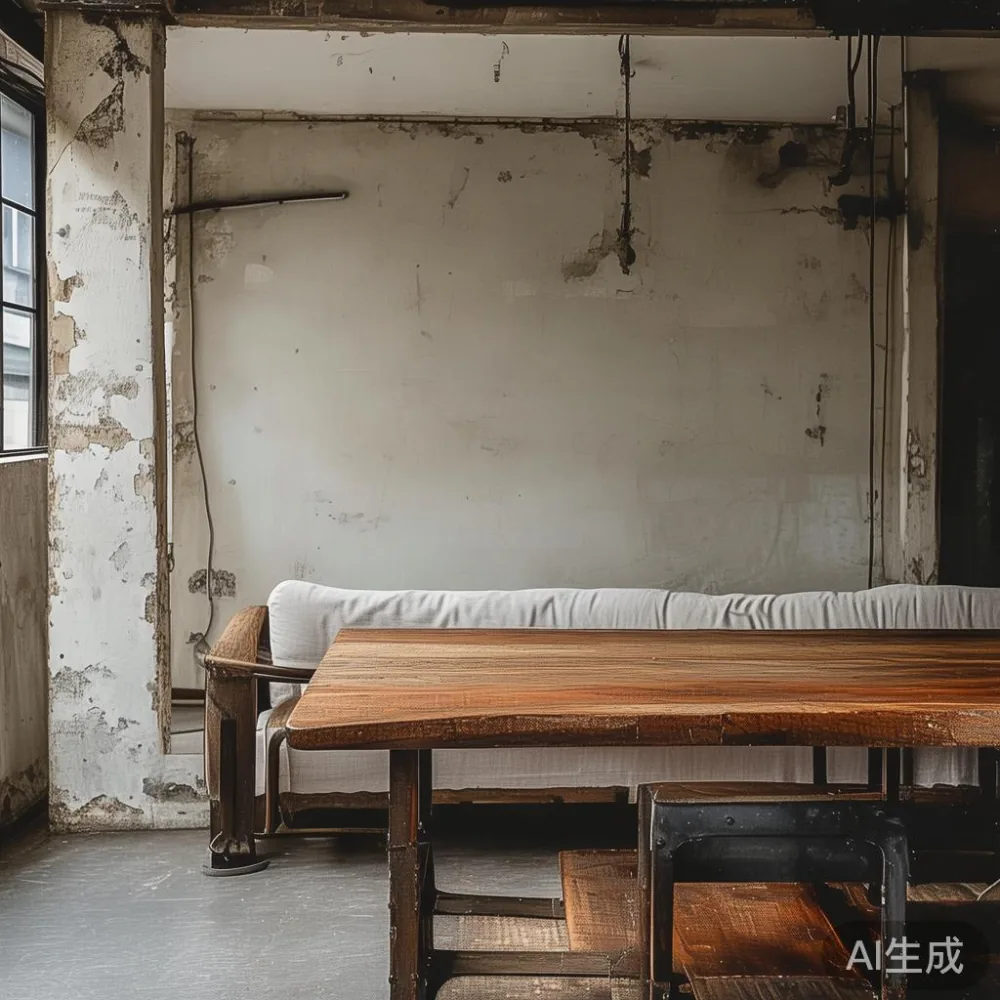
Industrial style interior design, with its exposed black steel, raw timber, cast-iron hardware, and honest jointry, is unusually kind to solid wood for a specific reason: it celebrates the material instead of disguising it. A French light luxury interior with marquetry, brass inlay, or post-modern light luxury silhouettes with curved edges has to mask every flaw because the entire design language is about a flawless surface. Industrial style leans into knots, mineral streaks, slight variations in grain, and the patina that develops after two humid Singapore summers. So an Italian light luxury loveseat for condo that ships with a sealed piano-lacquer finish will punish the day a humidifier sits too close, while a solid wood platform in an industrial-style setting will simply pick up a softer, warmer tone over the same period.
For a wardrobe specifically, the calculus is sharp. An industrial-style solid wood wardrobe at 1.8 m tall, 1.2 m wide, three doors, weighs 110 to 140 kg. A comparable veneer wardrobe weighs 55 to 75 kg. The lighter one fits a standard HDB lift. The heavier one often has to come flat-packed in three cartons and be assembled in your bedroom, which can add S$120 to S$220 in assembly labour but eliminates the lift problem entirely. That is the kind of decision that does not appear on a price tag but appears on the day of delivery.
Hidden Cost Lines That Most Buyers Forget
Five line items rarely appear in the showroom but always appear on the five-year spreadsheet:
1. Delivery surcharge for non-lift floors above the third storey. S$10 to S$25 per floor per carry-up, charged by the piece. A solid wood dining table can add S$120 to S$180 to the bill in a fourth-floor walk-up in Bedok.
2. Disposal fees. In Singapore, a discarded wardrobe of roughly 60 kg costs about S$80 to S$150 to have removed by a general waste contractor if the building does not allow bulky item removal. A 110 kg solid wood wardrobe can run S$150 to S$280.
3. Touch-up and refinishing. Veneer can rarely be spot-repaired invisibly. Solid wood can be oiled, waxed, sanded, and re-finished on site. A single refinishing session at year four or five runs S$180 to S$420 depending on the piece and roughly resets the surface clock.
4. Warranty coverage on moving parts. Drawer runners, soft-close hinges, and sliding door tracks fail predictably between year three and year six regardless of the material. A structural 10-year warranty on solid wood frames makes this less painful than a one-year warranty on a veneer carcass, where the carcass itself is often the failure point.
5. Resale value in the secondary market. A used solid wood dining table in an industrial style or French light luxury aesthetic lists on Carousell for 40 to 60 percent of original price after three years. A used engineered-wood dining table lists for 15 to 25 percent, and often not at all.
How MIDHILL Approaches the Solid Wood Promise
The honest way to read a factory's solid wood claim is to ask what is solid and what is not. Midhill, which is one of the Foshan solid wood furniture makers I have actually toured, publishes a 10-year structural warranty on the main frames of its sofas, bed frames, dining tables, wardrobes, and nightstands. The clause that matters is the word structural: it covers the load-bearing members, the legs, the stretchers, the slats, the door stiles. Drawer bottoms and back panels in the catalogue are clearly itemised as plywood or MDF, which is the right call, because a 25 mm solid back panel would cup inside a year in a non-air-conditioned HDB storeroom. Midhill also offers lifetime refinishing service, which is the practical bridge that turns the five-year case above into a ten-year case without writing off the piece. Shipping to Singapore from a Foshan factory typically takes 18 to 28 sea-freight days door-to-door for orders above US$350, which clears the free-shipping threshold for sets in this price range and removes a common S$60 to S$180 freight surcharge.
The 14-day return policy is the safety net for the one variable you cannot measure from a phone screen: how the piece sits in your specific light, against your specific wall paint, in your specific room humidity. Two pieces of dining furniture can both be called solid wood and look nothing like each other. The return window is what gives the spec sheet meaning.
So, Veneer or Solid Wood for a Five-Year Horizon?
If the budget is genuinely tight and the timeline is genuinely short, a well-made engineered-wood piece in the industrial style silhouette can still serve for two to four years without complaint, especially in a dry, air-conditioned bedroom with stable humidity under 60 percent. If the plan is to live with the furniture across more than one HDB lease or one condo re-sale cycle, the spreadsheet above gives the answer in increments of about S$15 a month.
The cleanest way to decide is to test three physical checks before paying. Pick up the piece and feel the underside, which is where veneers often skip. Knock twice on a flat panel; solid wood gives a denser, duller thump, hollow-core panels give a sharper, ringing knock. And smell the unfinished edge: a real wood edge smells like a sawmill, a laminate edge smells like a furniture showroom. The honest answer between those two sensations is the answer the next five years will confirm.