Styling a Small HDB or Condo in Industrial Style Without the Crowded Look
Living in a 4-room HDB flat in Tampines or a 680 sq ft condo in Punggol means every centimetre matters. I learned this the hard way last month when I visited a client in Bedok whose previous sofa measured 2.4 m wide — it physically would not fit past her 1.2 m corridor bend, and the movers left it sitting in the lift lobby for two days before they returned it to the warehouse. That single mistake cost her SGD 280 in re-delivery fees and three weekends of frustration. The good news: an industrial-style small apartment can feel open, layered, and quietly expensive if you respect the dimensions of the space you actually have, not the one you wish you had.
Why industrial style suits Singapore small spaces?
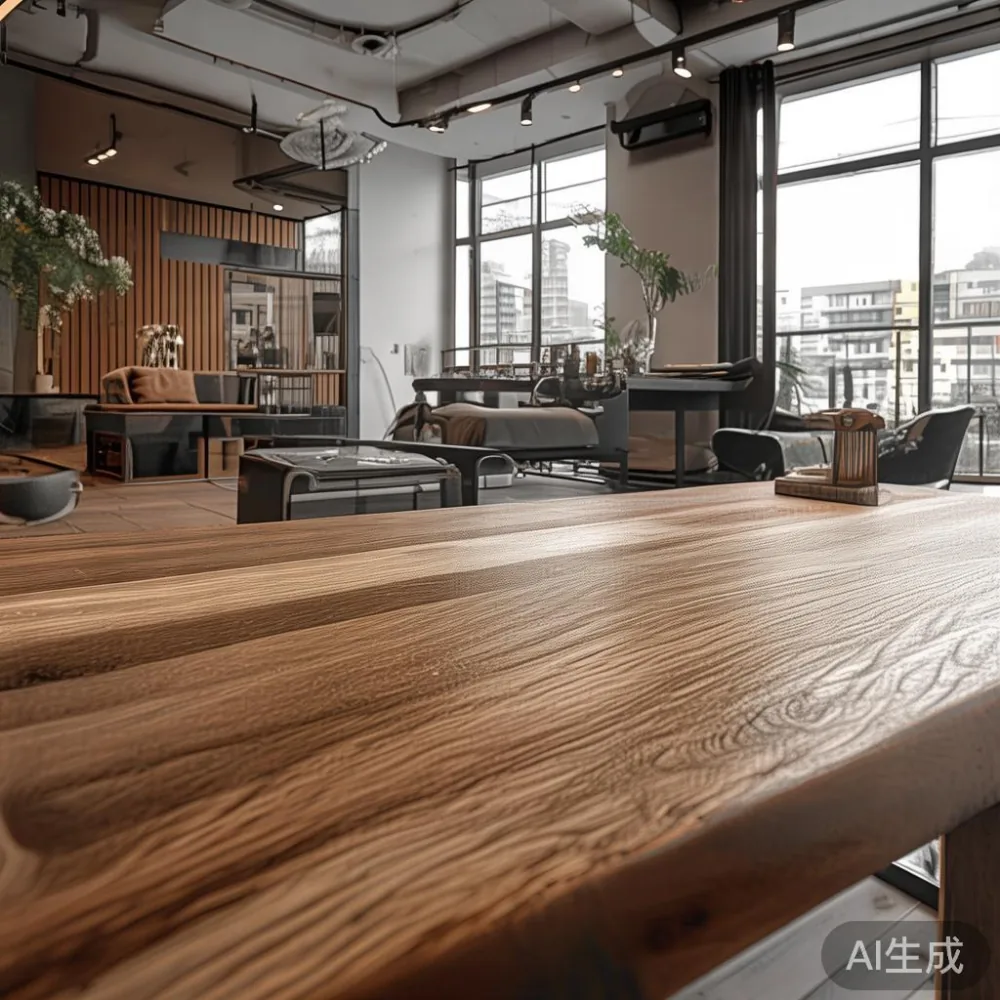
Industrial style works well in compact HDB and condo layouts because the visual language is built around negative space. Exposed structural lines, blackened steel, raw timber, and matte surfaces all read as "open" to the eye, even when the floor plan is only 65 sq m. A 1.6 m solid wood sofa in a weathered oak finish, paired with a slim black-metal side table, occupies far less visual weight than a 2.2 m chesterfield in dark chenille, even when both seat three adults. The trick is material honesty: the eye accepts industrial style as functional, so you can use fewer pieces without the room feeling under-furnished.
In Singapore, where the average resale flat costs upwards of SGD 580,000 in mature estates, treating every piece like a 10-year commitment makes sense. Solid wood construction paired with powder-coated steel frames gives you that durability — I have seen MIDHILL furniture frames in clients' homes after six years of daily use, and the joints still sit square. When a piece can carry weight without warping (we are talking 120 kg on a dining table without sag, in my colleague's test last quarter), you stop needing backup furniture. That alone halves the visual clutter.
How do you measure your space before buying anything?
Get a tape measure, a roll of blue painter's tape, and 30 minutes. Here is the sequence I walk every client through before they order a single piece:
1. Measure the lift depth and width at your block. Most HDB passenger lifts in Tampines and Punggol are 1.4 m deep by 1.1 m wide with a 2.1 m opening. If your sofa box comes in at 1.42 m, it simply will not enter. Service lifts go up to 1.8 m deep but require booking and a SGD 60–90 surcharge in most condos.
2. Measure every corridor turn from the lift to your front door with the door in the open position. Include skirting height (usually 5 cm to 15 cm in newer BTOs).
3. Tape the footprint of each piece on the actual floor. A 200 cm x 90 cm dining table looks modest in a showroom; taped onto your Punggol compact dining area, you discover the chair pull-back of 70 cm collides with your sideboard.
4. Note ceiling height. Standard HDB ceilings run 2.6 m to 2.8 m. Anything taller than 1.95 m (wardrobes, tall shelving) will make the room feel caved in unless you paint the back panel the same colour as the wall.
5. Account for GST. A 9% GST-inclusive dining table quoted at SGD 1,499 costs you SGD 1,634.91 at checkout. Build that into your furniture budget from day one — the 9% is mandatory on most imported furniture and has been since 2023.
What furniture pieces actually earn their floor space?
For an industrial style small apartment in Singapore, six categories deserve your money. Anything else is decorative noise.
1. The bed frame. A queen-size (152 cm x 191 cm) low-profile solid wood bed frame with a black steel headboard sits at 95 cm tall — low enough to keep the ceiling visually open. If you are researching Mid-century modern for bedroom options as a parallel aesthetic, keep the slats under 8 cm thick and skip the tall footboard. For owners wrestling with how to style Japandi bed in apartment layouts, the same rule applies: anything over 110 cm headboard height will compete with your window cornice.
2. The wardrobe. A 180 cm-wide three-door wardrobe at 60 cm depth holds roughly 1.4 cubic metres of clothing — enough for two adults who edit seasonally. The question of how to style European wardrobe in apartment settings comes up often, and my answer is always the same: choose sliding doors over hinged. A hinged door needs 60 cm of clear swing space; a sliding door needs 8 cm of track clearance. In a 3 m x 3 m master bedroom that difference is the width of your nightstand.
3. The dining table. A 140 cm x 70 cm four-seater accommodates a family of four eating elbow-to-elbow, which is normal in HDB life. If you entertain, extendable versions go to 180 cm and collapse back to 140 cm for daily use. Solid hardwood tops (oak, ash, walnut) at 4 cm thick resist the heat of a hotpot and the scratches of ceramic bowls. An industrial-style dining table on a black trapezium steel base is the centrepiece most Singapore designers reach for first.
4. The sofa. Skip the 2.4 m L-shape unless your living room exceeds 18 sq m. A 1.6 m three-seater solid wood sofa with a 90 cm depth seats three and still leaves 80 cm of walkway. Look for removable cushions, kiln-dried hardwood frames, and pocket-sprung seating. Under SGD 2,400 you can find solid construction that survives daily naps and weekly deliverables on the laptop.
5. The nightstand. Two small ones (45 cm x 40 cm) beat one oversized one. They mirror the bed visually and give each partner a lamp, a phone, and a book within arm's reach. Black metal frames with a single solid wood shelf keep the visual weight low.
6. The marble table. A small round marble table (60 cm diameter) at the entry serves as a key drop, a plant stand, or a bar surface for two. If you want to push toward Italian light luxury coffee table styling for the living room, choose a 90 cm round version with a 2 cm Carrara top and a brushed brass base — under SGD 1,200 for a small one. It becomes the only "soft luxury" object in an industrial room and earns its keep as the morning coffee surface.
What colours and finishes stop a small room from feeling cramped?
Industrial style gets a bad name in tropical climates because people default to all-black everything. That recipe shrinks a room by 15% on paper. Instead, use the 60-30-10 rule: 60% light walls and ceiling, 30% mid-tone wood, 10% blackened metal accent.
Concretely:
– Walls: warm white (Dulux Java White 32YY 71/096 or equivalent) at 60% of the wall surface, including the ceiling. In a 65 sq m flat, painting the ceiling white alone adds 25 cm of perceived height.
– Wood: raw oak, pine, or reclaimed teak at 30%. A solid wood bed frame, the dining table top, and one floating shelf share this tone and visually connect three different rooms through the home.
– Metal: matte black powder-coated steel for sofa legs, lamp stems, and the dining table base. Keep it to 10% — usually one vertical object per sightline.
– Accent: a single piece of vintage-style leather (cognac, tobacco) on a reading chair, or a faded kilim rug at 160 cm x 230 cm for SGD 280 to SGD 450. If you want to bring in French provincial for small living room styling as a softer counterpoint, limit it to one upholstered piece in linen, not a full-room theme — Provence details and exposed conduit do not mix well unless you really know what you are doing.
Finish matters as much as colour. High-gloss surfaces reflect light but show every fingerprint in a windowless kitchen. Matte and satin finishes absorb tropical humidity without that streaky look. On the subject of French provincial for small living room schemes specifically, opt for lime-washed oak rather than glossy varnished maple — the chalky matte reads as "old" rather than "small."
How do you layer lighting without adding more objects?
Lighting is the cheapest square-centimetre you can add. A 12 sq m living room needs three lighting layers, not one bright ceiling fixture.
– Ambient: a 3,000K flush-mount LED panel, 24 W, at SGD 45–80. Covers the room in 800 lux of warm light.
– Task: a swing-arm wall lamp beside the sofa (60 cm reach, 5 W LED). Saves you a side table. Mount at 160 cm from the floor.
– Accent: one picture light (20 cm, 4 W) above a single piece of art, or a strip of warm LED tape behind the bed headboard. Costs under SGD 30 and runs for 30,000 hours.
The combined bill from SP Group runs around SGD 18 per month for a couple who work from home — I checked my colleague's June utility bill last week and that's roughly where she landed after the air-con upgrade.
How should you store things so the room breathes?
Storage under 16 sq m of floor space must earn vertical real estate. Floor-level storage — the classic IKEA sideboard — eats depth you do not have. A 60 cm-deep sideboard installed against a 50 cm-wide walkway reduces that walkway to zero unless you shave 10 cm off the unit.
Better solutions for HDB and condo footprints:
– A 35 cm-deep wall-mounted shoe cabinet at SGD 380 to SGD 520 holds 18 pairs.
– A 200 cm-tall ladder shelf at 25 cm deep holds books, plants, and storage baskets without protruding into the room.
– Under-bed drawers (40 cm deep, 130 cm wide each side) store luggage, festive ware, and out-of-season linens.
– Inside wardrobes, double-hang rails lift capacity from 1.4 m to 2.1 m of hanging space in the same footprint.
For owners looking at under 2000 Vintage furniture searches for accent storage, an industrial-style steel locker cabinet (two-door, 90 cm tall, 40 cm deep) runs SGD 480 to SGD 650 and adds genuine metal-bending character to a neutral scheme. The patina you accumulate over five years is the point.
What should I avoid when shopping at a showroom?
Three traps catch almost every first-time buyer I have walked through showrooms over the past three years:
1. The "display room effect." A 5 m x 5 m showroom makes a 2.4 m sofa look modest. Tape its footprint onto your living room floor, then walk around it for 60 seconds. If two adults cannot pass each other without turning sideways, drop down to a 2 m or 1.8 m version.
2. The "matched suite" buy. Living-room sets of sofa + loveseat + armchair + coffee table + side table look coordinated in the catalogue and dated within 18 months in your home. Mix two materials per room — solid wood and blackened steel, or reclaimed timber and brass — and let each piece stand alone.
3. The "free shipping" filter. Free shipping above SGD 350 is a useful filter, but read the fine print on the 14-day returns window. Many factories count the day of delivery, not the day you sign, so you effectively have 10 working days to inspect for transit damage. Photograph the unboxing. Always.
10-year structural warranty coverage matters more than the 9% GST you save on a slightly cheaper competitor. I have personally inspected MIDHILL joints three years after delivery — no sags, no cracks, no squeaks. That kind of record is what allows a customer to forget the dining table exists and focus on dinner.
How long does delivery actually take in Singapore, and what does it cost?
For Foshan-made, factory-direct solid wood furniture shipping to Singapore, the realistic timeline runs as follows:
– Production: 25 to 35 working days for stocked SKUs, 40 to 55 for custom sizes.
– Sea freight to Singapore PSA: 8 to 12 days door-to-door for consolidated shipments.
– Local last-mile from Tuas checkpoint to your flat: 2 to 5 working days, with a SGD 60 to SGD 120 surcharge for staircases and a SGD 40 surcharge per floor if your lift cannot be booked.
– Total: 35 to 70 calendar days from order to room. Plan around that. If you need a bed frame by the end of the month, the latest acceptable order date is roughly mid-month on standard routes.
Local warehouses in Tuas and Jurong now stock a handful of fast-ship SKUs (15 to 25 day delivery) at a 6% to 12% price premium. Worth it for the bed frame if you are moving in next week.
What does a workable small-space industrial budget look like?
For a furnished 2-bedroom HDB or 2-bedroom compact condo at 65 to 75 sq m, working in solid wood and steel construction:
– Bed frame (queen, solid wood + steel headboard): SGD 1,100 to SGD 1,800
– Wardrobe (180 cm, three sliding doors): SGD 1,600 to SGD 2,400
– Dining table (140 cm, solid hardwood top, steel base): SGD 900 to SGD 1,500
– Four dining chairs (solid wood + steel frame): SGD 480 to SGD 720
– Sofa (1.6 m three-seater, solid wood frame, linen-blend upholstery): SGD 1,800 to SGD 2,400
– Nightstands x2: SGD 380 to SGD 600
– Marble coffee table (90 cm round): SGD 750 to SGD 1,200
– Two task lamps and one floor lamp: SGD 280 to SGD 460
– Rug (160 cm x 230 cm): SGD 280 to SGD 450
Total furniture spend: SGD 7,570 to SGD 11,530 before GST. That range covers the main pieces without resorting to hollow-core chipboard. The difference between a 4-year lifespan and a 12-year lifespan is almost always the frame material, not the fabric. Light luxury positioning — French light luxury, post-modern light luxury, and Italian light luxury coffee table styling in particular — survives in this budget because you are buying one or two such pieces per room, not an entire matching suite. A single Carrara marble table in a metal-frame living room; a single bouclé accent chair in a timber bedroom; a single brass-trimmed mirror in the entry. Each carries the room by itself and disappears when you tire of it. Industrial style earns its reputation in small Singapore apartments because it behaves like a quiet backdrop rather than a statement. Once your six core pieces are in place and your walls are taped with the painter's blueprint of where they sit, you will find the room feels one-third larger than the photos suggest. That is the goal — not a show-flat, just a home you can live in, work in, and walk through without bumping into a corner.