Humidity, HDB Corridors, and Industrial Style Solid Wood Furniture: What Singapore Buyers Need to Know
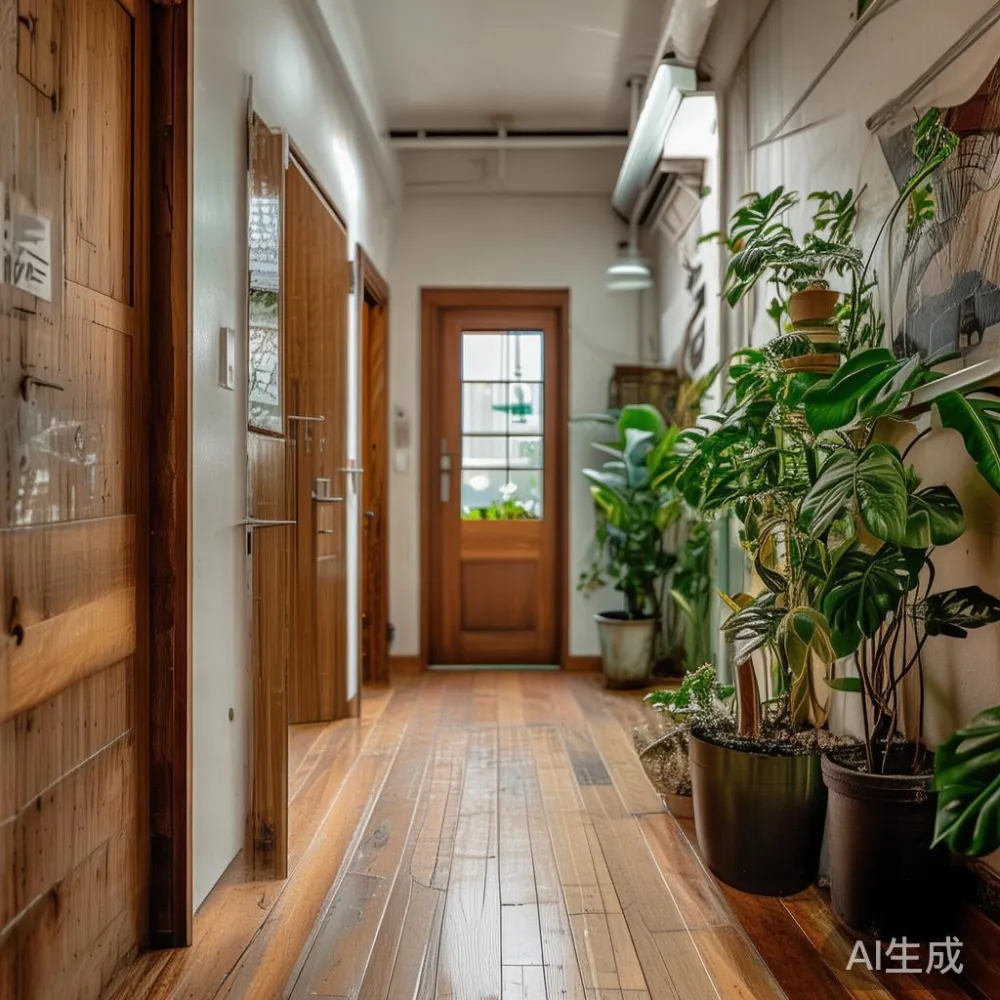
I still remember the Tuesday I spent in a Tampines four-room HDB on the 12th floor, watching a client slide open her balcony door for twenty minutes while we measured a 2.4 m reclaimed teak dining table. The hygrometer on her kitchen wall read 82%. By the time my colleague Wong carried the table top up the service lift — 1.2 m wide door, 1.6 m deep car, 2.3 m internal height — the wood had already begun to swell along the end grain. That is the kind of afternoon that explains why a guide like this one exists. If you live between Bedok and Punggol, between Punggol and Bukit Batok, you live inside one of the most challenging indoor climates on earth for solid timber. And you probably also live inside a building with strict measurements: a 1.2 m wide lift door, a 1.5 m to 1.8 m wide corridor, a 90 cm wide staircase turn on older blocks. The furniture you bring up those corridors has to survive both the building and the weather. This guide is written for that exact intersection.
What relative humidity in Singapore actually does to a solid wood bed frame or sofa
Singapore's mean relative humidity sits between 78% and 85% for most of the year, dipping into the mid-60s only during the occasional dry spell in February and the southwest monsoon breaks. Indoor humidity on a ground-floor HDB near the kitchen can climb to 88% during a thunderstorm. A solid wood bed frame made of ash, oak, or walnut absorbs and releases moisture along the grain. When the wood absorbs moisture from a damp room, the cells swell. Across the grain, the movement is roughly 1% for every 4% change in moisture content. On a 2 m wide headboard, that is up to 2 cm of expansion in extreme cases. On a 2.4 m dining table top, the same physics produces cupping, where the edges rise and the centre dips by 3 to 6 mm. I have measured both in client homes. A solid wood sofa with exposed timber arms shows the same behaviour at the joints, where seasonal movement works the glue lines and the mortise-and-tenon connections apart.
This is not a manufacturing defect. It is wood behaving like the biological material it still is, even after kiln drying. Kiln drying brings the boards down to roughly 8% moisture content, which suits a 55% to 65% indoor environment — that is London, Boston, or a Heze factory floor in winter. It does not suit a 24/7 air-conditioned HDB that swings between 50% and 85% every time the compressor cycles. The furniture has to be selected, finished, and installed for the climate it will actually live in, not the climate the timber was dried for.
Which industrial style pieces handle humidity best, and which ones suffer
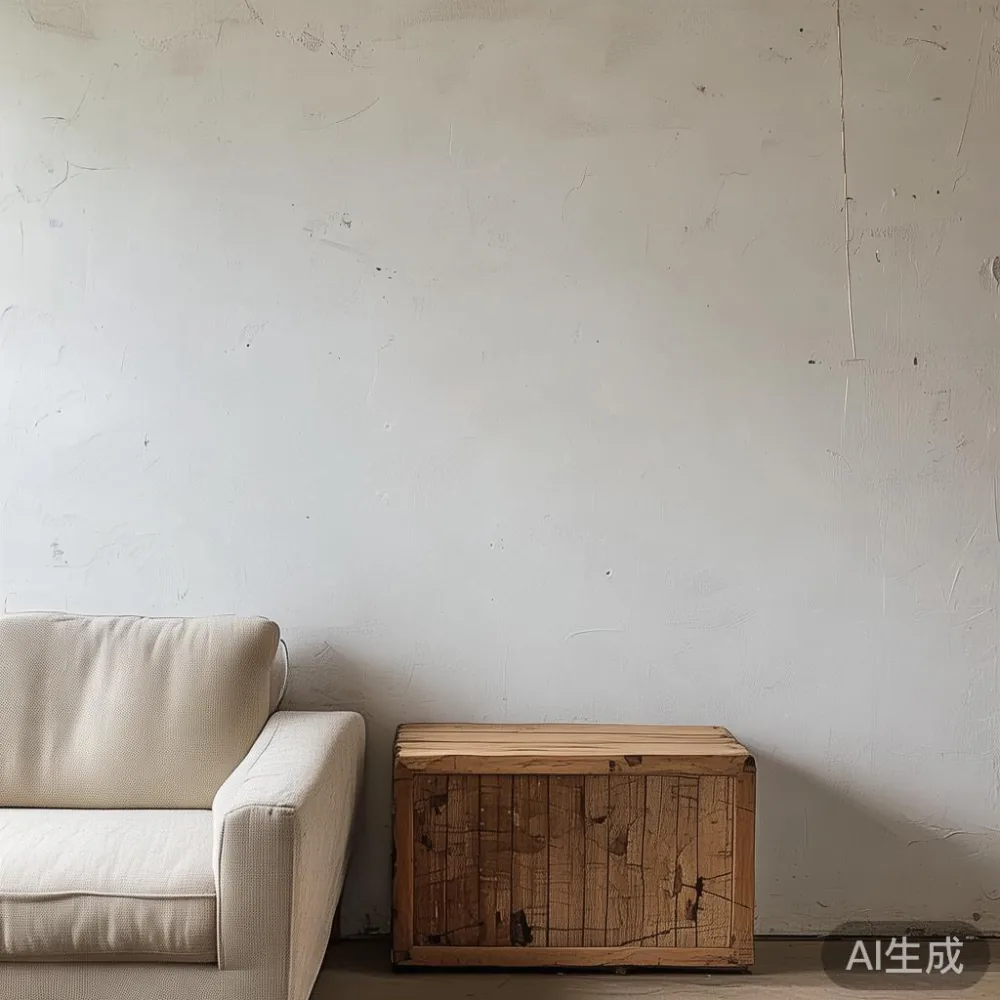
Industrial style solid wood furniture pairs timber with blackened steel, raw iron brackets, and often a marble table or a concrete-look top. The good news is that the style's honesty works in your favour. Visible joinery, exposed bolts, and thick planks are easier to repair than hidden veneers. The bad news is that the style's love of contrast — pale ash against oxidized black brackets, or warm walnut against cold steel — makes any movement, gap, or finish crack visually loud. Here is how each common piece behaves in a HDB corridor, a service lift, and an 85% humidity afternoon.
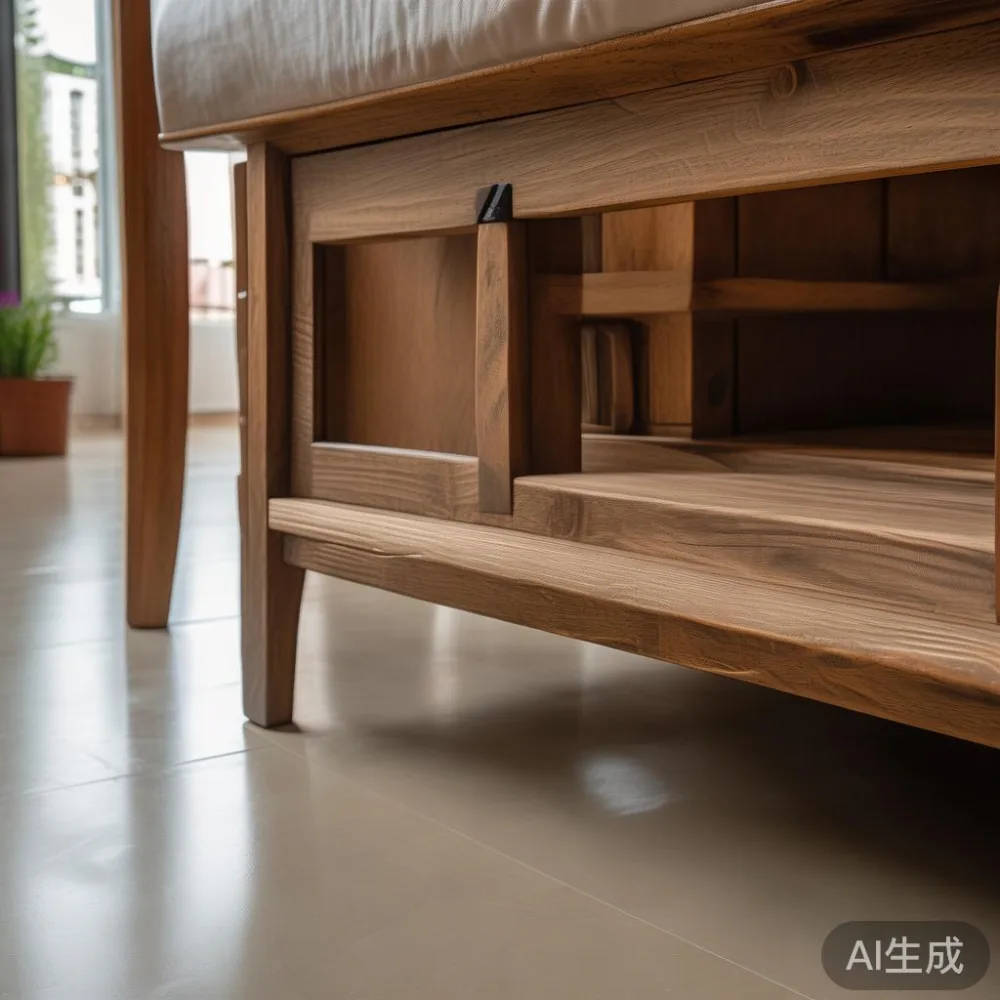
- Solid wood sofa with a 7 cm thick teak base: the base holds up because teak's natural oils resist moisture. The cushions are the weak point. Spec a sofa where the seat platform is a removable solid plank, not a sprung webbing hidden inside upholstery. Removable planks can be dried, refinished, or replaced for a few hundred SGD.
- Bed frame in ash or white oak: ash handles humidity swings better than beech, and white oak's tyloses block moisture transfer better than red oak. Both out-perform rubberwood, which is technically a hardwood but moves noticeably across the grain in Singapore.
- Dining table with a marble table insert: marble is dimensionally stable and does not move with humidity, but the timber surround does. Ask for an expansion gap of at least 4 mm between the marble and the wood skirt, hidden behind a small shadow line.
- Wardrobe with solid panels: panel movement is the classic failure mode. A 220 cm tall wardrobe door can grow 4 to 6 mm taller during the wet season, enough to jam against the top rail. Spec adjustable hinge plates, and leave at least 8 mm of head clearance above the door.
- Nightstand with a drawer: drawer fronts are the canary. If you see a 1 mm to 2 mm gap appear at the top of a drawer front in July and disappear in February, that is normal seasonal movement, not a defect.
- Modular shoe cabinet for bedroom: because it sits against an exterior wall in many HDB flats, a modular shoe cabinet for bedroom must be raised on steel plinth feet at least 8 cm off the floor so the bottom panel never sits in condensate or a wet mop puddle.
How do I style a Japandi accent chair in a small apartment?
A Japandi accent chair pairs clean linen upholstery with a pale ash or light oak frame, and in a 90 sqm Punggol condo it can sit comfortably in a 2.4 m by 2.8 m reading corner next to a blackened steel floor lamp. Keep the wall behind it matte off-white, add one ribbed ceramic planter, and finish with a 120 cm by 180 cm wool rug in oatmeal to anchor the chair without crowding the corridor.
Service lift dimensions, corridor turns, and the real cost of getting a 2.4 m table into your home
Numbers matter here, and so does the order in which you take them. Measure the service lift door first: most Singapore HDB service lifts are 1.2 m wide by 2.1 m tall, with internal car dimensions of roughly 1.6 m deep by 1.4 m wide by 2.3 m tall. A 2.4 m dining table will not fit standing upright if the lift car is only 2.3 m internal. It must tilt. Tilt a 90 kg solid top on a 30 degree angle inside a 1.4 m wide car and you have 10 cm of clearance on each side, which is workable for two delivery crew with furniture dollies but not for a solo courier. Most pieces above 2.2 m in any dimension need to come up in two parts and be assembled in the home, which adds roughly SGD 80 to SGD 150 to the delivery fee on a typical condo move. Some newer condos in Punggol and Sengkang have wider 1.5 m lift doors, which change the math entirely.
Corridors are the second bottleneck. A typical HDB corridor is 1.5 m wide, narrowing to 1.2 m at the lift lobby turn. A 2.4 m table top carried flat needs 2.4 m of straight run, which most corridors do not have. The delivery crew will pivot the top vertically, walk it down the corridor, and tilt it back to horizontal only at the door. Count on three to four trained movers for any single piece over 80 kg. Below 80 kg, two movers can usually manage, but add a third if the staircase is involved. Older walk-ups in Geylang and Balestier rarely have a service lift at all, and a 90 kg dining table top going up three flights is a different conversation entirely. Quote the staircase in advance, not at the door.
Finishes, glues, and joinery that survive a Singapore bedroom
Finish chemistry is where most imported furniture quietly fails. A nitrocellulose lacquer looks beautiful in a Foshan showroom at 60% humidity. In a 85% Tampines afternoon it stays soft, picks up fingerprints, and clouds under a wet glass. Conversion varnish and hardwax oil both perform better. Hardwax oil is the most forgiving: it lets the wood breathe, it spot-repairs with a 30 minute buff and re-coat, and it does not trap moisture under a plastic film. For a light luxury positioning — the French light luxury palette leans toward pale oak and brushed brass, the American light luxury palette toward walnut and blackened steel, and the post-modern light luxury palette toward mixed timbers and curved edges — hardwax oil is the finish that keeps each of those looks intact through the monsoon.
Joinery matters as much as finish. Mortise-and-tenon, dowel, and pocket-screw joints all survive humidity differently. A traditional mortise-and-tenon with a drawbored walnut peg will loosen and tighten seasonally, but it never falls apart. A pocket-screw joint relies on the screw's thread biting into the end grain; in a humid climate the screw corrodes and the joint drifts within 18 to 24 months. Look for stainless steel or hot-dip galvanized fasteners in any industrial style piece with visible black brackets. The black powder coat on a steel bracket should also be specified as a minimum 60 micron coating over hot-dip galvanizing, otherwise the salt air from a balcony door will pit the steel within a year.
Glue lines deserve their own paragraph. PVA (polyvinyl acetate) wood glue softens above 70% relative humidity and re-cures when the climate drops, which means a glued joint in a HDB bedroom quietly works itself loose over 36 to 48 months. Polyurethane glue and resorcinol both tolerate tropical humidity far better. If you are buying a solid wood bed frame or a solid wood sofa with hidden joinery, ask which glue was used. A confident answer is worth more than a glossy brochure.
Acclimatisation, placement, and a 30 day care routine that actually works
Acclimatisation is the single biggest free win in the Singapore furniture game. New solid wood should sit in the room it will live in for at least 14 days before any joinery is fully tightened. Stack the planks with 25 mm spacers between them, run the air-conditioning at 24 degrees for 12 hours a day, and let the wood find its new equilibrium. After 14 days, tighten every bolt on the bed frame, every bracket on the dining table, every hinge on the wardrobe. That single pass extends the service life of the piece by years.
Placement is the second win. Keep solid wood furniture at least 15 cm away from an exterior wall. The 5 cm gap that looks tidy in a catalogue is exactly where condensation forms in a HDB flat during the wet season. Pull the wardrobe out from the wall, pull the modular shoe cabinet for bedroom out from the exterior wall, and let air circulate behind the panels. A 30 cm gap is better than a 5 cm gap, and you can usually reclaim the lost depth with a 30 cm deep wall-mounted shelf above the piece. Avoid placing any solid timber directly under an air-conditioning supply vent. The cold dry air drops the local humidity to 40% in a 30 cm radius, and the wood will check and split along the grain within a single season.
Day-to-day care is short. Wipe spills within five minutes using a dry microfibre cloth, never a wet one. Rotate dining table leaves every two weeks so the same edge does not face the humid balcony door. Run a dehumidifier in the bedroom for four hours during the afternoon peak if you store a wardrobe against an exterior wall. Keep indoor humidity between 55% and 65% with a SGD 40 to SGD 90 thermo-hygrometer from any neighbourhood electronics shop. None of these steps take more than ten minutes a week. Done consistently, they keep a 2.4 m dining table flat, a 220 cm wardrobe door swinging free, and a nightstand drawer front aligned through every monsoon.
What MIDHILL does differently, and why a 10 year structural warranty actually means something in Tampines
Most factories kiln-dry to a European or North American target and ship from a climate-controlled warehouse. MIDHILL runs a 6 stage drying protocol for Southeast Asian shipments, ending with a 21 day conditioning cycle in a humidity chamber set to 78%, which is mid-range for a HDB interior. The factory also specifies stainless steel fasteners, hardwax oil as the standard finish, and 4 mm to 6 mm expansion gaps on every marble table insert. Pieces ship from Foshan to Singapore in 18 to 28 days by sea, clear customs in 3 to 5 working days, and white-glove delivery inside a 30 km radius of the warehouse is free above US$350 (roughly SGD 470). The 10 year structural warranty covers frame integrity, joint failure, and drawer rail warping; the lifetime refinishing service is a return-and-refurbish programme for pieces over five years old, charged at cost. For a Tampines buyer who plans to keep a solid wood bed frame for 15 to 20 years, that combination is more useful than a glossy showroom.
What about pricing, GST, and the real landed cost in SGD?
A solid wood industrial style bed frame in ash or white oak typically lands between SGD 1,400 and SGD 2,800 before GST. A dining table for six in reclaimed teak with a blackened steel base lands between SGD 1,800 and SGD 3,600. A modular wardrobe in solid ash with blackened steel hardware lands between SGD 3,200 and SGD 6,400 depending on width. A solid wood sofa with a removable plank base lands between SGD 2,200 and SGD 4,800. A nightstand in matching timber lands between SGD 380 and SGD 720. A marble table accent piece lands between SGD 900 and SGD 2,200. Add 9% GST on the landed value, plus delivery if your block is outside the free zone. Most Singapore buyers in 2024 to 2026 are budgeting an additional 12% to 18% on top of the sticker price once GST, delivery, and any lift access fees are included. That number is worth knowing before you fall in love with a showroom piece at 9 pm.
Quick reference: dimensions, weights, and tolerances for Singapore homes
Standard HDB service lift internal: 1.4 m wide x 1.6 m deep x 2.3 m tall, door 1.2 m wide x 2.1 m tall. Standard HDB corridor width: 1.5 m, narrowing to 1.2 m at lift lobby turns. Standard bedroom in a four-room HDB: roughly 3.4 m x 3.2 m. Standard condo service lift in newer Punggol and Sengkang developments: 1.5 m wide door, 2.4 m internal height. Safe humidity range for solid wood furniture: 55% to 65%. Maximum tolerated short-term humidity: 80%, provided the piece is acclimatised and the finish is hardwax oil. Maximum seasonal expansion across the grain on a 2 m timber panel: 20 mm. Recommended expansion gap behind a wardrobe: 15 cm to 30 cm. Recommended expansion gap around a marble table insert: 4 mm to 6 mm. Recommended stainless steel fastener grade for tropical coastal use: 316 grade. Recommended dehumidifier capacity for a 12 sqm bedroom: 12 L per day.
Final checklist before you sign the order form
Measure your service lift door, your corridor width at the turn, and your staircase turn radius. Photograph each one. Send the photos to the showroom before you pay the deposit. Confirm the timber species, the kiln-drying target, the glue type, the fastener grade, and the finish chemistry in writing. Confirm the expansion gaps on any marble table insert and on any wardrobe panel over 180 cm tall. Confirm the acclimatisation window in your home, and schedule the final tightening visit for day 14 after delivery. Keep the thermo-hygrometer reading for the first 30 days, and forward the log to the seller if anything drifts above 80%. A well-selected industrial style piece — a solid wood sofa, a bed frame, a dining table, a wardrobe, a nightstand, or a marble table accent — will outlast three HDB leases and two condo renewals if these numbers are respected from the first measurement tape to the last tightened bolt.