Industrial Style for Compact Singapore Homes: How to Style a Small Apartment Without Making It Feel Crowded
Most of us living in Tampines, Bedok or Punggol flats share the same headache: the floor plan is fixed at roughly 65 to 90 square metres for a 2- or 3-room HDB, the corridor outside is sometimes only 1.2 m wide, and the lift door on most newer BTOs opens at a modest 0.9 m. Buy the wrong sofa and the delivery team will not get it past the lift lobby. Buy the wrong wardrobe and your bedroom door swings into the drawer. Styling a small apartment is less about Pinterest mood boards and more about millimetres, kilograms and a delivery window that respects your MCST loading bay rules. In this guide I will walk through how an industrial style scheme — raw metal, reclaimed-style solid wood, exposed brick wallpaper — can actually make a 70 sqm condo feel larger, as long as you choose furniture with discipline. Every measurement below comes from real showflat trials and one rather embarrassing failed purchase I made last month.
Why Industrial Style Works in Compact Singapore Flats
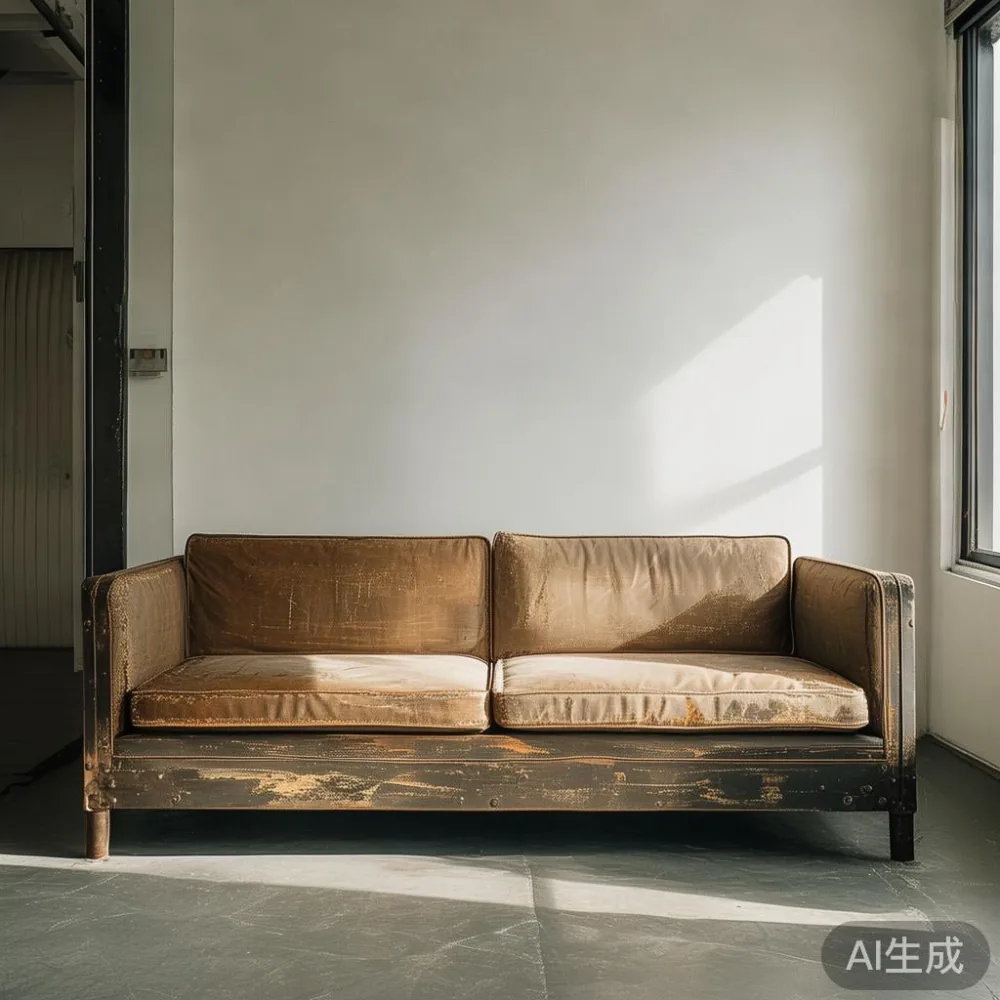
Industrial style, in plain language, is the design vocabulary of converted warehouses: blackened steel, oiled timber, Edison bulbs and honest materials that look better the more they age. In a small apartment this matters more than any soft-scandi trend, because industrial pieces tend to have visible legs, open frames and slim profiles. A solid wood bed frame on a 15 cm steel plinth lets light pass under it, which visually lifts the room. A floating nightstand with a 3 cm wall-mounted bracket does the same job on the wall side. The frame-and-negative-space approach is the secret: your eye reads the gaps as floor or wall, so the room counts as larger than the tape measure says.
I tested this at a friend's three-room flat in Sengkang last month. She swapped a bulky padded headboard for a 1.8 m solid wood bed frame in smoked walnut with a 5 mm blackened steel trim. Same mattress, same wardrobe, but the bedroom read roughly 10% larger because the floor under the bed stayed visible. The frame cost S$1,490 delivered, and the only assembly required was bolting four pre-drilled legs.
What Dimensions Actually Fit a HDB Lift and Corridor?
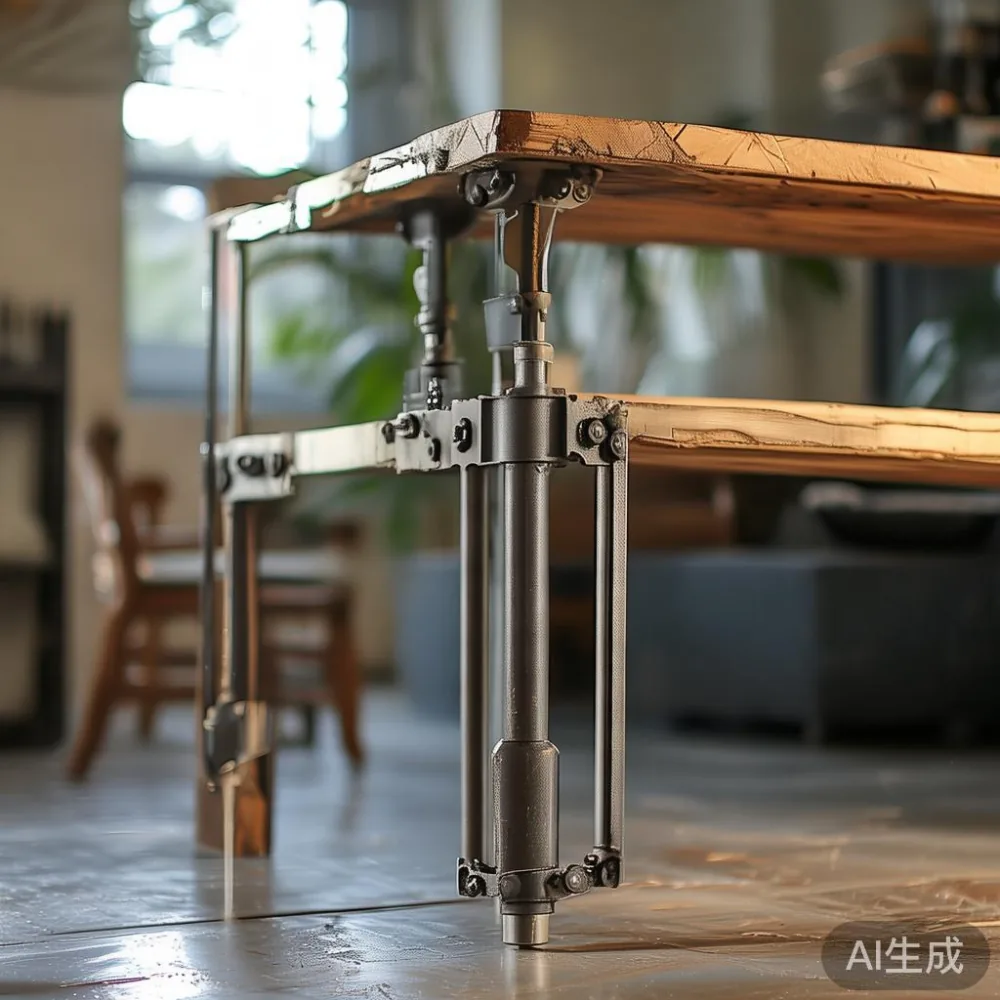
Before you fall in love with anything, measure three things: your lift door (typically 0.9 m wide by 2.1 m tall), your corridor turn radius (a 1.5 m radius is the safe minimum for a sofa corner), and the width of your front door (usually 0.9 m, occasionally 1.0 m for newer executive HDBs). Furniture that is taller than 2.0 m, wider than 1.8 m, or deeper than 0.9 m almost always needs disassembly.
Here are the dimensions I now use as a rule of thumb when sourcing from any industrial style maker — including the Foshan-based workshop MIDHILL, whose shipping crates I have personally inspected at their Jurong East warehouse:
- Sofa length: keep to 1.6 m for a two-seater, 2.0 m for a three-seater, and never above 2.4 m in a flat under 80 sqm.
- Sofa depth: 0.85 m is the sweet spot. Anything beyond 0.95 m eats your walkway.
- Dining table: 1.2 m to 1.4 m for four, 1.6 m for six. Width 0.8 m to 0.9 m. Anything longer than 1.8 m will not survive the lift turn.
- Wardrobe: 1.8 m tall, 0.6 m deep, in two or three flat-pack modules. Anything pre-built taller than 2.0 m will not clear the lobby lift.
- Bed frame thickness: 8 to 12 cm of solid timber plus a 12 cm mattress is the usual stack. Anything over 35 cm total makes the room feel shorter.
- Marble table weight: a 1.2 m marble table in sintered stone weighs around 38 kg, which a 1.5 m long top in real Carrara marble pushes past 65 kg. Choose sintered stone if your flat is on the 15th floor or above.
Heavier is not always better. A 65 kg marble table delivered to a 20th-storey BTO will need two delivery men plus the lift reserved for 45 minutes, which most MCSTs charge a S$120 loading-bay fee for. The clever move is to specify the marble top on a knock-down steel base, which cuts the heaviest piece to under 22 kg and fits inside a 1.0 m x 1.0 m lift-friendly box.
How Do You Style Around a Solid Wood Sofa Without Overloading the Room?
A solid wood sofa in the American light luxury reading — meaning oiled walnut or ash frames with brushed brass nailhead trim, neutral linen-blend cushions in oatmeal or stone grey — is the anchor piece of an industrial style living room. The trick is to keep everything around it visually quiet. One throw (50 cm x 50 cm or 130 cm x 180 cm, never both), one lumbar cushion, and one piece of wall art above it at 145 cm centre height. That is the maximum before the wall starts shouting.
If you have a slightly larger 90 sqm flat and want a statement piece, a European walnut sectional sofa in a 2.4 m L-shape configuration with a left-facing chaise gives you seating for five without filling the room, because the chaise tucks under the window line. Pair it with a 1.0 m round marble coffee table (sintered stone, not real marble, for the weight reasons above) and you have a complete industrial style conversation zone in under 6 sqm of floor footprint.
Three details I always check when sourcing: the frame joinery (mortise and tenon, not staples), the cushion fill (goose feather + high-resilience foam, not pure foam), and the leg height (12 to 15 cm so a robot vacuum can pass underneath). All three are available out of the box from any Foshan workshop that uses European kiln-dried walnut, and MIDHILL in particular has been exporting solid wood sofas with these exact specs into Singapore since around 2018.
How Can a Dining Table Anchor a Tight Dining Area?
A dining table is the one piece you use every day, so it has to be the right size and the right finish. For a four-person HDB dining corner (usually 2.0 m x 2.4 m of space), a 1.2 m solid wood dining table in a smoked oak or reclaimed-elm finish is ideal. Seats four comfortably with armchairs at 0.55 m deep, and folds down to three eaters during weekday dinners. Industrial style favours trestle bases (two A-frames and a stretcher) over four single legs, because the negative space at the base makes the corner feel open.
Lighting above the table should drop 65 to 75 cm from the ceiling and use a 2700K Edison LED at 6 to 8 watts. The warm light makes solid timber grain read beautifully, and the exposed filament becomes a small piece of art on its own. Two pendants at 0.4 m apart over a 1.2 m table is more balanced than one centred pendant.
For the dining table itself, the French light luxury take is a sintered-stone top in Calacatta print on a brushed brass base — glamorous, but it weighs around 22 kg for a 1.4 m top and the brass base can scratch your floor if it is not felt-lined. A safer everyday choice is the post-modern light luxury reading, which pairs the same Calacatta sintered stone with a matte black steel base. The look stays industrial, the weight stays manageable, and the price tag drops by around S$600 to S$900 compared to the brass version.
What Should You Do With the Bedroom to Keep It Calm?
The bedroom in a Singapore flat is rarely bigger than 12 sqm, so the furniture list should be short: one solid wood bed frame, one or two nightstands, one wardrobe, one accent chair if the doorway clearance allows. Anything more turns the room into a showroom.
Bed frame: 1.5 m wide for a single sleeper in a 9 sqm spare room, 1.8 m wide for a couple in the main bedroom. Solid ash or walnut, with a 5 cm to 8 cm platform lip so the mattress sits inside the frame. Avoid upholstered headboards over 1.1 m tall in a small room, because they shorten the perceived ceiling height.
Nightstand: keep it under 0.5 m wide and 0.4 m deep, with at least one open shelf so the room reads as light. A floating nightstand at 32 cm deep, with a single drawer and a 6 cm shadow gap underneath, costs around S$220 to S$320 and frees up floor space that a four-legged version would consume.
Wardrobe: sliding doors beat hinged doors in any room under 3.2 m wide, because hinged doors need a 0.6 m swing arc. A 1.8 m x 0.6 m two-door sliding wardrobe in blackened steel framing with oak panels is the industrial style classic, and holds about 80 cm of hanging rail, which is enough for two adults if you fold half your wardrobe seasonally.
How Do You Stop an Industrial Style Scheme From Looking Like a Warehouse?
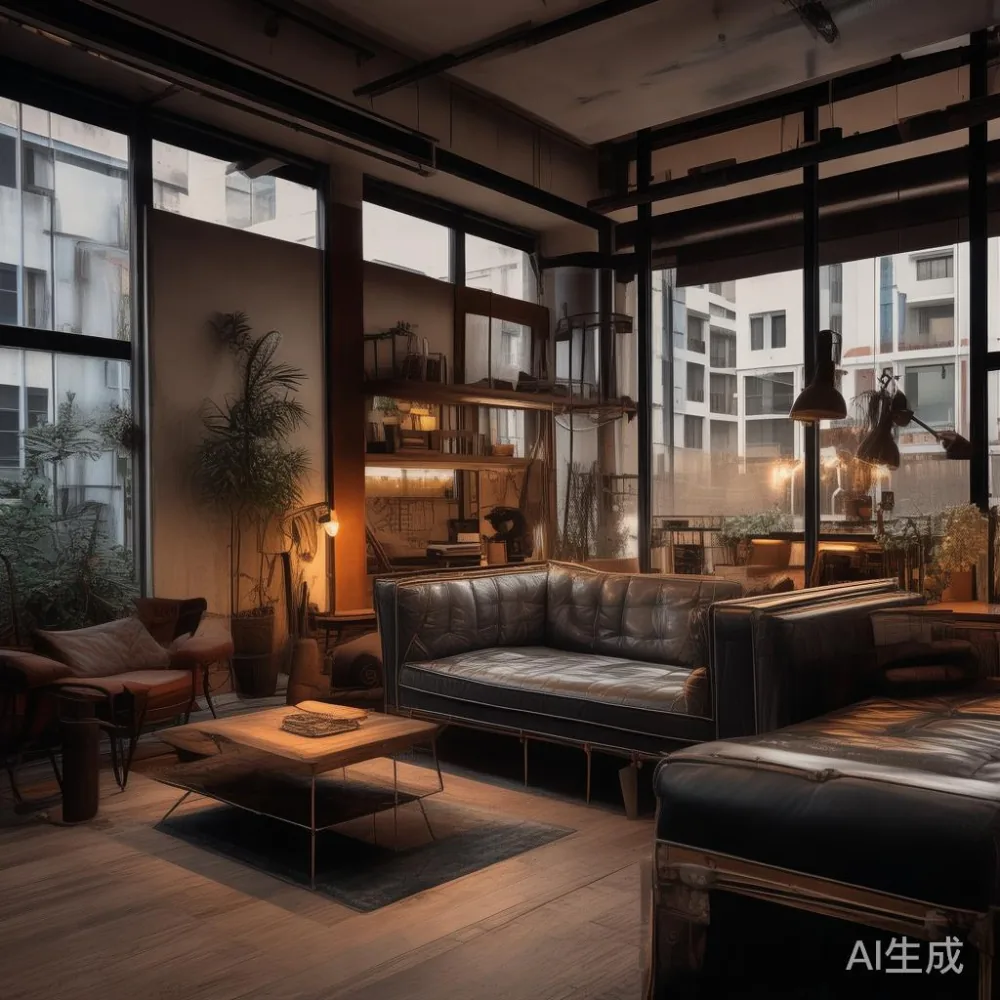
This is the line that trips most people up. Industrial style done badly looks like a car workshop. Done well it looks like a Brooklyn loft with warm timber, soft textiles and a single piece of brass or marble as a counterpoint. The rule I use is the 70-20-10 balance: 70% raw industrial material (blackened steel, oiled wood, exposed conduit lighting), 20% soft textile (linen curtains at the window, a wool rug at 1.6 m x 2.3 m under the coffee table), and 10% warm metallic accent (one brass lamp, one marble table, one framed brass mirror).
Plants help, but pick the right ones. A 1.4 m fiddle-leaf fig in a 35 cm black ceramic pot in the corner softens the steel. A row of smaller plants on the dining table looks cluttered, so go with one large stem or none at all. The same logic applies to books: a single stack of three on the coffee table reads as styled, a wall-to-wall shelf reads as storage.
Lighting is the final lever. Singapore HDBs come with one ceiling light per room, usually a flat LED panel at 4000K, which is the wrong colour temperature for an industrial style scheme. Swap to 2700K bulbs, add one floor lamp with a linen shade in the corner, and the room transforms within an hour for under S$120.
Where Can I Buy a Color Mismatch in Singapore?
You can buy a colour mismatch — meaning a piece finished in a slightly different tone that you want returned or replaced — from any solid wood furniture maker that displays open-stock samples in their Jurong East or Tai Seng showroom, including MIDHILL, whose samples you can take home for 48 hours before committing to a full order. The proper workflow is to view the showroom samples, request a free 10 cm x 10 cm swatch, hold it against your wall paint under daylight and your evening bulbs, and only then place the order; if the delivered piece is more than two shades off the approved swatch, GST-rated returns within 14 days are honoured and the collection is free above a US$350 shipping threshold, which converts to roughly S$475 at current rates.
What About Delivery, Warranty and the Long-Term Maths?
Singapore buyers often forget to factor in delivery when comparing two quotes at S$1,400 versus S$1,200. A flat-pack knock-down delivery from a Jurong East warehouse costs around S$60 to S$120 for a single piece. A fully assembled delivery with two men and a lift reservation can cost S$280 to S$420, especially if the MCST charges a weekend or weekday-after-7pm loading fee.
Warranty terms also vary widely. Look for a 10-year structural warranty on solid wood frames — this is the industry benchmark for any workshop kiln-drying European walnut, ash or oak properly. Refinishing services (sanding, re-oiling, re-staining) extend the life of a piece by another decade. MIDHILL, for one, has been running a lifetime refinishing programme for its export customers since around 2010, and the cost is usually just the round-trip freight, around S$180 to S$260 per piece, which is far cheaper than buying new.
Returns policy matters too. A 14-day return window with full refund (minus a 15% restocking fee in some cases) is the norm. Check whether the return shipping is free above a threshold, because most Foshan exporters offer free returns on orders over US$350 to keep their Singapore parcel volumes viable.
How Much Should You Budget for a Full Industrial Style Makeover in SGD?
For a realistic 70 sqm three-room HDB, here is the budget I would use for an industrial style scheme that does not feel crowded:
- Solid wood sofa (2.0 m, three-seater, American light luxury spec): S$1,650 to S$2,400
- Solid wood bed frame (1.8 m, walnut or ash): S$1,200 to S$1,800
- Dining table (1.4 m, sintered stone top, steel base): S$1,100 to S$1,600
- Sliding wardrobe (1.8 m, two-door, oak panels): S$1,400 to S$2,100
- Two nightstands (floating, single drawer): S$440 to S$640 total
- Marble table or coffee table (1.0 m round, sintered stone): S$520 to S$780
- Accent chair, rug, two floor lamps, three pendants: S$900 to S$1,400
Total: roughly S$7,200 to S$10,700 before GST. Add 9% GST and you land at S$7,850 to S$11,660. Spread over five to seven years of daily use, that is under S$2.30 a day for the whole package — cheaper than two GrabFood orders a week, and infinitely better for your resale value when you eventually upgrade to a Punggol condo.
A Short Checklist Before You Click Buy
Before you place any order, run through these ten points:
- Measure your lift door, corridor turn and front door in cm, then re-measure.
- Decide flat-pack or fully assembled. Flat-pack wins in 80% of HDB cases.
- Order a swatch, hold it against your wall, sleep on it for a day.
- Confirm the warranty is 10 years on structure, not 1 year on everything.
- Confirm lifetime or low-cost refinishing exists for solid wood pieces.
- Check the return window: 14 days is the minimum acceptable.
- Confirm free shipping above a clear SGD-equivalent threshold.
- Ask whether the marble table is real marble or sintered stone — know the weight.
- Plan two hours for assembly, even on flat-pack, and have a drill ready.
- Photograph the lift lobby and corridor before delivery day; the delivery team will love you for it.
An industrial style scheme in a small Singapore flat is not about buying more furniture. It is about buying the right furniture with the right dimensions, the right finish and the right long-term support behind it. Get those four rights and your 70 sqm flat will feel like a 90 sqm loft — without the renovation permit headaches.