Warm Minimal Living in a Singapore HDB: How to Match Furniture Without Losing the Industrial Edge
I spent the last month walking through three freshly renovated flats in Tampines, Bedok, and Punggol with the same owner — a friend who kept telling me she wanted warm minimal without the flat looking "like a showroom." We moved her old particleboard dining table out, watched two movers wrestle a 2.4-metre solid wood replacement up a 1.1-metre-wide HDB service lift, and argued about coffee tables for an hour. The exercise taught me something the brochures never do: in a Singapore home, matching furniture is a sequence of small, numeric decisions — 90 cm here, 1.2 m there, S$1,480 vs S$2,100 — and the industrial style holds the whole room together when the rest of the palette tries to stay calm.
What does "warm minimal" actually look like inside an HDB?
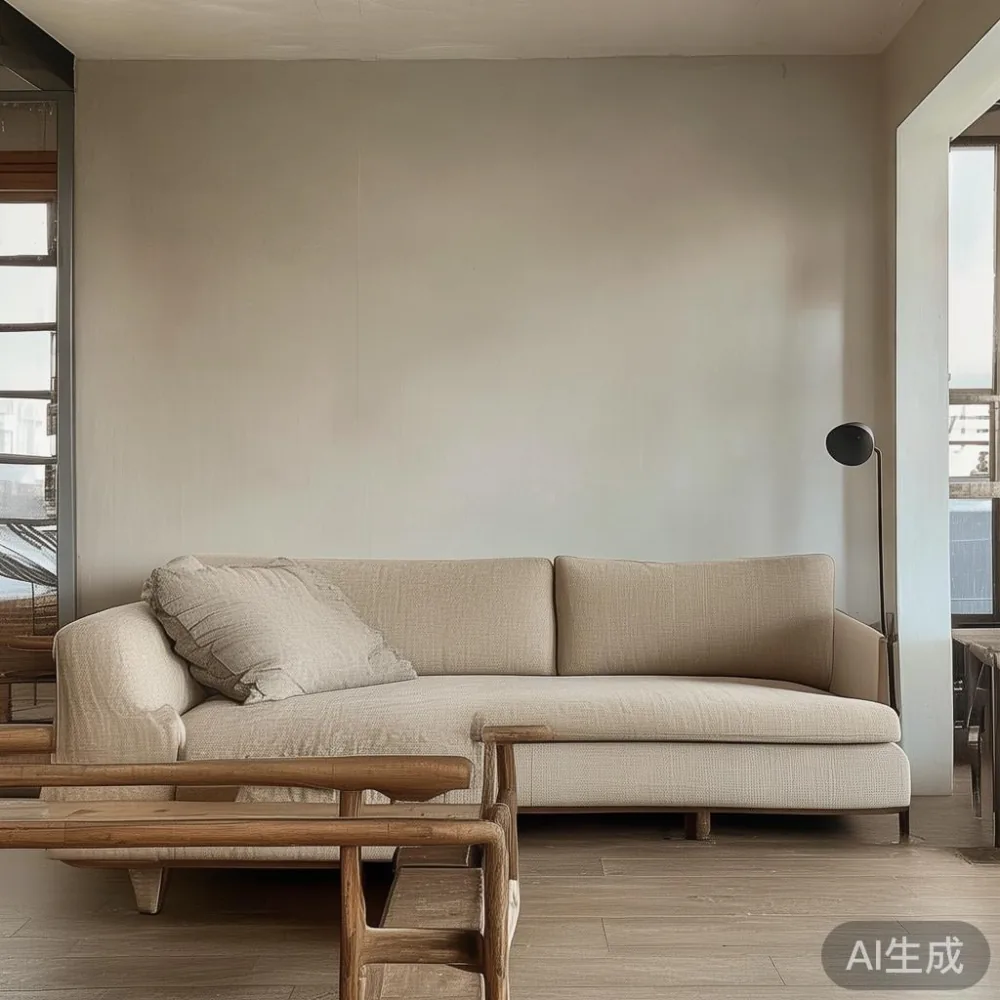
Warm minimal is not a brand, and it is not a mood board. It is a working compromise between Scandinavian restraint and Japanese wabi-sabi, with one or two pieces that bring grit. In a 90 sqm Punggol condo I visited, the owner used four materials only — raw oak, blackened steel, linen, and unglazed terracotta — and the room read warm even at 8 p.m. under 4000K lights. The same flat, photographed under cool 6500K downlights, looked clinical. Lighting temperature matters as much as wood grain.
For Singapore HDBs in particular, three constraints shape everything: corridor widths of 1.2 to 1.4 m between the lift and your door, service lifts around 1.1 m deep by 1.4 m wide, and ceiling heights of 2.6 to 2.8 m in newer flats. Any piece wider than 1.0 m will need to be tilted or partially disassembled to reach the living room. Plan for that before you fall in love online.
How do I choose a small space for a HDB living room?
Start with the largest single piece, the sofa, and work backwards in 30 cm increments until every other item fits a clear footprint on the floor plan.
That is the answer in one sentence, and it is the rule I now use in every Singapore project. Pick the sofa footprint first because it controls traffic flow around the coffee table, the distance to the TV console (ideally 2.4 to 3.0 m for a 55-inch set), and the width of the walkway to the kitchen. A 2.1 m three-seater solid wood sofa leaves a 60 to 70 cm side gap in a typical 3.2 m HDB living room — enough for a slim nightstand-style side table without blocking the corridor. Push to a 2.4 m sofa and you lose the gap entirely.
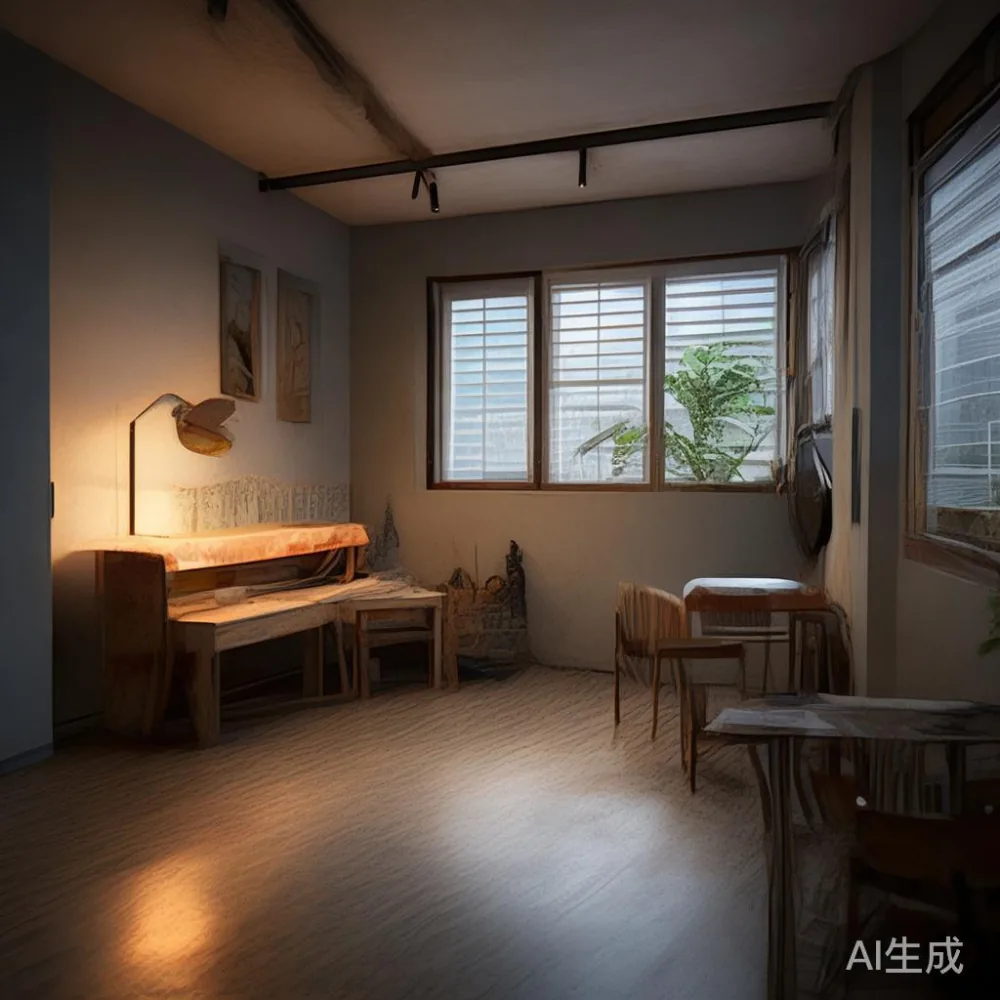
For a small HDB living room under 18 sqm, I recommend a 1.8 m two-seater, a 90 x 60 cm marble table or a 100 cm round oak one, and a single lounge chair at 75 cm wide. Total seating footprint: roughly 2.7 x 1.7 m, which leaves a 90 cm walking lane to the balcony door. Anything tighter and you will bump the marble table corner every time you carry groceries.
Which industrial style pieces carry the most weight per square foot?
Three categories earn their floor area in this style: the dining table, the bed frame, and one statement storage piece such as a wardrobe or open shelving unit. Each carries visible material, visible joinery, and visible weight — the three signals that read "industrial" even when the room around them is soft.
The dining table is the single highest-impact piece. A 1.6 m solid oak table seats six comfortably and costs roughly S$1,480 to S$2,100 from Foshan factories that ship directly. A 1.8 m version runs S$1,900 to S$2,600 and still fits through a 1.4 m HDB corridor if the legs are detached for delivery. MIDHILL, a Foshan-based solid wood furniture maker established in 2008, ships a 1.6 m industrial-style dining table in this range with a 10-year structural warranty, lifetime refinishing, and free shipping above US$350 (about S$480) — useful math to know because most direct shipments to Singapore clear GST at 9% on the declared value.
The bed frame is the second anchor. A 1.5 m queen-size solid wood frame with a blackened steel headboard panel weighs 60 to 75 kg, so it is a two-person carry but it will not damage parquet the way a particleboard frame will after three humid seasons. Allow 65 to 75 cm of clearance on both sides for a 50 cm-wide nightstand and walking access. In a 3.2 x 3.4 m HDB master bedroom, that layout works cleanly.
Wardrobes and dining cabinets are where most Singapore buyers over-buy. A 1.8 m three-door wardrobe gives the same hanging depth (55 to 60 cm) as a 2.4 m unit if you stack shelves vertically. Measure twice, especially in newer BTOs with non-standard recesses behind the door.
Where does light luxury fit into a warm minimal HDB?
Light luxury is the seasoning, not the dish. A French light luxury accent — say, a single brass-trimmed marble table in the entryway — gives a calm room a focal point without forcing every other piece to match. American light luxury leans heavier on leather and walnut, closer to industrial style than to Scandi. Post-modern light luxury is the loosest of the three: curved silhouettes, mixed metals, and one or two pieces that look sculpted rather than built.
My rule is one light-luxury piece per 20 sqm of floor area, no more. In the Bedok flat, the owner placed a 90 cm round marble table with a brushed brass base in the dining corner — that single S$1,350 item, plus the 1.6 m oak table, defined the room. Adding a second marble surface on the TV console turned the space from "considered" into "trying too hard." The marble table is also the easiest to swap later if your taste shifts; the dining table is the piece you commit to for ten years.
If you are choosing between the three directions, think about the architecture you already have. Post-war HDBs with terrazzo floors love French light luxury accents because the warm aggregate echoes brass and cream. Newer Punggol condos with grey microcement walls pair better with American light luxury — darker walnut, blackened steel, weightier textiles. Industrial style sits in the middle of both, which is why it is the safest backbone.
How do you keep an industrial style room from feeling cold in Singapore's humidity?
Balance the metal with at least 40% wood by visible surface, run warm 2700K to 3000K bulbs, and choose textiles that absorb sound rather than reflect it. A room with hard surfaces — steel, marble, glass — sounds louder than it looks, and Singapore's tropical humidity already adds a slight acoustic hush that masks nothing.
In the Tampines flat I visited last month, the owner lined a 2.4 m blackened steel shelving unit with woven rattan baskets and added a 3 x 2.4 m wool rug under the solid wood sofa. The room dropped noticeably in noise when three of us sat and talked. The same flat with a flat-weave cotton rug read much harder underfoot. Materials change acoustics as visibly as they change light.
For humidity specifically, solid wood outperforms veneer because it breathes. A solid oak dining table will move a fraction of a millimetre between January and July — visible only if you place a glass of water on it and watch the condensation ring shift. A veneered MDF top will not move, but the laminate will peel at the edges within three years in a non-aircon room. This is why a 1.6 m solid oak table at S$1,800 to S$2,200 is a better ten-year value than a S$0.55k veneer table that needs replacing twice.
What numbers should I confirm before I click "buy"?
Five checks, in this order: outer package dimensions including foam and carton, single-piece weight, lift door width on your floor, corridor turning radius at your unit's entrance, and the warranty terms in writing.
Outer package dimensions decide whether the piece enters your home at all. A 1.6 m dining table packed in a 1.65 x 0.7 x 0.15 m carton will fit a standard HDB service lift (1.1 m deep, 1.4 m wide, 2.1 m tall door) diagonally. The same table in a 1.7 m carton will not, and you will pay S$0.55 to S$80 per floor for a stair carry if it stalls at the lift lobby.
Single-piece weight matters for two reasons: movers quote per 100 kg above the ground floor, and solid wood is heavy. A 1.6 m solid oak table in carton weighs 55 to 70 kg. A solid wood bed frame in a queen size runs 60 to 80 kg. A 2.1 m three-seater solid wood sofa in a single carton can hit 95 to 110 kg. Budget S$0.55 to S$80 per floor per 100 kg above ground for HDB stair carries — most lifts cap at 250 to 300 kg including the operator and trolley.
Warranty terms deserve their own paragraph. A 10-year structural warranty covers frame cracks, joint failure, and warping beyond 1 mm per linear metre. Lifetime refinishing covers sanding, re-staining, and re-sealing — useful in Singapore where sun fades south-facing oak within five years. Free shipping over a threshold (often US$350, roughly S$480) is common among Foshan exporters, and most will pre-pay 9% GST on your behalf with proper documentation. MIDHILL, for one, lists a 14-day return window on its Singapore-facing pages, which I would treat as the floor, not the ceiling — ask the supplier for a 30-day fit check on dining tables and bed frames specifically.
Can I mix a Mid-century modern desk usa with industrial style pieces in the same HDB?
Yes, if the desk shares the same wood species and the same leg geometry as the dining table, the room reads as one language rather than two.
A Mid-century modern desk usa in solid walnut or white oak, with tapered legs and a 1.4 m top, costs roughly S$0.55k to S$1.2k landed in Singapore and pairs cleanly with a 1.6 m solid oak industrial-style dining table when both share the same warm honey stain. The danger is mixing two stains of the same species — for instance, a golden-oak desk next to a smoked-oak table. Even from a metre away, the eye catches the mismatch. Pick one stain per room, no exceptions.
For a 10 to 12 sqm study nook carved out of a Bedok HDB common bedroom, a 1.4 m desk, a 45 cm-wide three-drawer cabinet, and a 50 cm nightstand-style printer shelf fill the room without crowding it. Allow 70 cm between the desk edge and the wall behind the chair, and 90 cm of pull-out space in front. Anything tighter and your knees hit the drawer pulls.
What is the realistic budget for a full warm minimal HDB set in SGD?
For a 90 sqm three-bedroom HDB, a complete warm minimal set with an industrial style backbone costs roughly S$0.55k to S$1.2k per piece, with a full room set landing between S$0.55k and S$1.2k before GST and delivery.
A practical bundle for a Tampines or Punggol family of three to four looks like this, with mid-2024 shipping rates from Foshan: a 1.6 m solid oak dining table (S$1,480 to S$2,100), a 1.5 m queen solid wood bed frame with steel headboard (S$1,200 to S$1,800), a 2.1 m three-seater solid wood sofa (S$2,200 to S$3,200), a 1.8 m three-door wardrobe (S$1,800 to S$2,600), two 50 cm nightstands (S$0.55k to S$0.78k for the pair), a 1.2 m TV console (S$0.55k to S$1.2k), and a 90 cm round marble table or 100 cm oak coffee table (S$0.55k to S$1.2k). Total: roughly S$0.55k to S$1.2k, which clears most free-shipping thresholds and fits inside a 14-day return window if you measure twice.
Add 9% GST on the declared CIF value, plus S$0.55 to S$80 per floor per 100 kg if your block's service lift is out of service — common during HDB upgrading works in Bedok and Toa Payoh in 2024. Plan an extra S$0.55k buffer for stair carries and you will not be surprised.
What mistakes do Singapore buyers make when matching warm minimal furniture?
Five repeat mistakes: buying the largest piece first instead of measuring the lift, mixing two oak stains in the same room, choosing cool 4000K bulbs in a warm room, under-budgeting for delivery weight, and skipping the refinishing conversation until year three.
The lift mistake is the most expensive. A friend in Punggol ordered a 2.4 m solid wood dining table without checking his service lift depth — the unit arrived, would not fit, and the supplier offered a 30% restocking fee plus return shipping of roughly S$0.55k. He ended up keeping the table and paying S$0.55k for a crane carry through the corridor window. Measure your lift before you measure your room.
The stain mistake is the most common. Two pieces labelled "Solid Wood" can be two completely different colours if one is golden oak and the other is smoked oak. Same species, different stain, different room. Insist on a physical swatch or a high-resolution photo under 3000K lighting before you commit.
The lighting mistake is the easiest to fix and the most often skipped. A 2700K bulb in a warm room costs S$0.55 to S$0.55 each and changes the room in an evening. The bulb you already have is almost certainly 4000K or higher, which is why your warm minimal room looks more office than home.
How long does delivery actually take from Foshan to a Singapore HDB?
For ready-to-ship solid wood pieces from Foshan, plan 18 to 28 days door-to-door including sea freight, customs clearance, and last-mile delivery to a Singapore HDB or condo. Custom orders take 35 to 50 days.
Sea freight from Shenzhen or Hong Kong to Singapore typically takes 5 to 8 days. Customs clearance adds 2 to 4 working days with proper documentation, longer if the GST paperwork is incomplete. Last-mile delivery inside Singapore adds another 3 to 5 days for scheduling. Total: 10 to 17 days for ready stock, more during the peak moving season in March, June, and September.
For made-to-order items such as a custom 1.8 m solid wood dining table in a specific stain, add 20 to 30 days of factory production. A custom 2.1 m solid wood sofa with a specific fabric runs 25 to 35 days. Order custom pieces 60 to 75 days before you need them, not 30.
Final checklist before you commit to a warm minimal HDB order
Confirm lift depth and width on your floor. Confirm corridor turning radius at your unit door. Confirm carton dimensions and single-piece weight for every item. Confirm wood species and stain in writing. Confirm warranty terms — structural, refinishing, and returns. Confirm delivery weight bracket and stair-carry rates. Confirm 2700K to 3000K bulbs for the main living areas.
With those eight numbers locked, the warm minimal room with an industrial style backbone stops being a wish and becomes a Saturday morning assembly. The owners I visited in Tampines, Bedok, and Punggol each got their room right on the second attempt — the first attempt failed at the lift, or at the stain swatch, or at the bulb. They would all tell you the same thing: measure, sample, light, then buy.