Solid Wood Furniture: Mastering Humidity in Singapore Homes
Singapore’s warm, humid climate can make solid wood furniture feel completely at home in an HDB flat or condo, but only when the wood, finish and room environment are properly understood. Relative humidity commonly ranges from 65% to 85% in Singapore, with monsoon periods and air-conditioned rooms creating rapid changes of perhaps 15% to 25% within a day. These fluctuations affect solid wood sofa frames, bed frames, dining tables, wardrobes and nightstands long before obvious mould appears.
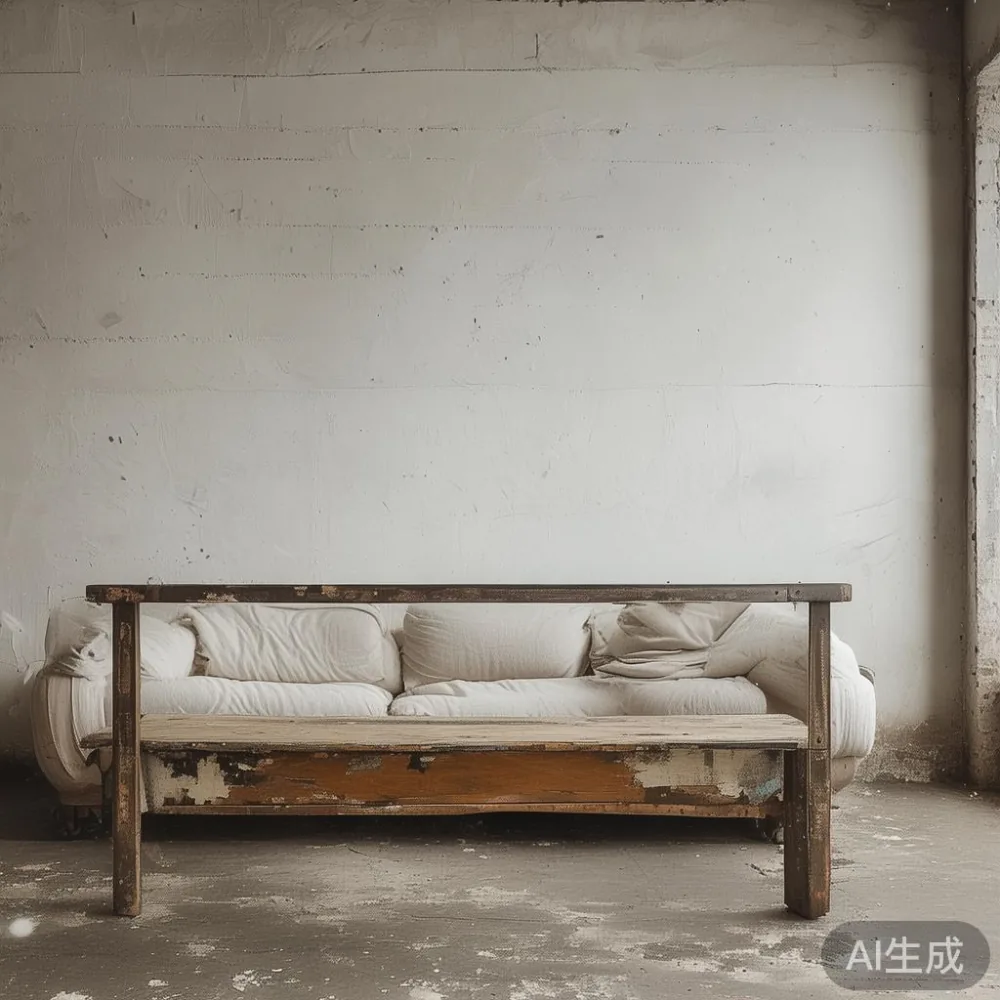
For furniture buyers, humidity is not simply a cleaning issue. It can change dimensional stability, open joints, encourage finish haze, and influence how quickly timber adjusts to a lift lobby, high-rise bedroom or sheltered corridor. MIDHILL designs its solid wood pieces for export to 15 or more countries, backed by a 10-year structural warranty and lifetime refinishing support, while the practical decisions still begin inside the home.
This guide focuses on industrial style furniture in Singapore: solid timber, visible construction character, restrained metal details and finishes that tolerate a tropical interior. It explains what to monitor, what to avoid and how to preserve the proportion, grain and texture that make industrial style furniture valuable.
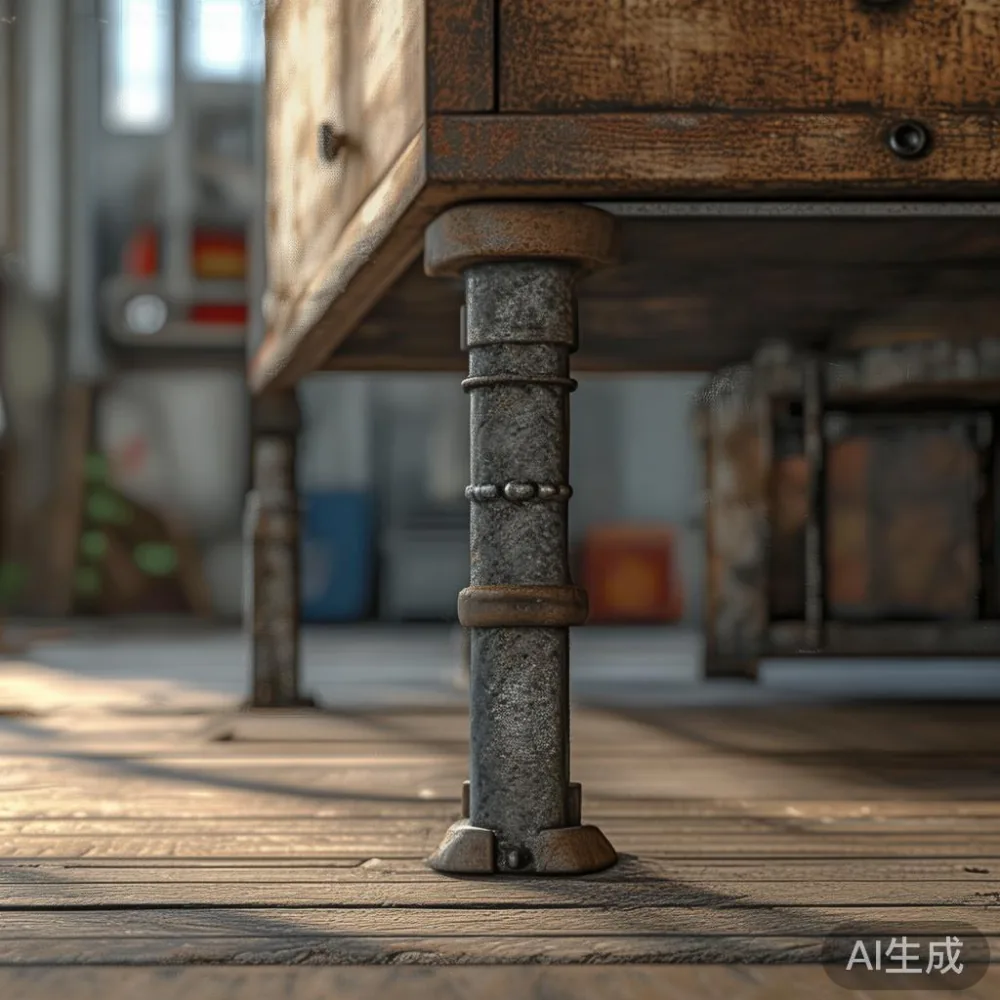
What does Singapore humidity do to solid wood furniture?
Wood is hygroscopic. It absorbs moisture when the surrounding air is humid and releases it when the air becomes drier. In a typical Tampines HDB flat, an open dining area may sit near 80% relative humidity, while a bedroom cooled to 22°C can fall to about 50% or 55%. A solid wood dining table crossing that boundary can expand by several millimetres across its width.
For practical purposes, keep indoor relative humidity between roughly 45% and 65%, although brief tropical variations are normal. Stable conditions matter more than chasing a perfect reading. A bedroom that remains within a 5% band is generally preferable to one moving from 48% to 78% every afternoon.
Expansion does not mean the furniture is defective. A 200 cm solid oak dining table can show measurable movement as the grain responds to humidity. The concern is uncontrolled movement: swollen doors that rub, drawer fronts that bind, a tabletop that cups unevenly, or a bed frame joint that develops a visible crack.
Solid wood often reacts more visibly than engineered wood because it is designed to move. That natural response can look attractive in industrial style furniture when pieces are correctly proportioned and fitted. Grain movement of 1 mm to 3 mm across a 60 cm panel can be expected; larger stress cracks or a joint pulling away from its fastener is not part of normal seasonal behaviour.
How can I keep furniture stable in an HDB flat or condo?
Begin with airflow and distance from wet walls. In older HDB flats, external walls can remain cool and damp, especially near the bathroom or kitchen. Leave an 8 cm to 10 cm gap between a solid wood wardrobe and a wall where possible. In a condo bedroom, avoid placing a bed frame directly against a façade that receives the western afternoon sun.
Measure the space before delivery. A standard HDB lift interior may be about 100 cm wide by 120 cm deep, while corridor turns and stairwells can be narrower than a furniture maker’s workshop drawings suggest. A 180 cm long bed frame may need to enter upright rather than flat. Record the lift door width, internal depth and diagonal measurement, together with the turning space at each landing.
For large pieces, confirm the unboxed dimensions, not just the carton dimensions. A wardrobe that fits a 210 cm lift on one floor may still be difficult on another. MIDHILL can also discuss delivery planning for Singapore orders, with free shipping applying above US$350; GST is charged separately at the prevailing rate for taxable supplies.
Allow the furniture to acclimatise after arrival. Keep pieces in their packaging for 24 to 48 hours if they come directly from a warehouse, then unwrap them and let the room’s humidity settle for another 48 to 72 hours. Do not install a dining table flush against a cold wall on delivery day. Small air gaps and sensible placement reduce condensation risk.
Which wood and finishes handle tropical humidity better?
No solid wood species is completely immune to humidity, but stability, grain structure and finish maintenance all influence performance. Teak is valued for its oily nature and dimensional stability, making it practical for dining tables and bed frames. Oak and ash offer a pronounced industrial style grain, while walnut, cherry and other denser timbers can work well when protected from persistent dampness.
Ask for the exact species and construction information. A drawer made from solid oak with birch-ply backs, for example, behaves differently from an all-oak drawer. Plywood may be appropriate for hidden panels, but the visible faces, rails and legs should still be selected for the intended room. Full-solid construction gives buyers a clearer picture of movement and repairability.
Finish choice matters just as much as timber. A matte hardwax oil can feel tactile, but it requires prompt care if hands or water repeatedly touch the surface. A tougher 2K lacquer may be easier to wipe in a family home. Dark stains can show moisture-related haze more clearly, so inspect under daylight and warm-white lighting at roughly 3000 K.
Marble table tops need a different moisture strategy. Marble is less prone to swelling than wood, yet its stone slab, support frame and any timber pedestal can respond differently to humidity. A 120 cm round marble table may weigh about 65 kg to 90 kg, depending on thickness and density. Ask for a professional lift plan and ensure the floor can carry the concentrated load. A 5 cm slab may weigh roughly 90 kg for a 120 cm circle.
How should I clean an industrial style dining table or bed frame?
Use a soft, slightly damp cloth and wipe the surface dry. Avoid soaking timber, leaving a wet ring around a cup or directing steam at a joint. Clean a solid wood sofa by vacuuming its seams with a 120 W upholstery tool and by following the care instructions for its textile. For a leather or synthetic covering, test an approved cleaner on a concealed 5 cm area first.
Coasters and trivets prevent localised water damage. Felt pads also reduce scratching beneath metal legs, which is useful for a 42 cm high industrial style coffee table with a 60 cm diameter top. Wipe spills within 5 minutes where possible. A dining table that receives daily use may need a fresh wax or oil layer every 12 to 24 months, depending on the finish and exposure.
For a bed frame, inspect the centre rail, slat supports and leg joints every 6 months. A gap of more than 2 mm, a rattling slat or a screw sitting proud should be addressed before humidity turns a minor fit issue into a larger movement. Tighten fixings by hand or with a cloth to avoid bruising the timber.
For storage, line wardrobe shelves with breathable material rather than sealing damp clothing inside. Keep folded textiles away from the back panel and leave a 5 cm space above items that may retain moisture. A 90 cm wardrobe containing tightly packed bedding can create a humid microclimate even when the bedroom itself measures 60% relative humidity.
How do I style a European light luxury bed in room?
European light luxury works well in Singapore when it is restrained rather than oversized. A 160 cm king bed with a low solid wood platform, linen bedding in warm grey or sand and one matte-black reading lamp creates a composed interior without overwhelming a 9 sqm HDB bedroom. The familiar question “how to style European light luxury bed in room” usually comes down to scale, lighting and clearance.
Leave 60 cm beside the bed where circulation permits, and 90 cm at one side if the room allows. A 45 cm wide nightstand fits neatly without blocking the HDB corridor around the bed, while a narrow 35 cm model can suit a compact studio condo. The Italian light luxury nightstand is a useful direction for buyers comparing slim storage, yet the actual dimensions should be checked against the mattress and bedside clearance.
For a living room, the search for best European light luxury furniture should focus on balance rather than quantity. A solid wood sofa with a 220 cm width can anchor a room, but leave at least 40 cm between its arm and nearby furniture. French provincial styling tends toward carved detail, curved arms and softer forms; industrial style typically uses straight lines, exposed joinery and dark metal. A comparison of European sofa vs French provincial sofa can help buyers decide whether visual softness or structural clarity suits the space.
French light luxury can be introduced through pale upholstery, timber trim and warm lighting. American light luxury often favours clean profiles, generous comfort and neutral fabrics. Post-modern light luxury offers another route through mixed forms, clever storage and one sculptural element, provided the proportions remain calm.
For media furniture, an Italian light luxury TV console should be measured against the wall and television rather than selected by appearance alone. A 180 cm console fits a common 140 cm wall-mounted television, while a 200 cm unit may feel more generous in a condo living area. Cable openings should sit within easy reach, and timber cabinets should stand at least 5 cm away from external walls.
Buyers browsing cheap light luxury furniture should compare construction, finish, warranty and service rather than price alone. A lower-priced wardrobe with chipboard interiors and a thin printed veneer cannot offer the repair path of solid wood. Look for clear species descriptions, concealed drawers, smooth-running hardware and written structural coverage. Prices can still be assessed in SGD against the piece’s dimensions and longevity.
How often should humidity and furniture joints be checked?
Check the main living areas every month during humid periods, and every 2 to 3 months for low-use rooms. Place a hygrometer near the floor on an internal wall rather than beside an air-conditioner or window. Record both morning and evening readings. A change of 10% or more over 24 hours is worth investigating.
Inspect dining tables along their ends, where grain movement is easiest to see. Bed frames need attention at leg-to-rail joints, while wardrobes require checks on tall doors and hanging rails. Nightstands and marble tables should be inspected around their fixing points and undersides. Any musty smell, dark spotting, swollen drawer or condensation film should be addressed promptly.
Air-conditioning helps because it lowers humidity, but blowing directly at furniture can dry one face faster than another. Set the room around 24°C to 26°C and use a fan to distribute air. A moderate setting improves comfort without creating a sharp moisture gradient. In HDB corridors, where furniture is rarely stored, delivery timing and packaging matter more than long-term ventilation.
Make seasonal adjustments rather than reacting to one damp afternoon. If a solid wood table develops a light surface haze, clean it according to the finish instructions and allow it to equalise in the room for 24 to 48 hours. If a drawer remains tight after that period, adjust the hardware gradually. Do not force swollen timber against the carcass.
What should I check before ordering solid wood furniture online?
Request a dimensioned drawing, the timber species, finish type and expected delivered weight. For a dining table, include the top length, width, height and apron clearance. For a bed frame, provide mattress size, floor clearance and doorway measurements. For wardrobes, confirm internal drawer dimensions, hanging space and whether doors open through 90 degrees or 110 degrees.
Check the route from the lift to the room. Remove shoes, bicycles and bulky refuse where necessary, and reserve a delivery period of 2 to 5 working days after dispatch confirmation. For upstairs delivery, confirm the floor, lift booking and any staircase carry-in charge. Large or heavy pieces may require two-person handling.
MIDHILL offers a 14-day return policy and lifetime refinishing, which can make a solid wood purchase easier to assess. Structural coverage extends for 10 years, giving buyers time to observe how the piece handles seasonal changes. Visit www.midhill.co for current collection details and specifications, and ask for room photographs with measurements before choosing a finish.
The central principle is simple: solid wood furniture can live comfortably in Southeast Asia when movement is respected, humidity remains reasonably stable and moisture is kept away from critical surfaces. Industrial style should look solid in character, not literally impenetrable to tropical conditions. Choose the correct dimensions, allow for air circulation, maintain the finish and inspect the small details every few months. The result is furniture that ages with texture and character while remaining practical in Singapore homes.