How to Match Industrial Style Solid Wood Furniture to a Warm Minimal Interior in a Singapore HDB
I still remember standing inside a 980 sq ft Punggol BTO last month with my colleague, a colour consultant who had just flown back from Taipei. She pointed at the cream-toned walls, the wide-plank vinyl flooring in a honeyed oak shade, and the long corridor of LED strips the owner had already installed, then said something that stuck with me: "Warm minimal is not a style, it is a temperature. The furniture either cools the room down or warms it up — there is no neutral middle." That sentence is the spine of this guide. If you are decorating a four-room HDB in Tampines, a five-room flat in Bedok, or a 1,200 sq ft condo in Punggol with lift access that allows furniture up to 200 cm tall, you can absolutely pair an industrial style solid wood sofa, bed frame, and dining table with a soft, warm interior — as long as the weights, finishes, and textures are chosen on purpose.
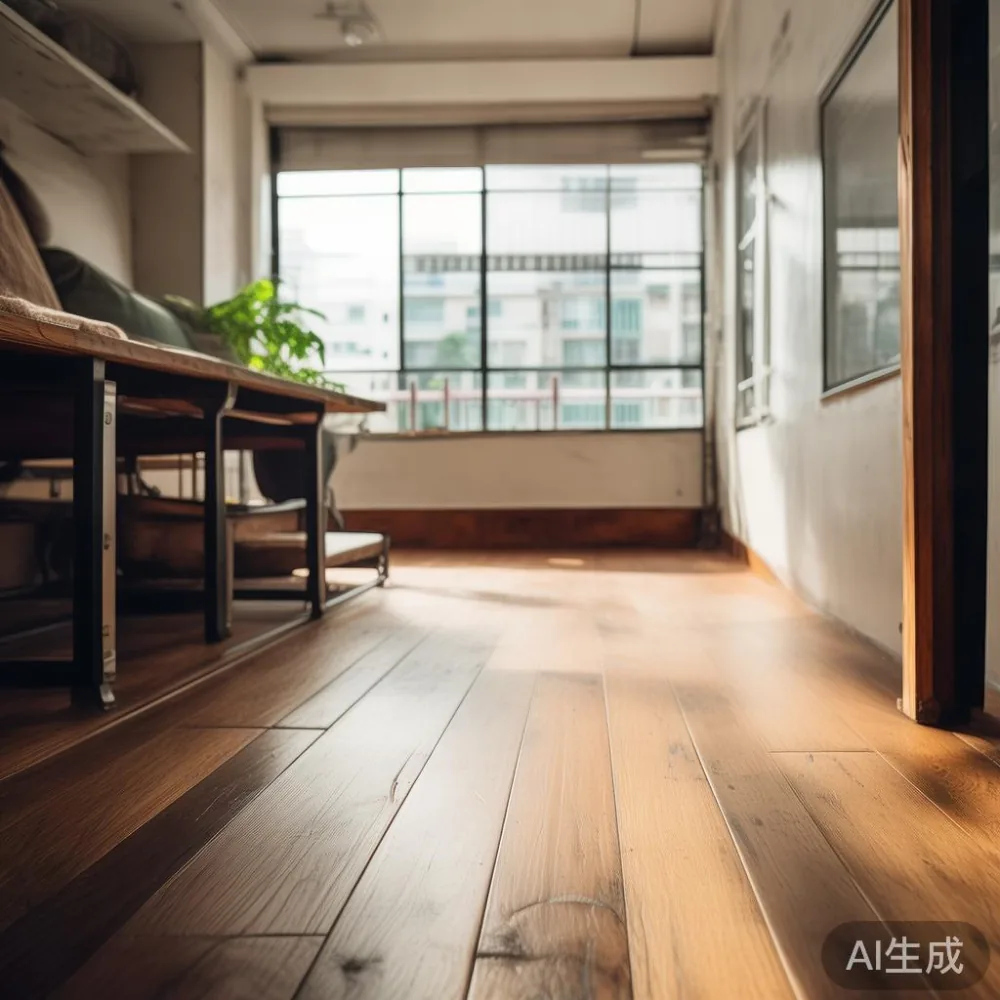
What "warm minimal" actually looks like in a 90 sq m Singapore home
Warm minimal is the local cousin of the Scandinavian hygge mood, adjusted for our humidity and the way HDB corridors swallow natural light. Picture walls in warm white (Nippon Paint Timeless Beige 1135Y or equivalent, around SGD 75 per 5 L tin), a flooring in a mid-tone oak or ash, and very few decorative objects on display. Plants are allowed — bird's-nest ferns, fiddle-leaf figs under 1.6 m so they do not block corridor sightlines. The palette sits between beige (RAL 1001) and a soft clay (RAL 050 50 20), with metal accents kept to a brushed brass or matte black rather than chrome.
Furniture should feel substantial but not heavy. A solid wood dining table in walnut or white oak, a low-profile bed frame with a fabric headboard, a marble table in the entry, a slim wardrobe with fluted glass panels, and a nightstand with rounded corners — that is the typical shopping list. In local context, the most common mistake I see is buying everything in the same wood tone. A flat in Punggol we visited recently had an oak dining table, oak bed frame, oak nightstand, and oak wardrobe, all within one degree of colour. The room felt flat, not warm. Warm minimal needs contrast: a darker walnut piece next to a lighter oak piece, or an industrial style metal-and-wood coffee table against a creamy boucle sofa.
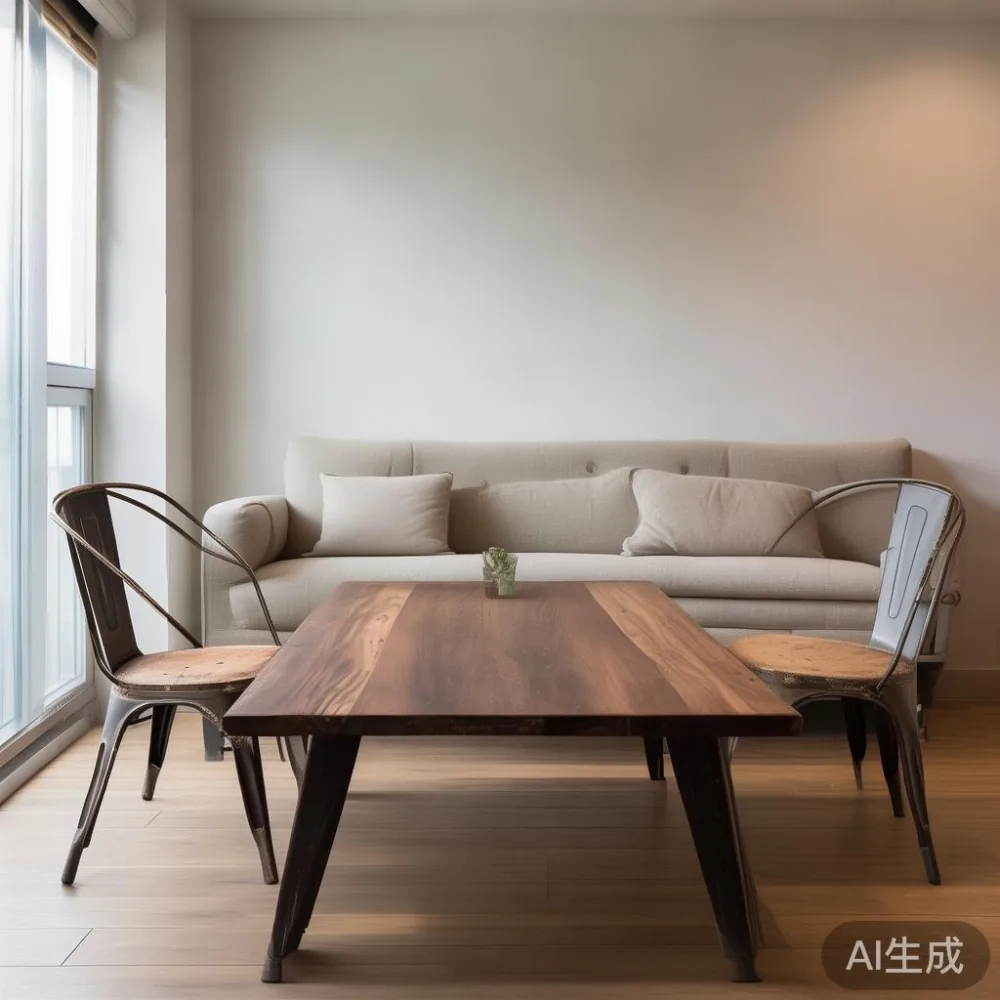
Why industrial style solid wood furniture fits warm minimal in HDBs
Industrial style gets a bad reputation in tropical homes because people imagine cold concrete, exposed pipes, and black steel — the loft look that does not survive our 32 °C afternoons. That is only one branch. The branch that suits warm minimal is the workshop branch: reclaimed-look solid wood, blackened steel legs, visible joinery, no glossy finishes. A solid wood sofa frame in ash with a matte black sled base, an industrial style dining table on a cast-iron pedestal, a wardrobe with riveted metal handles — these pieces add the warm minimal interior needs: texture, weight, and a sense of something made rather than something flat-packed.
For a typical Singapore HDB living room of about 18 sq m, a 220 cm three-seater industrial style sofa with solid ash wood arms and a kiln-dried oak base will leave around 70 cm of walking clearance on each side, which is the minimum comfortable path for two people passing each other. Lift openings in most HDB blocks measure 0.9 m wide by 2.1 m tall, and a king-size bed frame at 180 × 200 cm arrives in a flat-pack box no taller than 35 cm, so access is rarely the bottleneck. The bottleneck is always proportion.
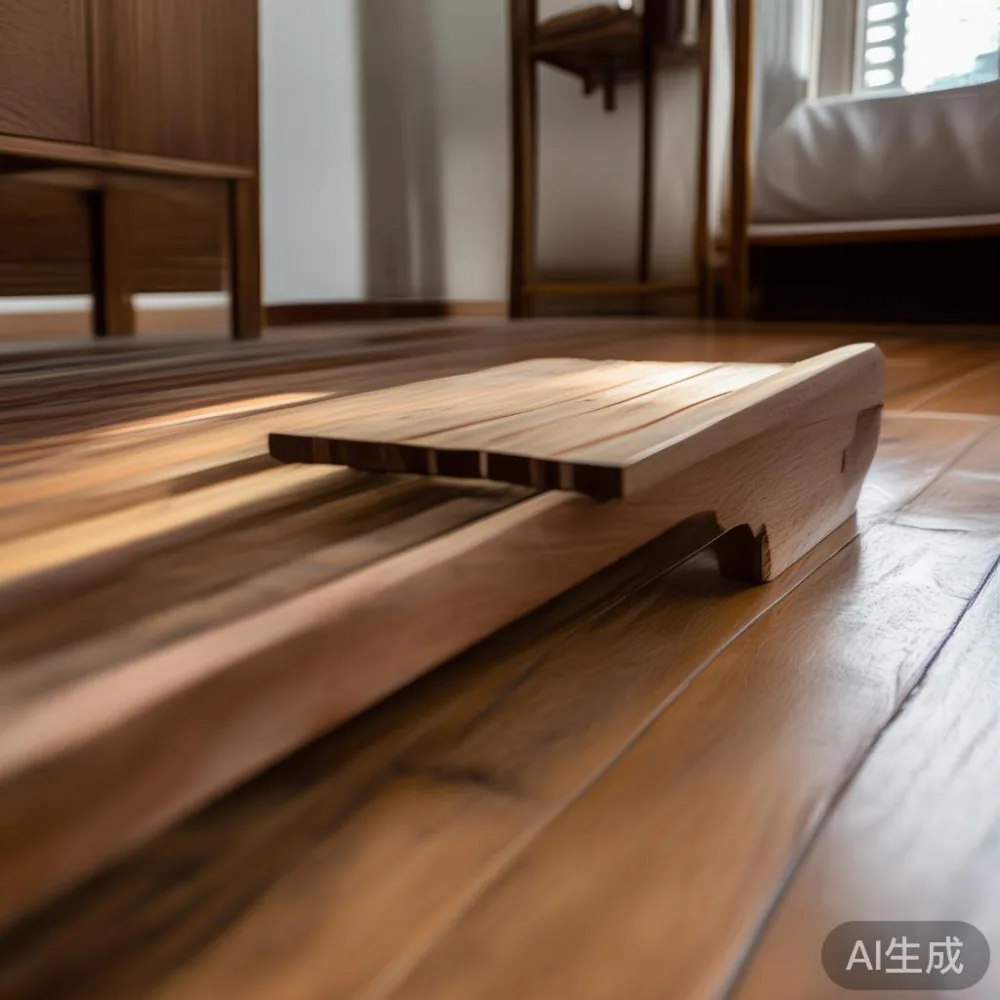
How to choose solid wood pieces that warm a room up instead of cooling it down
Wood species sets the temperature. In our humid 80 %-plus afternoons, oak (around SGD 280 per solid wood dining chair), ash, and beech stay visually warm. Walnut pushes deeper into cocoa and pairs beautifully with boucle or linen upholstery in oatmeal. Teak is a classic Singapore choice but reads slightly orange under our warm-white LEDs; if you go teak, drop the colour temperature to 2,700 K rather than 3,000 K. Mango wood and acacia are budget-friendly and sit between oak and walnut on the warmth scale, around 15 to 25 percent cheaper than imported oak at current Singapore prices.
Finishes matter as much as species. A matte hardwax oil (Osmo Polyx-Oil, about SGD 38 for 750 ml) keeps the grain visible and avoids the plastic sheen of PU lacquer. Avoid high-gloss finishes on anything bigger than a nightstand — they bounce the LED strip light across the ceiling and read as cool, not warm. For upholstery, performance linen with a Martindale rating above 30,000 rubs handles our daily use and still looks relaxed after 18 months. Genuine top-grain leather on a solid wood sofa in cognac adds about SGD 600 to the price compared to fabric, but the patina after three to five years is what gives a warm minimal room its lived-in honesty.
What about a marble table — does it belong in a warm minimal HDB?
Yes, but only one marble piece per room. A marble table in the dining area, a small marble side table by the sofa, or a marble-topped nightstand is enough. Pick a warm veined stone — Crema Marfil, Emperador Light, or a beige Carrara — rather than the cool Statuario that fights against beige walls. A 120 cm round marble dining table seats four comfortably and fits most four-room HDB dining nooks; expect a solid marble top to weigh between 70 and 95 kg, so ask your supplier about two-person delivery charges (usually SGD 40 to SGD 80 per floor in Singapore without lift access on the destination floor).
Marble needs sealing every 12 to 18 months in our climate — a penetrating sealer such as Tenax Proseal costs about SGD 45 per litre and covers a 120 cm round top twice. Wipe spills within ten minutes, especially lemon juice, red wine, and soy sauce, or you will be calling a restoration specialist. For households with small children, a sintered stone top (Dekton or Neolith, 12 mm thick) is now widely available in warm beige tones and costs roughly SGD 200 to SGD 300 more than the same marble table, with zero sealing needed.
Which fabric and metal pairings work best with industrial style solid wood?
Industrial style solid wood furniture lives or dies by its metal. Brushed brass warms a room up but requires wiping every fortnight to avoid the green patina our humidity encourages. Matte black powder-coated steel (around 40 microns of coating) reads warmer than chrome because the surface absorbs light instead of bouncing it. Stainless steel in a brushed finish is the easy-care compromise, though it sits closer to cool than warm. For a Bedok five-room flat that opens onto a balcony with afternoon sun, brushed brass can oxidise quickly; matte black is the safer daily choice.
For fabrics, anchor the room with one heavy texture and one light texture. A boucle or chenille solid wood sofa (around 35,000 to 50,000 Martindale) plus linen curtains, plus a flat-weave wool rug in a 200 × 300 cm size, gives the layered weight warm minimal needs. The MIDHILL coffee table I keep recommending to clients — a 120 × 60 cm solid ash top on a blackened steel cradle base, around 18 kg — sits well under such a sofa because the wood tone matches ash frames and the base disappears into the rug.
How do I plan the layout so the industrial pieces do not dominate the warm minimal mood?
Follow the 60-30-10 rule. 60 percent of the room in your main warm tone (walls, large rug, main curtains), 30 percent in a secondary tone (sofa fabric, bed headboard, dining chairs), and 10 percent in your accent (blackened steel hardware, an oil-rubbed pendant lamp, a single piece of wall art). A common Singapore mistake is pushing the 10 percent up to 25 percent by adding black TV consoles, black dining legs, black wardrobe handles, and black window frames all at once. The room then tips from warm minimal into cold industrial.
For a typical Tampines four-room HDB living-dining of 22 sq m, a workable layout places a 220 cm solid wood sofa against the longest wall, a 120 × 60 cm coffee table at 40 cm from the sofa, a 150 × 80 cm dining table for four against the window wall, and a 180 × 200 cm bed frame in the master bedroom with a 50 cm nightstand on each side. Leave at least 80 cm between the bed frame and the wardrobe doors, and at least 70 cm between the dining table and any wall for chair pull-out. GST at 9 percent is added at checkout by every furniture retailer in Singapore, including MIDHILL, so plan for that in your budget.
What is the difference between French light luxury and American light luxury for a warm minimal HDB?
French light luxury (sometimes called French modern light luxury) leans into curved silhouettes, cabriole-inspired legs softened into contemporary shapes, tapered upholstery, and pale oak or ash with brushed brass details. Picture a low-slung solid wood sofa with rounded arms, a slim dining table with a gently curved apron, and a bed frame with an upholstered headboard in oatmeal linen. In Singapore, French light luxury pieces tend to be 10 to 20 percent pricier than their American counterparts because of the fabric and brass content. They suit warm minimal rooms because the curves soften the industrial style metal.
American light luxury — what designers in Singapore often call post-modern light luxury — goes straighter, chunkier, and more architectural. Think blocky walnut nightstands, a solid wood bed frame with a channel-tufted headboard running floor to ceiling, and a dining table on a wide pedestal rather than four legs. The proportions feel grounded and confident. For a 1,200 sq ft Punggol condo with 2.7 m ceilings, American light luxury furniture reads cleaner because the straight lines echo the architecture of the room. For a 1,500 sq ft Bedok condo with a slightly lower 2.6 m ceiling, French light luxury keeps the room feeling taller.
Do I need to match every wood tone in the room exactly?
No — and matching too closely is the fastest way to make a warm minimal room feel like a furniture showroom rather than a home. A practical rule: stay within the same wood family (all oak, all walnut, or all ash) and let one piece be two shades darker or lighter than the rest. A white oak dining table, a walnut bed frame, and an ash nightstand share the same yellow undertone and therefore read as a family, even though each piece is visually distinct. Bring in a fourth material — a blackened steel lamp, a rattan pendant, a marble table — to add the 10 percent accent your eye needs to rest.
If you are buying a full set, ask your supplier for a finish sample on A5 wood cards before committing. Most Foshan factories, including the ones MIDHILL works with, will courier two or three samples to Singapore for around SGD 15 to SGD 25 each, refundable on order. Lead time from order to delivery in Singapore is typically 35 to 55 days by sea, plus 7 to 14 days for local delivery and installation, so plan ahead.
How should I budget for a warm minimal interior with industrial style solid wood furniture?
For a fully furnished four-room HDB of about 90 sq m, expect a realistic mid-range budget of SGD 14,000 to SGD 22,000 excluding soft furnishings, lighting, and appliances. A solid wood three-seater sofa runs SGD 2,400 to SGD 4,800; a king-size solid wood bed frame SGD 1,200 to SGD 2,600; a six-seater solid wood dining table SGD 1,600 to SGD 3,400; a three-door wardrobe SGD 1,800 to SGD 3,200; and a pair of nightstands SGD 400 to SGD 900. Add a marble table at SGD 1,200 to SGD 2,800 and a MIDHILL coffee table at SGD 600 to SGD 1,100 and you are in the middle of that range. Always add 9 percent GST, plus a 5 percent buffer for delivery charges to higher floors without direct lift access.
Warranty matters as much as price. A 10-year structural warranty on solid wood frames and joinery is standard from serious Foshan makers, and lifetime refinishing on wood surfaces — sanding, re-oiling, colour touch-ups — is a quiet luxury that adds real resale value to your HDB. Free shipping over US$350 works out to roughly SGD 480, and a 14-day return window protects you if the proportion feels wrong once the pieces arrive. Order one large item first (usually the sofa or the dining table), live with it for two weeks, then order the rest. That is the single best budgeting advice I can give for a warm minimal interior.
Will my industrial style furniture age well in Singapore's humidity?
Solid wood furniture that is kiln-dried to 8 to 12 percent moisture content and finished with a matte hardwax oil handles our 70 to 90 percent humidity band without warping, provided the home has basic ventilation. Run a dehumidifier (around SGD 250 to SGD 400 for a 12 L daily capacity unit) in the bedroom during the December to February monsoon window and you will protect every wood piece in the flat. Avoid placing a solid wood bed frame or wardrobe flush against a north-facing HDB wall that sweats in the early mornings — leave a 2 to 3 cm gap and let air circulate behind.
A quick first-person note: three years ago I bought a solid ash dining table from a Foshan factory for my own place in Punggol. After two monsoons, a hot pot incident, and a toddler phase, the surface still looks honest. I re-oiled it once with Osmo Polyx-Oil in March 2024 (cost: SGD 38, time: 90 minutes), and the grain came back. That kind of recoverability is what you are paying for when you choose a real solid wood piece over a veneer alternative. A 0.6 mm veneer top can scratch through to MDF in the same period and there is no repair, only replacement.
What size dining table works for a typical HDB dining nook?
A 150 × 80 cm rectangular table seats six comfortably and fits a four-room HDB nook that is 2.8 m wide. A 120 cm round table seats four and leaves more circulation space but holds less crockery. For a five-room flat or a condo with a dedicated dining area of at least 2.5 × 3 m, a 180 × 90 cm rectangular table seats six to eight and gives you room for a centrepiece. Industrial style dining tables in solid wood tend to be heavier than their Scandinavian counterparts — a 180 cm ash table with a cast-iron pedestal base can weigh 55 to 70 kg, so confirm the weight with your supplier and budget two strong friends for the move-in day.
Chair clearance is the number most Singapore buyers forget. You need at least 60 cm behind each dining chair for someone to stand up without bumping the wall. For a 150 × 80 cm table with chairs on both long sides, that means a minimum floor area of 2.7 × 2 m. Measure your nook before ordering, not after. A friend of mine in Bedok had to return a 180 cm table because his nook was 2.6 m wide — the 14-day return window saved him about SGD 240 in restocking fees.
Can I mix a marble table with industrial style solid wood without clashing?
Yes, and the combination is one of the strongest pairings in post-modern light luxury interiors right now. The trick is to keep the metal finishes consistent. If your industrial style dining table has blackened steel legs, choose a marble table with a black or dark bronze base — not a chrome or gold base. If your dining table has brushed brass details, let the marble table base echo that brass tone. This single decision is what separates a designed room from an assembled one. A MIDHILL coffee table in solid ash with a blackened steel cradle, paired with a 50 cm round marble side table in Crema Marfil on a black steel tripod, is the kind of pairing I have specified in three Punggol condos in the last year alone, and it reads warm rather than cold every time.
What about curtains, rugs, and lighting — do they need to match the industrial style?
Curtains should not match the furniture — they should soften it. Linen or linen-blend curtains in oatmeal, sand, or a very pale terracotta, hung 5 cm above the window frame and pooling 1 cm on the floor, will warm up any industrial style solid wood sofa sitting nearby. The fabric should be at least 280 gsm so it drapes rather than stands. In Singapore, look for polyester-linen blends if you want easier washing — pure linen wrinkles badly in our humidity unless steamed weekly.
Rugs do the heavy lifting. A 200 × 300 cm wool rug in a low-contrast geometric pattern (beige and oat, or warm grey and oat) anchors a living room and protects a solid wood floor from chair scratches. Budget SGD 350 to SGD 1,800 for a rug of this size in Singapore. For lighting, choose warm dimmable LEDs at 2,700 K with a CRI above 90 — the colour rendering index matters in a warm minimal interior because low-CRI bulbs make beige walls look greenish under artificial light. A single statement pendant in oil-rubbed bronze or aged brass above the dining table, plus recessed downlights in the rest of the room, gives you the 10 percent metal accent without crowding the ceiling.
How do I keep the look warm minimal after the kids, the dog, and the in-laws arrive?
Warm minimal is honest about living — it accepts the scratches, the dings, and the small stains as part of the room's story. The reason it works with industrial style solid wood furniture is that both the interior style and the furniture are designed to age visibly rather than hide their age. Buy a small tin of hardwax oil in the same colour as your dining table, keep it under the kitchen sink, and touch up scratches the week they happen rather than letting them collect. Rotate the rug 180 degrees every six months so the fade under the dining table is even. Move the solid wood coffee table slightly every few weeks so the area underneath gets equal sunlight. These small acts of care keep the room feeling warm rather than worn.
For households with small children, skip the marble table in the dining area and put it in the entryway or the master bedroom instead, where little hands are less likely to leave lemon-juice rings. Replace the linen sofa with a performance fabric in the same warm tone, and choose a bed frame with a removable, washable headboard cover. Storage is the unsung hero of warm minimal: a wardrobe with soft-close hinges, a nightstand with a felt-lined drawer, a dining table with extension leaves that store inside the apron. When everything has a home, the room stays warm and calm even on a Sunday morning with three extra people at the breakfast table.
Final thoughts before you order
Matching industrial style solid wood furniture to a warm minimal interior in a Singapore HDB or condo is less about rules and more about a handful of deliberate choices: pick wood species for warmth, finishes for matte depth, metal for consistency, and one marble piece for texture. Keep the 60-30-10 colour split, allow one shade of variation between each wood piece, and protect everything with a dehumidifier during the monsoon months. Order one big piece first, live with it, then order the rest. And remember that warm minimal, like good solid wood, is supposed to age well — a scratch on a hardwax-oiled oak nightstand is a feature, not a defect. Your Bedok, Tampines, or Punggol home has the ceiling height, the natural light, and the floor area to handle a confident industrial style piece if you let it. If you are still deciding between a French light luxury curve and an American light luxury straight line, this guide offers one more comparison worth weighing: a French bed vs Nordic bed — French silhouettes tend to feel softer and more upholstered, while Nordic beds lean into pale wood and slim frames, both of which can work in a warm minimal room if the surrounding furniture carries the industrial style weight. As you compare options for the living room, the best French sofa for 2026 in our local market is one that combines a kiln-dried solid wood frame, performance linen in a warm neutral, and a base in blackened steel rather than chrome — exactly the spec to look for when you see french sofas for sale across the various factories in Foshan. The bed, on the other hand, deserves a separate shortlist: the best American bed for 2026 in our HDB context is a channel-tufted solid wood frame in walnut with a CRI 90 warm reading light mounted at 1.1 m above the mattress. And for the sofa decision, a quick practical guide on how to choose Mid-century modern sofa (or its industrial style cousin) is to sit in it for at least eight minutes in the showroom — long enough for your back to forget the showroom and start evaluating the seat depth, the arm height, and the way the cushion feels at minute seven versus minute one. Finally, when you start arranging the living room, refer back to the simple framework for how to style European light luxury sofa in room: keep one warm textile, one cool metal, and one natural fibre in the same sightline, and the room will feel composed without feeling styled. Plan around the 35 to 55 day sea freight lead time, the 9 percent GST, and the 14-day return window, and you will have a warm minimal home that actually feels warm by the time the third monsoon rolls in.