Industrial Furniture in Singapore: What I’ve Learned After Buying, Returning, and Living With It
Is industrial style actually a good fit for Singapore homes?
Why the look catches on here
Where it clashes with our climate and floor plans
Honest answer after living with industrial pieces in three different Singapore flats: yes, but only if you pick the right slice of the style. The aesthetic grew out of converted factories and warehouses in places like Brooklyn and East London, so the vocabulary is raw steel, reclaimed timber, exposed hardware, and visible welds. In a 90 sqm HDB in Punggol or a 65 sqm condo in River Valley, you are not recreating a 300 sqm loft. You are borrowing cues.
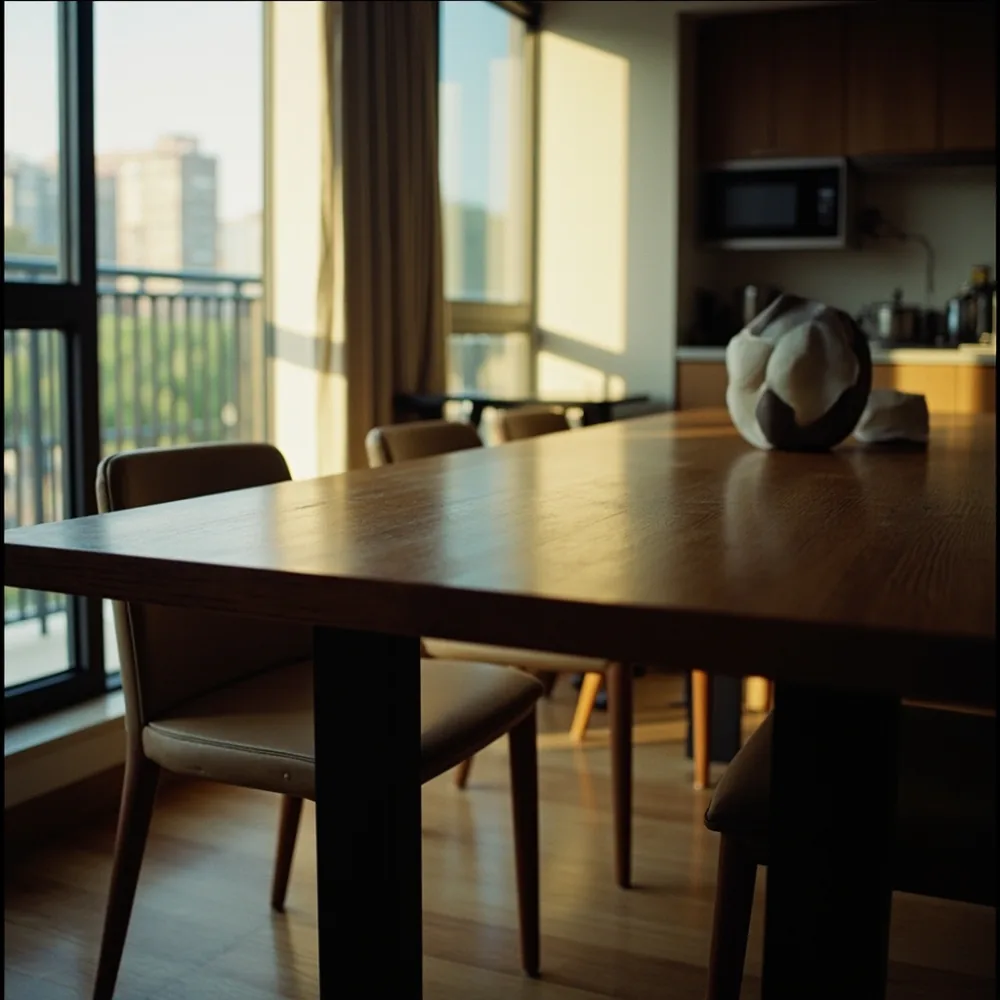
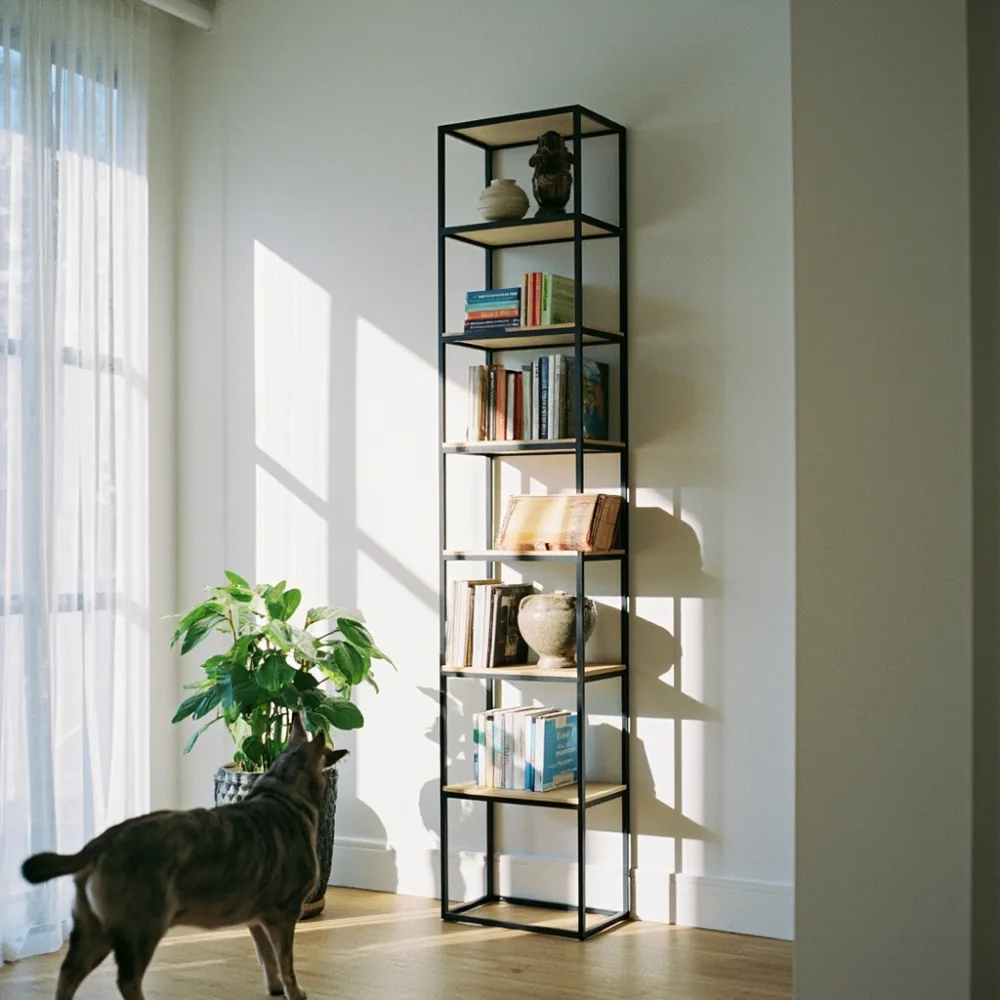
What works well is the contrast play. A matte black steel bookshelf against white walls makes a small room feel taller. A thick reclaimed-wood dining top grounds a space that is otherwise all glass and laminates. What fails fast is the cosplay version: distressed everything, fake rust, decorative gears on the wall. That reads theme-park in a Singapore context where most apartments already lean modern Scandinavian.
I treat industrial as a seasoning, not a diet. One statement piece plus a couple of supporting items beats a full themed room every time.
What exactly counts as industrial furniture in Singapore stores?
The four pillars
Common imposters to avoid
When I started shopping, I realised "industrial" gets used very loosely. Here is the working definition I settled on:
- Frame material: powder-coated or blackened steel, sometimes raw iron, occasionally cast iron for bases.
- Wood: thick, heavy timber, often reclaimed or with a rough-sawn face. Acacia, teak, pine, oak, or mango wood show up most.
- Hardware: visible bolts, rivets, pipe-style fittings, castors, exposed welds.
- Finish: matte, slightly uneven, often with patina rather than mirror polish.
Imposters are MDF with a faux-wood laminate printed to look like grain, paper-thin "metal" frames that flex when you lift them, and leatherette labelled as leather. Touch the underside. Pick up one end. If a dining table feels lighter than your household pet, the joinery is probably hiding something.
Does Singapore humidity ruin industrial solid wood and steel?
What humidity actually does to wood
What humidity does to steel
What I do about it
Short version: yes, it can, and it will, if you ignore it. Singapore sits around 80 percent relative humidity most of the year, with peaks above 90 percent during the monsoon months. That is harder on furniture than people realise.
Solid wood absorbs and releases moisture. In our climate, it expands more than it contracts, which shows up as cupped tops, gaps between planks that close up in December and open in June, and occasional sticky drawers. Cheaper engineered wood swells irreversibly. Steel does not warp, but untreated or poorly coated steel flashes with surface rust within a season, especially near a kitchen or a balcony door.
Practical fixes I now swear by:
- Buy solid wood furniture from makers who kiln-dry to 8 to 12 percent moisture content and acclimatise it before delivery.
- Ask what finish sits on the steel: proper powder coating beats wet paint by a wide margin.
- Keep pieces 10 to 15 cm away from aircon vents and out of direct afternoon sun, which fades acacia and teak surprisingly fast.
- Run a dehumidifier in the bedroom if you store books or a leather sofa nearby. 50 to 55 percent RH is the sweet spot.
Good durable furniture for Singapore is not the same as durable furniture for Melbourne or Toronto. The metric that matters is how the piece behaves at 85 percent RH for ten years, not how it looks in a showroom.
What dimensions actually work in an HDB or condo without blocking the corridor?
Dining
Sofa and TV
Bedroom
Delivery and lift realities
Singapore apartments are unforgiving. A dining table that looks reasonable in a 4-room HDB living room can still block the corridor from the front door to the kitchen. Measure your floor plan, then subtract walking space. I use 80 cm as the absolute minimum walkway and 90 cm as comfortable.
| Piece | Realistic size for 4-room HDB | Size for condo 70 to 90 sqm | Notes |
|---|---|---|---|
| Dining table | 140 x 80 x 75 cm, seats 4 | 160 to 180 x 90 x 75 cm, seats 6 | Below 140 cm feels cramped with four chairs |
| TV console | 150 to 180 x 40 x 50 cm | 200 to 240 x 45 x 50 cm | Depth above 45 cm eats walkway |
| Sofa | 200 to 220 cm wide, 90 cm deep | 240 to 280 cm wide, 95 to 100 cm deep | Industrial leather sofa frames run deeper |
| Coffee table | 110 to 120 x 55 to 60 x 40 cm | 120 to 140 x 60 to 70 x 40 to 45 cm | Lower than seat height by 5 cm |
| Bookshelf | 80 to 100 cm wide, 35 to 40 cm deep, 180 to 200 cm tall | Same footprint, taller is fine | Anchor tall units to the wall |
| Bed frame (queen) | 160 x 200 cm mattress, frame 170 x 215 cm | Same | Add 60 cm on two sides for circulation |
Two things that surprise first-time buyers: the lift and the turn at your door. Most HDB lifts are about 1.1 m wide and 1.4 m deep with a door opening around 0.9 m. Anything taller than 200 cm or wider than 110 cm usually has to come in via the service lift, and service lifts in many condos shut by 6 pm. Plan your delivery window, especially if you live in districts 9, 10, or 11 where loading bay access is tighter.
How much should a real industrial dining table or leather sofa cost in SGD?
What I have paid and seen
Where the price actually lives
When custom makes sense
Numbers below are what I have paid or what shops along Jalan Besar, Tai Seng, and the Joo Chiat cluster quoted in the last 12 months. Treat them as a sanity check, not a quotation.
| Item | Entry-level SGD | Mid-range SGD | Solid wood + steel (heavier) | Custom build |
|---|---|---|---|---|
| Industrial dining table, 160 cm, 4 to 6 seater | 900 to 1,400 | 1,800 to 2,800 | 3,200 to 5,500 | 4,500 to 8,000 |
| Industrial leather sofa, 3-seater, full or top-grain leather | 2,200 to 3,500 | 4,500 to 7,000 | 8,000 to 14,000 | 10,000 to 18,000 |
| Steel bookshelf, 180 cm, 4 shelves | 450 to 800 | 1,000 to 1,800 | 2,200 to 3,500 | 2,800 to 4,500 |
| Bed frame, queen, solid wood + steel | 1,200 to 1,800 | 2,400 to 3,800 | 4,200 to 6,500 | 5,500 to 9,000 |
| TV console, 180 cm | 700 to 1,200 | 1,500 to 2,500 | 3,000 to 4,800 | 3,800 to 6,500 |
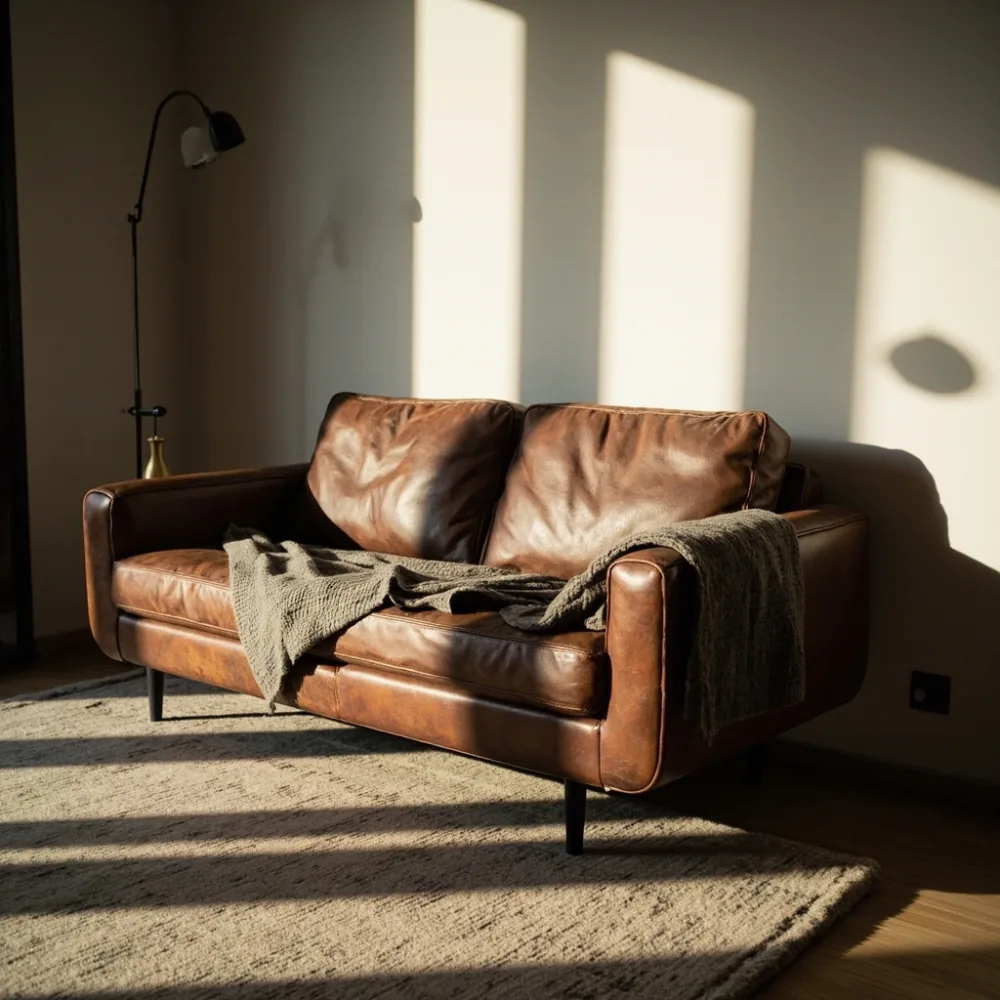
Where the money goes: the top, the joinery, and the leather grade. A dining table at 1,500 SGD is almost always MDF with a printed grain. At 3,000 SGD and above you start seeing real planks and proper mortise-and-tenon or welded steel bases. A leather sofa under 3,500 SGD for a three-seater is bonded leather, which peels in three to five years in our humidity. Top-grain starts around 4,500 SGD.
Custom furniture earns its premium when you have an awkward wall, a non-standard ceiling height, or a fixed layout that off-the-shelf simply does not solve. For a straight dining table in a normal room, off-the-shelf is usually smarter.
Which woods and metals survive Singapore best?
Woods I trust
Woods I avoid
Steel and iron choices
Finishes that actually last
p>Woods that behave well here tend to be dense and naturally oily. Teak is the local classic, expensive now, but stable. Acacia is the workhorse of the industrial scene, hard, attractive, and reasonably priced if you accept the colour variation. Reclaimed pine looks great but dents easily. Mango wood is a solid mid-range choice. Rubberwood I treat with caution because cheap rubberwood pieces tend to be poorly dried and twist within a year. Engineered MDF, even good quality, swells near wet areas, so I keep it out of the kitchen zone.For metals, powder-coated steel is the default for good reason. Hot-rolled steel with a wax finish looks beautiful but wants occasional waxing. Cast iron is gorgeous as a base but punishingly heavy; a cast iron dining base can hit 60 to 80 kg, so check your floor loading and your back. Wrought iron is fine for small items, overkill for structure.
Finishes matter as much as substrate. Conversion varnish and hardwax oil outperform polyurethane in our humidity because they let the wood breathe. A high-gloss lacquer will craze and yellow within a few years. Matte is more forgiving.
How do you actually style industrial without making the flat look like a warehouse?
The 60-30-10 rule in practice
Materials beyond furniture
Lighting that pulls it together
The mistake people make is buying five industrial pieces and expecting cohesion. You get visual fatigue and zero contrast. Instead, I anchor one or two hero items and let everything else do a quieter job. A 60-30-10 split works well: 60 percent neutral walls and big surfaces, 30 percent a secondary texture (linen, oak, or rattan), 10 percent the industrial statement.
Materials beyond furniture help more than people think. A black steel window-style mirror, a pipe-style clothing rail in the bedroom, or a vintage-style filament bulb in a brass cage does the heavy lifting without taking floor space. These are great for small space furniture strategies because they add character vertically rather than horizontally.
Lighting is where industrial design shines, literally. Pendant lights with metal shades over a dining table, a single wall-mounted swing-arm lamp by the sofa, or a floor lamp with a tripod base in dark corners all reinforce the look. Stick to warm 2700K to 3000K bulbs. Cool white kills the warmth that makes timber look like timber instead of brown plastic.
What should I check before I pay a deposit in Singapore?
Paperwork
Physical checks
After-sales
Lead times
A short checklist I run through every time:
- Material spec in writing. Exact wood species, steel gauge, leather grade, foam density.
- Moisture content of the wood, ideally kiln-dried to 8 to 12 percent.
- Structural warranty, in years. A 10-year structural warranty is a strong signal.
- Finish warranty, usually 1 to 3 years.
- Delivery scope: door, lift, room of choice, assembly, rubbish removal.
- Lead time: 4 to 8 weeks is normal for stocked industrial pieces, 10 to 16 weeks for custom builds from overseas workshops.
- Return policy for defects, not change-of-mind.
- Weight of each piece, so you can plan the move and the floor loading.
On Foshan-made solid-wood industrial pieces, I have had consistently good experiences with workshops that have been at it for 15-plus years. MIDHILL, a Foshan-based solid-wood furniture maker established in 2008, fits that profile and backs its frames with a 10-year structural warranty, which is one of the longer ones I have seen for this category in the Singapore market. Worth shortlisting if you are comparing custom quotes.
One last thing. Photograph your apartment on the day of delivery, before the team unloads anything. If a lift panel gets scratched or a door frame gets dented, the photo trail saves an argument. I learned that the hard way in a District 14 condo.
Where can I see and touch industrial pieces in Singapore before committing?
Showrooms to walk in
What to ask the salesperson
Physical viewing matters more for industrial than for any other style because the appeal lives in texture and weight. Stores and clusters worth a Saturday afternoon:
- Jalan Besar and Lavender area: a high concentration of industrial and loft-style pieces, mostly mid-range.
- Joo Chiat and Tanjong Katong: a mix of vintage-industrial and Scandinavian-industrial blends.
- Tai Seng and Eunos: workshop-style showrooms where you can see the welds and ask the maker questions directly.
- Marina and Bukit Timah condo galleries: useful for scale, less for materials.
When you are there, ask to see the underside of a table, the back of a sofa frame, and a swatch of the leather under good light. Sit on the sofa for at least ten minutes. Stand next to the dining table and put your elbows on it. Industrial pieces are generous in scale, which means they often fit tall buyers better than petite ones, and vice versa. Buy for the person who uses it most.
Frequently asked questions
What is the best wood for industrial furniture in Singapore humidity?
Acacia and teak are the most reliable choices. Both are dense and naturally resistant to moisture swings. Mango wood is a solid mid-range option. Avoid MDF near kitchens or balconies, and treat rubberwood with caution unless the maker can prove proper kiln-drying to 8 to 12 percent moisture content.
How long does custom industrial furniture from Foshan take to reach Singapore?
Plan for 10 to 16 weeks end to end: 2 to 4 weeks for design confirmation and material prep, 6 to 8 weeks for build, 2 to 3 weeks for sea freight plus Singapore customs and delivery. Add buffer if your order queues behind festive-season demand in Q3.
Is a leather sofa worth the extra cost over fabric in Singapore?
For a household without small children or pets, yes. Top-grain leather handles humidity better than most fabrics, wipes clean, and lasts 10 to 15 years. Bonded leather under 3,500 SGD for a three-seater is not worth it; it peels within a few years in our climate. Fabric is fine if you prefer a softer look and accept replacement every 5 to 8 years.
Can industrial furniture work in a 3-room HDB without looking cramped?
Yes, if you pick one hero piece and keep the supporting items slim. A 140 cm dining table, a 200 cm sofa, and a wall-mounted steel shelf will fit a 65 sqm flat comfortably. Skip oversized pendant chains and bulky TV consoles, and use vertical lighting to draw the eye up.
How do I stop my industrial steel pieces from rusting?
Choose powder-coated steel over wet-painted frames, wipe down any splashes within a day, and keep pieces away from the kitchen sink and the balcony door. A light coat of beeswax once or twice a year helps raw or waxed steel finishes hold up in our climate.
Questions about specifications, fabric or delivery? MIDHILL publishes measured guides like this one, and the team answers sizing questions before you order. See the full collection or contact the team.