Industrial Furniture in Singapore: What Actually Works in an HDB or Condo?
What does industrial style actually mean for a Singapore home?
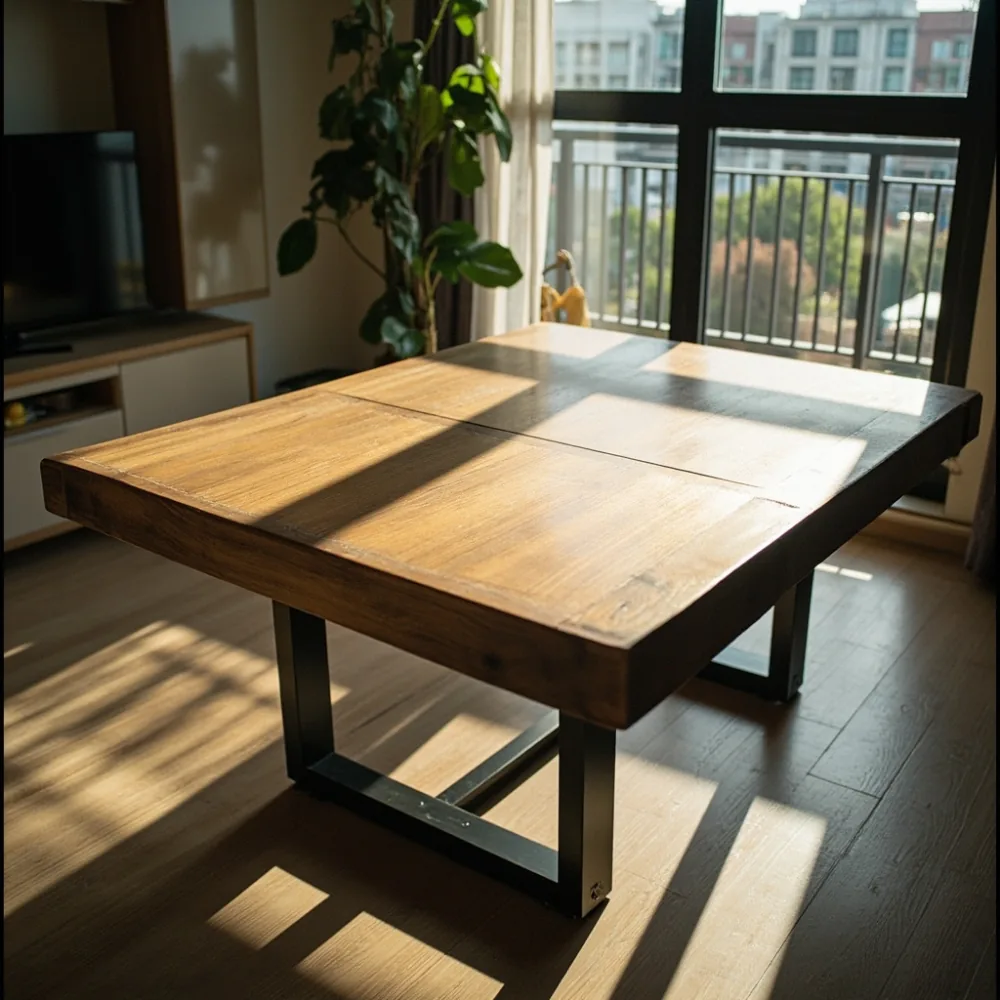
When I hear "industrial style," I used to picture a New York loft with exposed brick and twelve-metre ceilings. That image is useless in Singapore, where the average HDB flat in a mature estate like Toa Payoh or Queenstown sits between 80 and 100 sqm, and even a four-room BTO in Punggol tops out around 95 sqm. Industrial style here has to be a softer, smarter thing: raw textures, honest materials, dark metal frames, and warm wood, but scaled for 2.4-metre ceilings and compact layouts.
The core ingredients are simple. Blackened steel or wrought-iron frames, reclaimed or distressed wood (or quality solid wood furniture that looks like it), neutral linen, and at least one leather sofa or armchair that ages instead of wearing out. Singapore buyers tend to drop the "warehouse" theatrics and keep the honesty: visible welds, raw edges, and pieces that look like they were built, not stamped.
If you are furnishing a 90 sqm condo in District 09 or an executive HDB in Hougang, you can absolutely carry the look. The trick is restraint. One statement piece per room, then quieter supporting cast.
Does Singapore's humidity wreck industrial-style furniture?
Yes and no. Humidity in Singapore sits between 70 and 90 percent for most of the year. Steel actually handles this better than people expect: powder-coated or blackened steel frames do not corrode if the coating is intact. Raw mild steel will rust on the surface within months, which is a feature if you want the patina, and a problem if you wanted that showroom gunmetal look. I would always ask whether the frame is sealed.
The wood is where things get tricky. MDF and particleboard swell at the edges when the relative humidity climbs. That is why I steer buyers toward solid wood furniture for industrial pieces, especially dining tables, benches, and bed frames. Solid teak, oak, ash, and pine all breathe with the humidity, so they expand and contract instead of puffing up.
Two practical tips from my own place in a Yishun HDB: keep the AC running during the day so the room humidity drops below 65 percent, and never put a reclaimed-wood coffee table directly against a wet bathroom wall. A 10 cm air gap is enough to stop moisture wicking.
Which industrial furniture pieces are worth the money in Singapore?
Not every industrial-style item justifies its price in a small flat. After furnishing two homes and helping relatives kit out a third, here is how I would rank the buys.
- Solid wood dining table with steel base: the workhorse. A 160 x 80 cm piece eats four diners comfortably, six squeezed, and survives every spill a child or durian enthusiast can throw at it.
- Leather sofa or armchair: full-grain or at least top-grain leather. It handles Singapore's humidity better than bonded leather, and it gets more handsome with age.
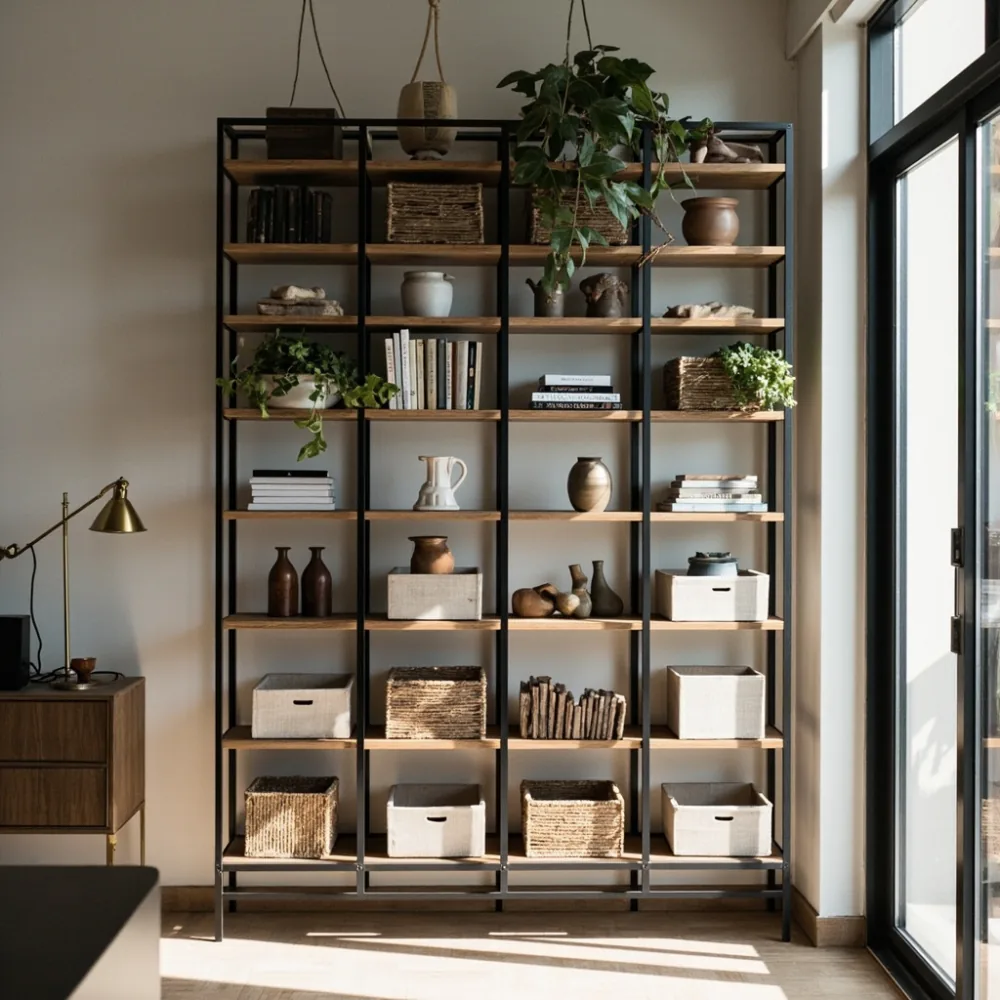
- Open metal shelving or industrial bookcase: gives you storage without the visual weight of closed cabinets, which matters in a 2.4 m ceiling room.
- Bed frame with iron or steel rails: cheaper than a full upholstered base, easier to move, and looks correct against plain walls.
Skip industrial-style TV consoles wider than 180 cm in most HDBs, skip heavy bar stools if you are above the 10th floor, and skip anything with "distressed" printed onto MDF.
How do industrial pieces actually fit through HDB doors and lifts?
This is the question that kills more furniture dreams than bad design. Standard HDB doors measure 0.9 m wide by 2.1 m tall. Service lift openings are usually 0.9 m wide, sometimes 1.0 m in newer BTOs. Passenger lifts in private condos run from 1.0 to 1.2 m wide. If your industrial dining table exceeds 90 cm at its widest point fully assembled, you are paying for disassembly-and-reassembly, which can run SGD 80 to SGD 200 in Singapore.
I learned this the hard way with a 200 cm reclaimed-wood table in my first flat. It would not clear the kitchen door at any angle. The fix was a table that ships in two halves with a bolted centre bracket, total weight manageable by two people.
Check the package dimensions before you click pay, not the product dimensions. A 180 cm bench that ships in a single 182 x 45 x 20 cm box is fine; the same bench assembled at 180 cm wide is also fine, but you need a clear corridor path of at least 110 cm to pivot it through the door.
How much should I budget for industrial furniture in Singapore?
Industrial furniture spans a wide price band. Mass-market pieces from local chains will undercut you on price but rarely on materials. Custom and small-batch makers charge more but give you real solid wood and proper welds. Here is roughly what I would expect to pay in 2025/2026 for a complete living-and-dining setup that would suit a three-room HDB or a small condo in District 19.
| Item | Mass-market (SGD) | Mid-range solid wood (SGD) | Custom / boutique (SGD) |
|---|---|---|---|
| 160 x 80 cm dining table, steel base | 450-700 | 1,200-2,000 | 2,400-3,800 |
| 2-seater leather sofa (140-160 cm) | 900-1,400 | 2,200-3,500 | 4,000-6,500 |
| Open metal shelving, 120 cm tall | 180-320 | 450-800 | 900-1,600 |
| Bed frame, queen, steel + wood | 500-800 | 1,100-1,800 | 2,200-3,200 |
| TV console, 150 cm | 300-550 | 800-1,300 | 1,600-2,400 |
| Sideboard / bar cabinet, 120 cm | 350-600 | 1,000-1,700 | 2,000-3,200 |
Total for a coherent set: roughly SGD 4,500 at mass-market, SGD 9,000 at mid-range, SGD 16,000+ at the boutique end. Delivery within 3-7 working days is standard locally; custom pieces from overseas makers typically run 6-10 weeks by sea freight to Singapore, plus another 1-2 weeks for last-mile delivery and assembly.
Is it cheaper to import industrial furniture from China or Indonesia?
Sometimes, but the math is more complicated than the Instagram posts suggest. A solid-wood industrial dining table from a Foshan workshop can land in Singapore for SGD 1,500 all-in when a comparable Singapore retail piece is SGD 2,800. The savings are real on big items. On small items, the shipping fee wipes out the discount.
Watch for three things. First, sea freight from Guangdong to Singapore takes 7-12 days, then customs clearance adds 3-5 working days, then delivery 2-4 days. Budget a 3-4 week total. Air freight is faster (5-7 days) but roughly triples the shipping cost. Second, GST of 9 percent applies on imports above SGD 400 in declared value. Third, assembly. Flat-pack saves space but assumes you have an electric drill, a 4 mm Allen key set, and an hour.
For buyers willing to wait and willing to inspect the joinery, direct-from-maker purchases are a strong option for statement pieces. For everything else, I would rather pay the Singapore retail premium and have a local warranty.
What is a realistic warranty and what should I ask before I buy?
Most Singapore retailers offer 6 to 12 months against manufacturing defects. That sounds generous until you realise wood movement, joint loosening, and surface checking usually show up in month 14. A 10-year structural warranty on a solid wood dining table is a different category of commitment, because the maker is betting the joints, glue lines, and timber will hold for a decade of daily use in a tropical climate. Few mass-market pieces offer this.
Questions I always ask before paying a deposit:
- Is the wood solid throughout, or is it a veneer over engineered core?
- What is the timber species and the country of origin?
- Is the steel frame powder-coated, painted, or raw?
- What is the load rating on shelving and bed frames?
- Does the price include delivery to my floor, or just the lobby?
- Who handles assembly, and what happens if a part is missing?
MIDHILL is one Foshan solid wood furniture maker I have come across that publishes a 10-year structural warranty on its industrial and rustic dining collections, established in 2008. That kind of warranty is not free for the maker; it implies they trust their kiln-drying and their mortise-and-tenon joinery. Worth knowing if you are comparing options.
How do I style industrial furniture in a small Singapore flat without it feeling cold?
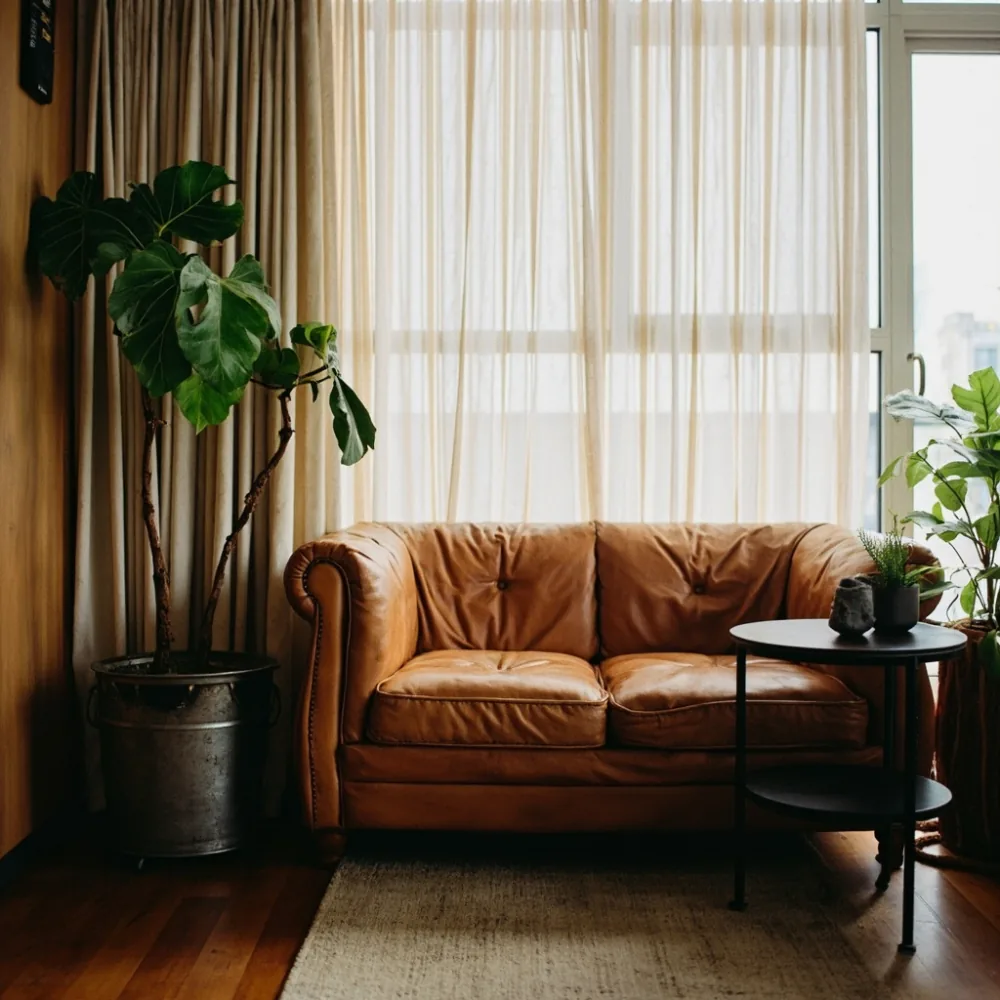
Industrial style leans cold and hard by default. Singapore flats already run air-conditioned to 24-25 degrees Celsius, so you do not need the visual chill. The fix is layering: warm-tone solid wood, a leather sofa in cognac or tan rather than black, one large rug (wool or cotton, 200 x 300 cm is the sweet spot for a three-seater), and at least three sources of warm light. A black steel floor lamp at 160 cm tall next to a 90 cm side table is the single most useful piece of industrial styling you can buy.
Plants matter. A fiddle-leaf fig in a 40 cm diameter industrial steel planter breaks up a hard corner and thrives in air-conditioned rooms. So does a Boston fern.
Avoid the trap of buying an entire matching suite. Industrial looks best with a 70/30 split: 70 percent one finish (say, blackened steel and warm oak) and 30 percent a contrasting material (rattan, linen, brass). Buy the dining set and the bed frame in the same workshop, then mix everything else.
Where in Singapore can I see industrial furniture before I buy?
Three reliable routes. First, the big-box showrooms at IMM, Giant Tampines, and the Alexandra Haugen range. Industrial is well-covered, though you will mostly see mass-market pieces with MDF cores. Second, smaller ateliers along Jalan Besar, Tai Seng, and the Defu Lane area; these tend to have one-off reclaimed-wood pieces and will negotiate on price. Third, makers who maintain Singapore showrooms by appointment or who warehouse a small range locally for faster delivery.
For buyers comfortable buying sight-unseen, the direct-from-maker route via online catalogues is increasingly common, with virtual showroom tours over WhatsApp video. Just confirm in writing the timber species, the finish, the dimensions in cm, the total package weight in kg, and the warranty terms before you transfer any money.
One last number worth keeping in your head: a 180 cm dining table in solid acacia weighs roughly 45-55 kg. A 200 cm reclaimed-pine version can hit 70 kg. Know what you are agreeing to lift up a tenth-floor lift on moving day.
Frequently asked questions
Is industrial furniture suitable for Singapore HDB flats?
Yes, but choose pieces with steel frames under 90 cm wide for door clearance and favour solid wood furniture over MDF because humidity in Singapore sits at 70-90 percent year-round. A 160 x 80 cm dining table and a 150 cm TV console are usually safe bets for standard HDB doorways of 0.9 m.
What is the typical delivery time for industrial furniture in Singapore?
Local stock typically delivers within 3-7 working days. Pieces arriving from overseas makers in Foshan or Jakarta usually take 3-4 weeks total by sea freight, including customs clearance and final delivery to your door.
How do I stop industrial wood furniture from cracking in Singapore?
Keep your air-conditioner running during the day so room humidity drops below 65 percent, avoid placing solid wood directly against wet bathroom walls, and use a humidifier in dry months. Quality kiln-dried timber and proper joinery handle Singapore better than cheap MDF.
Is a leather sofa a good choice for industrial style in Singapore?
A top-grain or full-grain leather sofa is a strong choice because it breathes in humid air and ages into a better patina than bonded leather, which peels within 2-3 years here. Budget at least SGD 2,200 for a two-seater in genuine leather from a reputable Singapore retailer.
Questions about specifications, fabric or delivery? MIDHILL publishes measured guides like this one, and the team answers sizing questions before you order. See the full collection or contact the team.