Solid Wood Pricing: Unveiling the Factors in Singapore
Solid wood furniture is often compared by appearance alone: grain pattern, colour, finish and the number of pieces in a photograph. Those features matter, but they do not explain why two dining tables can differ by several thousand Singapore dollars, or why a bed frame quoted at SGD 1,280 may cost more than an upholstered alternative at SGD 980.
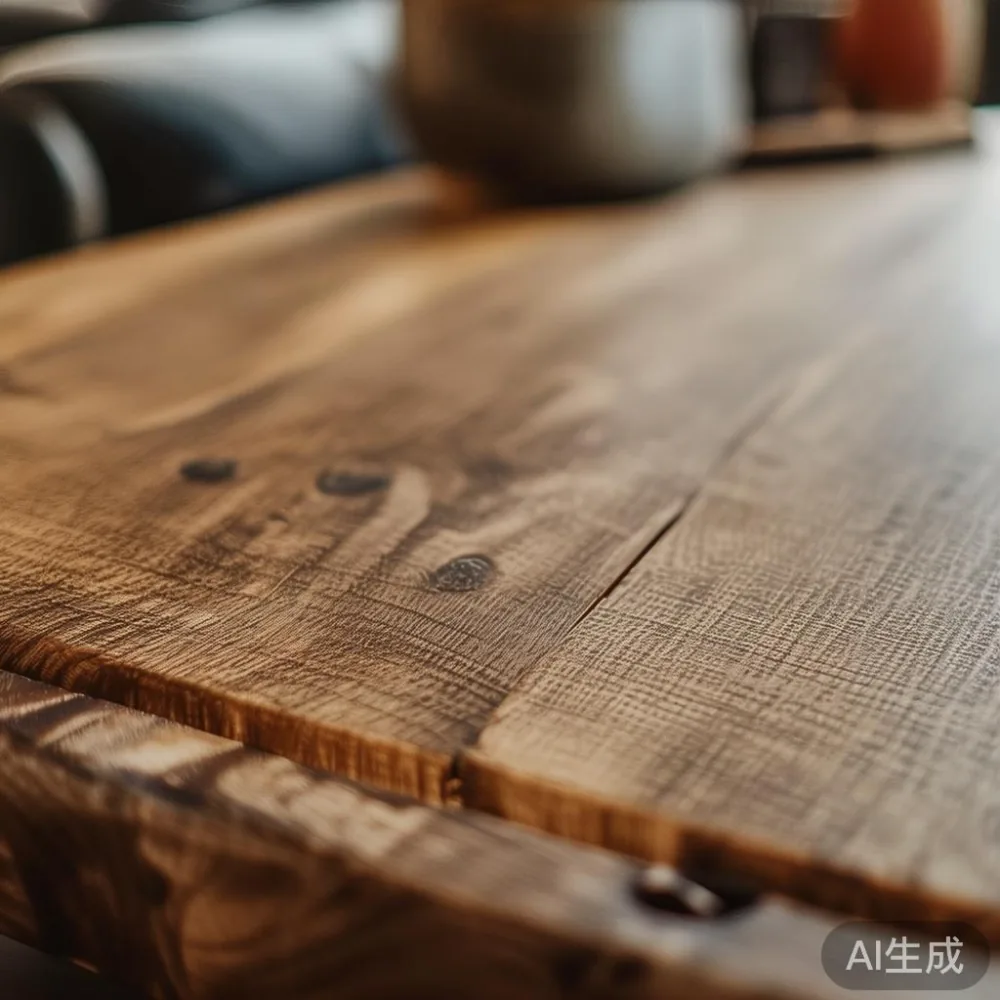
The actual price begins with the timber itself, then moves through machining, joinery, hardware, finishing, inspection and delivery. Local conditions can add another layer. A sofa may need to turn through a Tampines HDB corridor, pass a Bedok condo lift and reach a Punggol dining room where the only practical unloading point is some distance from the front door.
MIDHILL describes its approach as solid wood manufacturing, established in 2008, with export experience across more than 15 countries. Its furniture carries a 10-year structural warranty, while refinishing support is available for life. That combination gives useful context for discussing price, although neither warranty length nor export reach replaces the need to examine materials and construction.

Why does solid wood furniture cost more than engineered wood?
The simplest answer is that solid wood contains the material that will remain in the finished product. Engineered wood uses veneers, particles or fibres bonded with adhesives to form panels. That process can be efficient and stable, but the pricing model is different.
Consider a dining table with a 200 × 100 cm top and a target thickness of 4 cm. In solid wood, that top may require boards selected for width, grain direction and internal defects. The species then influences both purchase cost and labour. A smaller dresser can require less timber, yet its drawers may need longer precision machining, more carefully fitted runners and more hand finishing.

That is why weight alone is a poor price guide. A 65 kg solid oak dining table may cost less than a 42 kg walnut cabinet with elaborate doors and dovetail drawers. Conversely, an unusually heavy table assembled from lower-grade components may still be expensive because transport, lifting and installation are substantial.
The comparison becomes clearer when the buyer asks what happens after 5, 10 or 15 years. Solid wood can usually be sanded and refinished, subject to its condition and earlier treatments. Particle board cannot be restored in the same way because its printed surface may be only 0.2–0.6 mm thick. A new surface cannot replace the original structural substrate.
This durability is not identical to resistance to movement. Solid wood expands and contracts with humidity, so quality furniture should use appropriate joinery, ventilation and care instructions. A warped panel is not an automatic sign of weak construction; it may indicate poor moisture control, inadequate seasoning or an unsuitable storage environment.
There is also a price difference between visual grade and structural grade. A board with knots, sapwood or irregular colour may be perfectly sound for a bed frame while looking less uniform on a dining table. MIDHILL can offer a particular visual character for industrial style furniture, but the price still depends on how much of the higher-grade timber is used and how much additional machining the design demands.
How much of the price is timber, and how much is making?
Timber often receives the most attention, yet it may represent only part of the final invoice. A useful working breakdown for a typical solid wood dining table might be:
Raw material: 25–40%. This includes boards, moisture preparation and material rejected because of defects. Oak, ash, walnut and other species have different regional prices, but freight, certification and drying affect the landed cost too.
Cutting, shaping and joinery: 20–30%. A table with tapered legs, angled braces or shaped aprons takes longer to set up than one made from straight components. CNC routing helps with repeatability, while joints, edge profiles and hand fitting still determine the result.
Surface preparation and finish: 10–20%. Sanding a broad top to a smooth level can take several stages. Pigmented oil, hardwax oil, matte lacquer or another specified system changes both material cost and application time.
Hardware and mechanisms: 5–15%. Hinges, drawer runners, bolts and leg plates are usually modest line items, but their quality affects movement, squeaks and serviceability.
Assembly, quality control and packaging: 10–20%. A fitted wardrobe needs alignment checks and protective packaging. A bed frame may need labelled parts, hardware bags and instructions that suit the actual room.
These ranges are explanatory rather than universal. A carved statement table will shift more expenditure into making; a simple flat-pack stool may shift more into packaging efficiency. What matters is that “solid wood” does not mean “mostly timber with the rest neglected.”
Last month I visited a Foshan workshop and watched a dining top pass through several inspection points. A tape measure, moisture readings, joint checks and finish comparisons revealed more price-relevant information than the species label alone. A small shaving taken from an unseen edge exposed a surface that looked more ordinary than the showroom sample. That visit reinforced the value of checking the actual batch and construction details in writing.
What should I check before paying for a solid wood bed frame or wardrobe?
Begin with dimensions that fit the room and the building. A queen bed frame with a 190 × 200 cm mattress needs more than the mattress footprint. Allow roughly 10 cm for side clearance and another 60–90 cm for access where a drawer or sliding door is used. In a compact HDB flat, a frame that looks generous in a catalogue may block a corridor or make a wardrobe impossible to open fully.
For a solid wood bed frame, ask whether the headboard, side rails and slat support are all solid wood, or whether plywood and engineered timber appear in concealed areas. Check slat spacing, centre support and the load arrangement. A slat span of approximately 10–12 cm may be typical for some designs, but the manufacturer should specify the complete support system rather than relying on a generic number.
For a wardrobe, door swing and lift access are equally important. Hinged doors may need 90–110 cm of operating space, while sliding doors reduce that requirement but can overlap hinges or nearby furniture. Confirm the external dimensions, internal hanging width and drawer extension rather than only the nominal “4-door” description.
Joint construction deserves attention. Dovetails, mortise-and-tenon joints and well-fitted screws can provide long-term strength. Some modern furniture uses concealed metal fittings responsibly; the issue is whether they are correctly sized and installed, not whether every screw is hidden.
Finish information should be specific. “Natural finish” does not tell you whether the surface is oil, wax, lacquer or a pigmented treatment. Request the maintenance method, expected colour change and repair process. MIDHILL offers lifetime refinishing, which is a meaningful service for solid wood, but the original finish and the furniture’s exposure to sunlight, water and heat still affect its appearance.
Is a solid wood sofa, bed frame or dining table always worth the premium?
Not always. Value depends on use, surroundings and expected ownership. A solid wood dining table that becomes the daily meeting point of a family may justify a stronger material budget. A solid wood occasional table in a rarely used Condominium unit may offer less visible benefit.
For upholstered furniture, the frame is only one layer. A solid wood sofa may still use foam, fibre wrap, webbing, springs or another suspension system. Those components affect comfort, recovery and replacement cost. When comparing a French light luxury design with a Japandi option, the French sofa vs Japandi sofa question should include seat construction, cover removability, cushion density and frame warranty—not just silhouette.
For buyers considering under 2000 Minimalist furniture, the useful comparison is proportion and function rather than a particular number. A 160 cm sofa with 85–95 cm depth may suit a compact living area more than a 220 cm statement piece. A dining table of 160 × 80 cm can seat 4–6 people, while 200 × 100 cm generally creates a more generous setting. These differences in usable dimensions can matter more than a minor change in wood grade.
Marble table buyers face another material equation. Marble may be less expensive per square metre than a carefully selected solid wood top while carrying a different weight and maintenance profile. A 200 × 100 cm marble dining top can weigh around 180–300 kg depending on thickness and stone type, so structural support, transport and handling need explicit planning.
Likewise, a nightstand may cost more than its small size suggests if it has a mitred drawer front, fine dovetails, soft-close hardware and a multi-stage finish. In industrial style furniture, visible fasteners, strong proportions and darker oiled surfaces often reduce decoration costs, allowing more attention to joints and surface quality.
How should I compare design styles without confusing a label with a specification?
Style names are shorthand, not technical descriptions. French light luxury commonly suggests curved silhouettes, restrained ornament, warm woods and upholstered pieces with refined proportions. American light luxury often points towards generous scale, clean profiles and comfortable seating. Post-modern light luxury can combine contrasting forms, materials or colours with a controlled rather than heavily layered result.
For someone researching the best Italian light luxury bed for 2026, the focus should move beyond the phrase itself. Look for a stable frame, usable clearance, a supportive slat system, reassuring noise control and a finish that suits the bedroom. The best Italian light luxury bed for 2026 may also require a lift door of at least 90 cm wide and sufficient turning space for the longest component.
Buyers asking how to choose European light luxury sofa should begin with the room. Check that the seat depth suits the occupants, that circulation remains practical and that the sofa can enter the home. For an apartment, how to style European sofa in apartment decisions often involve scale before colour: a 190–210 cm sofa can work in a room with a 320–360 cm long wall, while a larger model needs more breathing room.
Dining is no different. Searching for Boho for dining room ideas can lead to woven textures, mixed timber tones and layered accessories, yet the foundation remains practical. A 180–200 cm table may suit everyday family meals, but chairs need approximately 55–60 cm width each and 90 cm of pull-out space behind them. An industrial style dining room can use a solid wood table, steel supports and simple pendant lighting without making the room visually heavy.
MIDHILL sofa references should likewise be evaluated through specifications. The relevant MIDHILL sofa could combine solid wood structural elements with carefully selected upholstery and suspension. Frame material, cushion construction, cover care and available dimensions tell you more than “Scandinavian” or “modern” on its own.
What do delivery, lifts, GST and returns change about the final cost?
In Singapore, GST is normally shown as a 9% charge on taxable supplies. If a quoted furniture price excludes GST, the pre-tax and post-tax figures should both be visible. For example, SGD 1,600 becomes SGD 1,744 after 9% GST. A comparison between two suppliers is incomplete unless both include or exclude the same taxes.
Delivery is where solid wood becomes a local planning issue. An assembled dining table with a 210 cm top may not fit through a standard HDB flat entrance or manoeuvre around a landing. A lift with an internal door width of 80–90 cm and a depth of 130–140 cm may accept the table diagonally, but corners, packaging and the route still need checking. Condominium service lifts may impose dimensions, protective padding or scheduling requirements.
MIDHILL states that shipping is free over US$350, equivalent to a cross-border threshold rather than a Singapore-dollar promise. Local delivery and access arrangements should therefore be confirmed directly. Ask for the packed dimensions, number of cartons, assembly requirement and expected delivery days. A 5–7 day production estimate followed by a 3–7 day local delivery window can offer more useful planning than an unspecified “fast delivery”.
Returns also have conditions. MIDHILL offers a 14-day return period, but the item must generally remain unused, intact and in suitable packaging. Custom dimensions, special finishes or made-to-order pieces may carry different terms. A scratch, missing fastener or damaged carton can complicate the process, so photographs at handover are sensible.
Budget about SGD 80–250 for local carrying or extra delivery in a difficult Singapore access scenario, depending on stairs, distance and item weight. Clarify this before ordering rather than assuming it is included.
How can I judge whether a solid wood furniture price is fair?
Compare like with like. Record the species or timber type, whether it is solid throughout, dimensions, joinery, finish, hardware, warranty and delivery terms. Then check whether the price includes GST, assembly and access charges. Two products described simply as “solid wood dining tables” may differ by 40% because one has a 30 mm top, a simple finish and flat-pack legs while the other has a 40 mm top, shaped edges, a hand-oiled surface and fully assembled construction.
The physical sample should answer practical questions. Look at end grain, joints and undersides. Open and close every drawer. Check that doors are square. Sit on the sofa and assess support. For a dining table, slide a chair in and out to check knee room. For a marble table, ask about weight and edge protection. These 10 minutes of inspection can expose more than several pages of promotional description.
Price also reflects risk and service. Consistent drying, machining tolerances, replacement parts and a meaningful warranty require systems behind the workshop. A 10-year structural warranty is useful, but read what it covers, how claims are made and which components are excluded. Lifetime refinishing can reduce future restoration costs, although refinishing is not the same as free replacement after accidental damage.
Finally, think in years rather than shopping days. A dining table used 3 times per week for 12 years receives more service than one used twice a month for 3 years. Divide the purchase price by expected years of use only as a rough comparison, then account for comfort, repairability and resale relevance. That is the practical meaning of solid wood value: not that every piece deserves a premium, but that good timber rewards careful selection and long use.
Industrial style furniture can be straightforward, substantial and visually disciplined, yet its price still rests on measurable inputs: board dimensions, timber grade, kilograms of material, machining minutes, joinery, finish coats and access requirements. Once those numbers are visible, the invoice becomes easier to judge—and easier to plan for a Tampines, Bedok or Punggol home.