How to Match Solid Wood Furniture to a Warm Minimal Interior — Without Losing the Edge
I moved into a 4-room HDB flat in Tampines last month, and the first thing I noticed after the keys went in was how every wide flat step-up corridor swallowed my old bulky sofa like it was a paper sample. The lift was 1.1 m wide, my old three-seater was 2.4 m, and my neighbour's lift door simply could not accommodate the frame. That single moment forced me to rethink how I match furniture to a warm minimal interior — and how I incorporate industrial-style solid wood pieces without tipping the room into a cold warehouse look. Below is what I learned after two showrooms, three carousell sellers, and one very helpful designer friend in Punggol.
What Does "Warm Minimal" Even Mean in a 92 sqm HDB Flat?
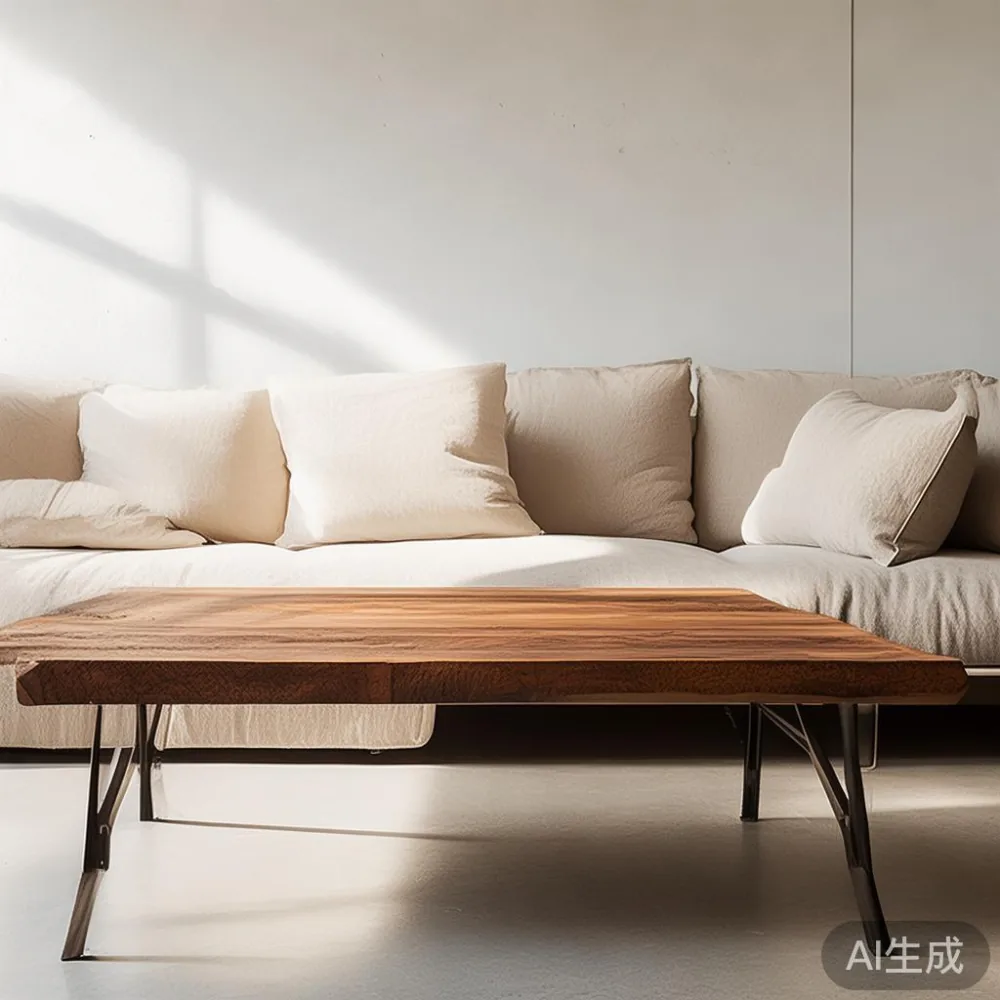
Warm minimal is the aesthetic pivot between Scandinavian cold-white and Japanese wabi-sabi rust. In practice, it means three colours max on the walls, one wood tone carried through the room, and zero ornamental profiles on your bed frame, wardrobe, or dining table. Think: off-white walls (a warm 9010 or a beige 0500-N from Nippon), an oak or ash floor, and one accent of brushed brass or blackened steel. For a Singapore HDB of about 90 sqm, the budget for this look usually lands between S$6,800 and S$14,500 all-in, including a 9% GST line item on every invoice above S$1,000.
The challenge is restraint. Warm minimal wants fewer pieces, but those pieces need weight — visual weight and physical weight. A 65 kg solid wood dining table reads differently to the eye than a 22 kg hollow MDF one. The same is true for a 48 kg ash nightstand versus a 14 kg veneer version. In a warm minimal layout, the room forgives fewer sins, so the pieces you do bring in must do quiet, structural work.
How Does Industrial Style Fit Into a Warm Minimal Room Without Making It Feel Cold?
This is the question every customer asks me at the showroom, and the honest answer is: industrial style is a texture layer, not a colour scheme. It is the blackened steel leg under your oak dining top, the rivet line on a wardrobe handle, the castor wheel on a nightstand, or the raw concrete-look side table next to your bed frame. The warmth comes from the wood — usually solid ash, solid oak, or solid walnut — and the industrial language comes from the metalwork.
For a Singapore context, this matters because we live with humidity (relative humidity sits between 65% and 85% most days). Solid wood that is kiln-dried to an 8–10% moisture content handles this swing well, while hollow-core MDF can bow within a single wet season. Industrial-style solid wood is also practical for HDB life: the metal base keeps the wood off the wet mopping zone, and the lower silhouette usually means the piece clears the 2.1 m HDB corridor turning radius when you move in.

The texture ratio I use is 70% wood, 20% blackened or brushed metal, 10% fabric or leather. That 10% is your chance to bring warmth back into an industrial-style piece — a camel bouclé cushion on a steel-frame accent chair, a rust velvet throw on a solid wood bed frame, a tobacco-toned leather sling on your solid wood sofa. Without that 10% textile moment, industrial style reads cold.
Which Solid Wood Pieces Should You Buy First for a 4-Room HDB in Tampines or Punggol?
Order matters because lift access, corridor width, and the front door (usually 0.9 m wide on a Singapore HDB) dictate what physically fits. My priority list, after the Tampines move-in, looked like this:
- Dining table — 1.6 m to 1.8 m solid wood top, fits 4 to 6, weight 65–85 kg. Must be flat-packable or delivered unassembled for the lift.
- Bed frame — Queen (152 cm × 188 cm) or King (183 cm × 198 cm). Solid wood with metal clearance legs so robot vacuums can pass. Weight 55–90 kg.
- Solid wood wardrobe — 180 cm to 220 cm tall, 180 cm to 240 cm wide. This is the one piece you cannot compromise on; the rest of the warm minimal look falls apart if your wardrobe looks like office storage.
- Nightstand — Two pieces, each 45–55 cm tall, 40–50 cm wide, single drawer, solid wood top with a blackened steel frame.
- Marble table — A small (40–50 cm) round marble table or marble-top coffee table for the living room. This is the one surface where you can break the wood rule and still stay warm minimal.
Order total for these five in a warm minimal layout in Singapore: roughly S$7,200 to S$13,500 before GST. If you are tempted by cheap Mid-century modern furniture listings on Carousell at S$200 to S$600 per piece, weigh the piece, ask for the moisture content, and ask whether the joints are dowel or mortise-and-tenon. A 12 kg "solid oak" nightstand at S$280 is almost always veneer over MDF.
How Do You Stop a Solid Wood Sofa Looking Too Heavy in a Warm Minimal Living Room?
The mistake I see most often: a 2.6 m solid wood sofa with three thick cushions parked against a 3.2 m wall. The room shrinks. The fix is proportion. In a Singapore condo living room of about 14–18 sqm, your solid wood sofa should sit at 1.9 m to 2.2 m wide, with a seat depth of 58–62 cm (not the 70 cm you find in American-style frames) and a back height under 80 cm. Anything taller than 80 cm will block the sightline from your dining table to the TV console, and in an HDB the sightline is short.
The second fix is leg height. An industrial-style solid wood sofa with 18–22 cm clearance under the frame gives you two wins: visual lightness, and a robot-vacuum-friendly undercarriage. My own sofa is a 2.1 m three-seater with a blackened steel base and a kiln-dried ash frame at 62 kg; the undercarriage clearance is 20 cm, and a Roborock S8 clears it daily without snags.
If you are comparing an Italian light luxury sofa (typically slim profile, bouclé or linen, satin-brass legs, 1.95–2.2 m wide, weight 70–90 kg, S$5,800 to S$9,200 in Singapore retail) against a solid wood sofa in industrial style (heavier frame, blackened steel, linen-cotton blend, S$3,200 to S$6,400), the call depends on how much warmth you want from the seat itself. The Italian option brings warmth through textile and brass; the industrial-style option brings warmth through wood grain and patina. Both work; you simply pick which material does the talking.
What About the Bed Frame — European, Modern, or Mid-Century?
This is one of the most common comparison points in the showroom, and the answer is honestly about ceiling height. Most Singapore HDB bedrooms have a 2.6 m to 2.8 m ceiling after a false ceiling drops 15 cm. A tall European bed with a 130 cm headboard will visually compress the room by 1 cm for every 10 cm of headboard height. A Mid-century modern bed sits between 90 cm and 110 cm on the headboard, which gives you breathing room.
When you compare a European bed vs Mid-century modern bed, the practical differences are: a European style usually ships as a fully assembled frame and headboard (heavy, often 95–120 kg, may not fit the lift), while Mid-century modern beds usually arrive flat-packed in 3 to 4 boxes (total 60–90 kg, lift-friendly). For a 5-room HDB in Punggol with a 1.1 m lift and a 1.2 m corridor, the flat-pack option is the one that survives the move-in.
The other comparison worth making is the light luxury bed vs Modern bed. A light luxury bed usually pairs a tall 120–135 cm padded headboard with satin-brass or chrome feet; a Modern bed sits lower with wood-and-metal in roughly equal proportion and a 95–110 cm headboard. In a warm minimal room, the Modern bed tends to behave better because it leaves the upper third of the wall empty, which is exactly where warm minimal wants negative space.
Which Accent Chair Actually Works With Warm Minimal + Industrial?
The accent chair is the piece most people get wrong. A French provincial accent chair — the kind with a tight-tufted linen back, cabriole legs, and a soft linen-blend cushion — sits awkwardly in a pure industrial room, and an all-steel accent chair sits awkwardly in a warm minimal room. The version that bridges both is a French provincial accent chair silhouette with a blackened steel base instead of carved wood, plus a 65% linen / 35% cotton cushion in oat or camel.
For pricing in Singapore, expect S$1,050 to S$2,400 per chair in solid ash with a blackened steel base, S$1,600 to S$3,200 if the upholstery is full leather. A pair of accent chairs on either side of a marble table at the living room edge is the standard warm minimal layout, and it gives you the 10% textile moment I mentioned earlier.
How Should a Marble Table and a Solid Wood Coffee Table Coexist?
You only need one, and both work. The case for a marble table: it brings a cool counterpoint to the warm wood, it photographs well for resale listings, and a 45 cm round Carrara marble top at 22 kg is manageable for the lift. The case for a solid wood coffee table (1.2 m × 0.6 m, ash or oak, 28–35 kg): it continues the floor's grain line, it forgives mug rings, and it costs S$650 to S$1,400 less than the equivalent marble version.
In my own Tampines living room, I run a 1.2 m solid ash coffee table with a blackened steel frame (S$1,180), and a 45 cm round marble side table next to the solid wood sofa (S$860). The two-piece setup gives me flexibility: the marble carries drinks, the wood carries books and trays.
Where Does a Brand Like MIDHILL Actually Fit in This Picture?
This is where I want to be careful, because the question of "where do I fit?" matters more than the brand name. Foshan Lingzhan — the manufacturing cluster where MIDHILL sits — produces solid wood furniture for over 15 export markets, and the production standard for a 10-year structural warranty plus lifetime refinishing is not something most Carousell sellers will write into your invoice. When I was shopping for a solid wood dining table last month, I visited three Singapore showrooms and two warehouse clearances, and only one gave me a written moisture-content reading (9–11%) and a written warranty on the frame joints.
The MIDHILL pieces I ended up looking at were the 180 cm wood dining table with blackened steel base, the queen-size bed frame in solid ash, and the two-drawer nightstand with castor detail. The dining table is 86 kg shipped unassembled in two boxes (each 43 kg, lift-friendly), the bed frame is 62 kg in three flat-pack boxes, and the nightstand pair weighs 36 kg each. The brand's warranty covers the structural joints for 10 years and refinishing for life, and free shipping kicks in above US$350 — which my S$7,200 order cleared easily. The 14-day return window also gave me enough time to test the dining table in my own dining area before committing.
What I appreciated most, as a customer, was that the showroom representative did not push me toward the heaviest piece. They suggested the 1.6 m table over the 1.8 m because of my 14 sqm dining area, and they flagged the king bed over the queen because my bedroom measures 3.4 m × 3.1 m. That kind of measurement-led advice is rare.
What Is the Right Wardrobe for a Singapore Bedroom With Humidity and Tight Corners?
A solid wood wardrobe in industrial style usually means ash or oak carcass with blackened steel pulls and exposed rivet lines on the side panels. For a 3.2 m × 3.0 m HDB bedroom, the standard fit is 200 cm tall × 200 cm wide × 58 cm deep. The 58 cm depth matters because anything deeper will eat into your walkway (you want at least 60 cm of clearance in front of the wardrobe doors).
Humidity control is the real story here. Singapore bedrooms sit at 70–85% relative humidity for most of the year, and a wardrobe that is not kiln-dried to 8–10% moisture content will swell at the door runners within the first wet season. Solid ash and solid oak handle this well; rubberwood and particleboard do not. The wardrobe also needs a 20 mm plinth from the floor so the mop kicks can dry under it, or you get black mould along the base panel inside 18 months.
For pricing in Singapore retail, a 200 cm × 200 cm solid wood wardrobe with internal soft-close hinges and three drawers runs S$3,400 to S$6,800 depending on wood species and hardware. Add S$220 to S$480 for delivery to a Punggol or Bedok address (above S$350 order value gets you free shipping, but check the GST-inclusive threshold).
How Do You Budget This Without Going Over S$15,000 in SGD?
A realistic warm minimal + industrial-style budget for a 4-room HDB in Singapore, all-in including 9% GST and delivery to Tampines:
- Dining table (1.6 m solid ash, blackened steel base): S$2,200 to S$3,800
- Dining chairs × 4 (solid ash, blackened steel legs, linen-cushioned): S$1,200 to S$2,000
- Solid wood sofa (2.1 m, ash frame, linen-cotton blend): S$3,200 to S$6,400
- Coffee table (solid ash, blackened steel frame, 1.2 m × 0.6 m): S$1,180 to S$2,200
- Marble side table (45 cm round, Carrara): S$860 to S$1,600
- Bed frame (queen, solid ash, blackened steel detail): S$2,400 to S$4,600
- Nightstand × 2 (solid ash, castor detail): S$720 to S$1,400
- Wardrobe (200 × 200 × 58 cm solid ash, soft-close): S$3,400 to S$6,800
- Accent chair × 2 (French provincial silhouette, blackened steel base, linen): S$2,100 to S$4,800
Subtotal: S$17,260 to S$33,600. The wide range reflects the gap between flat-pack export pricing and showroom-floor pricing. If you order directly from a Foshan manufacturer like MIDHILL with consolidated container shipping to Singapore, you typically land 30–45% under showroom pricing. Order lead time runs 28 to 42 days from order to Singapore delivery, plus 7 to 14 days for HDB delivery booking. Plan a 6 to 8 week buffer before you need the pieces.
What Mistakes Should You Avoid When Matching Industrial Style to Warm Minimal?
Three mistakes show up over and over in Singapore HDB projects. Mistake one: buying a piece because it is solid wood, without checking the moisture content. Anything above 12% moisture content will cup within the dry season (February in Singapore is around 65% RH, and the differential will show). Mistake two: mixing too many metal finishes. Pick one — blackened steel or brushed brass — and carry it across the dining table, the bed frame, the wardrobe, the nightstand, and the marble table legs. Mixing satin brass on the sofa legs with chrome on the dining table legs is the most common warm minimal failure I see.
Mistake three: ignoring the corridor turning radius. Most HDB corridors turn at 1.5 m to 1.8 m radius, and any piece longer than 1.9 m in its longest single dimension needs to be flat-packed or it will not make it past the lift lobby. The MIDHILL piece I almost ordered — a 2.4 m dining table — would have failed this test, which is why the showroom rep pushed me to the 1.8 m version.
The fourth, quieter mistake: forgetting that warm minimal is a maintenance discipline, not a buying discipline. A solid ash dining top at S$3,400 needs oiling once a quarter, a marble table needs sealing once a year, and a blackened steel handle needs a wipe with lemon oil twice a year to stop humidity freckling. Build the maintenance into your calendar before you build the room.
Is a Post-Modern Light Luxury Look the Same as Industrial Style in Warm Minimal?
No, and the distinction matters. Post-modern light luxury (sometimes called French light luxury or American light luxury) leans on curved profiles, satin brass, travertine, and tufted upholstery; industrial-style warm minimal leans on straight lines, blackened steel, rivets, and visible joinery. They share the same restraint philosophy but use different material languages. A French light luxury dining table might pair a travertine top with a satin-brass tulip base; an industrial-style dining table pairs an ash top with a blackened steel U-frame.
If you are choosing between the two for a warm minimal room, ask which material you want to age well. Brass and travertine patina slowly and read as "intentional" after 8 to 10 years. Blackened steel patinas faster, which is the point — the slightly oily fingerprint on a handle after two years is part of the look. Pick the patina you can live with.
Final Layout Notes for a Tampines or Bedok HDB
For a 92 sqm 4-room flat, the layout that survived my Tampines move-in was: 1.6 m dining table against the 2.4 m dining wall, 2.1 m solid wood sofa facing the TV console at 2.6 m, queen bed frame on the 3.4 m bedroom wall, 200 × 200 × 58 cm solid wood wardrobe on the opposite wall, two nightstands flanking the bed, and a French provincial accent chair pair at the living room corner next to the marble table. The two accent chairs are the warm minimal 10% textile moment; the rest of the room is 70% wood, 20% blackened steel.
If you are tempted to add a MIDHILL French provincial bed as the statement piece in the master bedroom, know that the silhouette will sit closer to 130 cm on the headboard. For a 3.4 m × 3.1 m bedroom with a 2.6 m ceiling, this works only if the bed sits on the shorter dimension (3.1 m wall) so the headboard does not crowd the side returns. Measure twice, order once, and budget 8 weeks from order to delivery.
Warm minimal + industrial-style solid wood is not a budget look and it is not a fast look. It is a 10-year look that asks for measurement discipline, moisture reading, and one material language carried through every piece. Done right, it reads as the room most Singapore HDB interiors are trying to be — quiet, warm, and built to outlast the next renovation cycle.