Humidity, HDB Flats, and Your Solid Wood Sofa: A Practical Guide from a Foshan Workshop Floor
I keep a small hygrometer bolted to the leg of my workbench in our 320,000 sqm Foshan yard, and every time I fly back from Singapore with a notebook full of client photos, the numbers tell the same story. Tampines in March reads 82% relative humidity at 9 a.m. A Bedok condo on the 18th floor reads 76%. A Punggol HDB with the windows half-shut for the afternoon thunderstorm reads 89%. Solid wood furniture does not care about postcode pride. It cares about moisture.
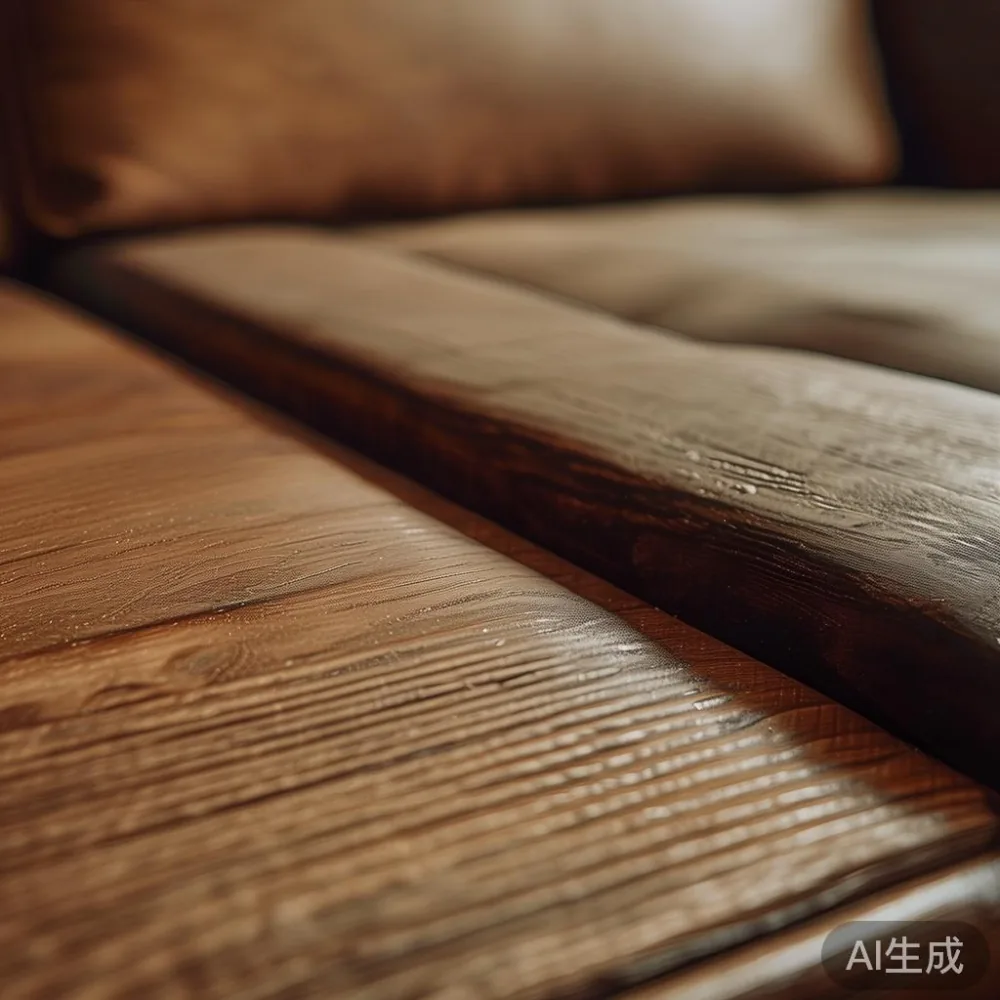
Wood moves. Anyone who has spent a decade cutting mortise-and-tenon joints for a solid wood sofa, a bed frame, a dining table, or a wardrobe will tell you that the kiln-dried timber you load into a 40-foot container at 9-12% moisture content is going to meet a very different atmosphere on the other side of the South China Sea. Singapore's average year-round humidity sits between 70% and 85%. Condos with air-conditioning run drier, around 55-65%. HDB corridors that trap afternoon heat with no cross-ventilation push the gauge the other way.
This is the reality behind every warped cabinet door and every hairline crack in a marble table top sitting on an unseasoned base. The good news: industrial-style solid wood is built for rougher handling than most people assume. The better news: a few habits, the right timber, and a maker who actually understands seasoning will save you thousands of dollars over the lifespan of a piece.
Why does Southeast Asian humidity cause solid wood furniture to crack or warp?
Solid wood is hygroscopic. It exchanges moisture with the air around it, swelling when humidity climbs above its equilibrium moisture content (EMC) and shrinking when indoor air drops below it. A 180 cm dining table built at 10% EMC and dropped into a Tampines HDB running 85% humidity at night will absorb roughly 3-4% extra moisture across its width, which translates to 5-8 mm of lateral movement on a slab that wide. Across a year of wet-dry cycles, that movement adds up to visible cupping on panels and hairline splits along the grain.
Industrial-style construction helps because the joinery is over-engineered for movement. Floating tenons, elongated slot-and-bore fasteners, and quarter-sawn boards all give the timber somewhere to go instead of fighting the change. At MIDHILL, we kiln-season our oak, ash, and walnut for 60-90 days, then let the boards rest in our 4,800 sqm open-air shed for another 2-3 weeks before CNC cutting, which lands the stock closer to its final destination EMC than most factories bother with.
Which loveseat fits a 4-room HDB living room?
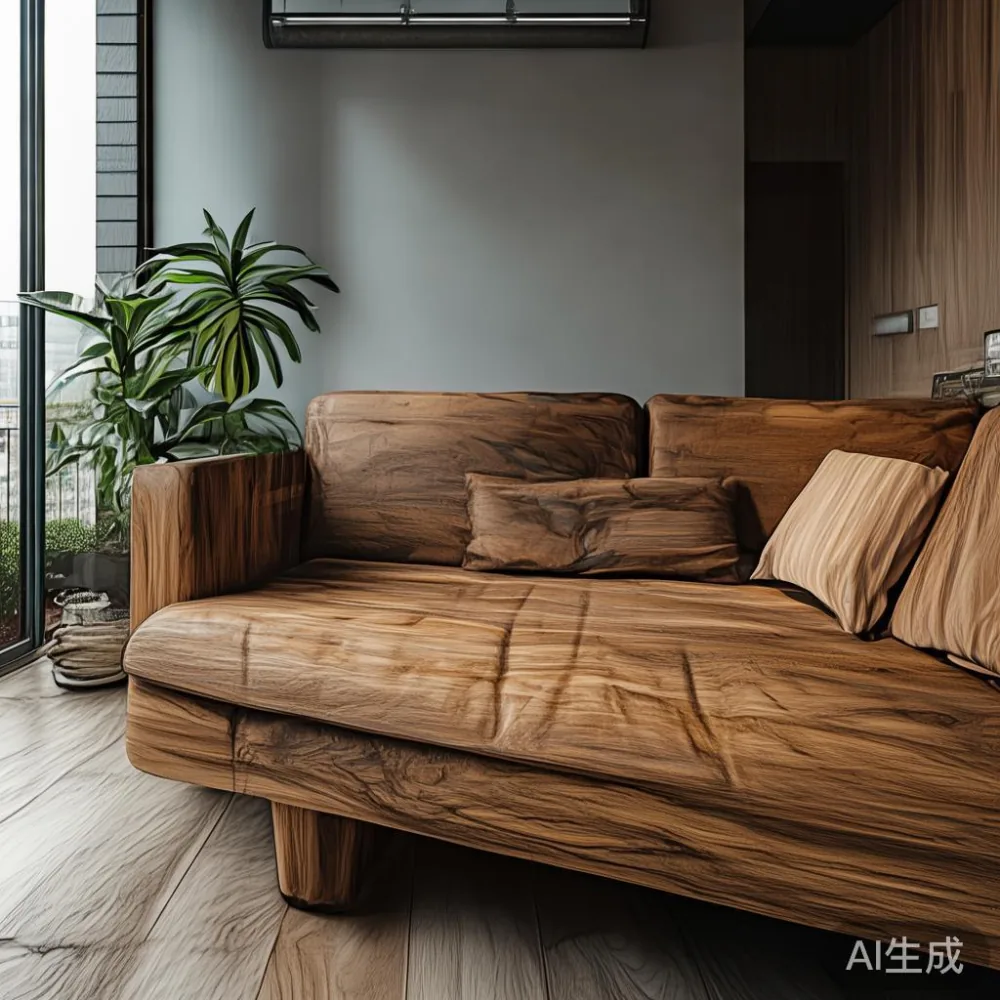
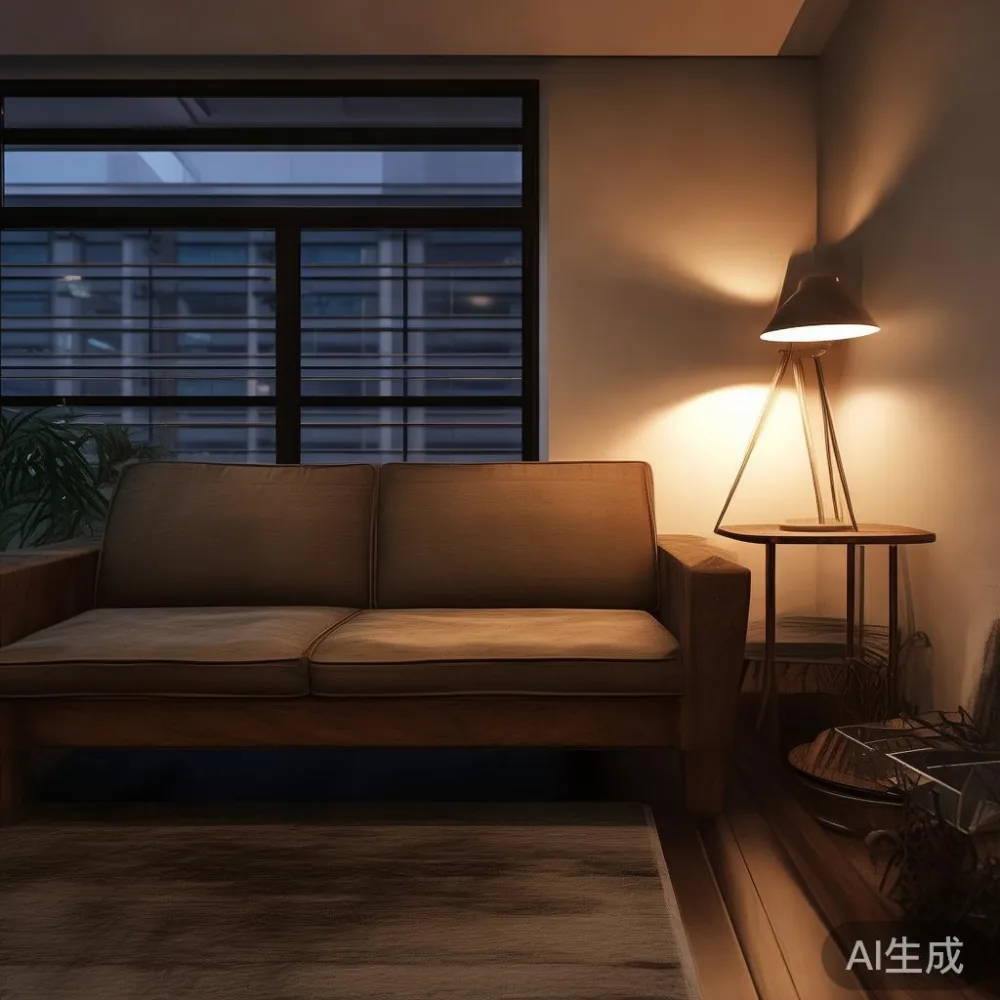
A 1.4-1.6 m loveseat fits a 4-room HDB living room, provided the seat depth stays under 95 cm and the arm height is under 85 cm to clear standard 90 cm corridor handrails during delivery. For a typical 4-room HDB layout in Tampines or Punggol (living room roughly 3.2 m wide by 3.0 m deep after the kitchen and bathroom partitions), a 1.5 m solid wood loveseat with a 90 cm seat depth leaves about 1.6 m of walking room behind it and still pairs with a 90 cm coffee table.
Check three things before you click buy. First, measure the lift door and the corridor pinch point. Most Singapore HDB blocks have lift openings of 80-90 cm clear width and corridors that narrow to 110-120 cm at the stairwell turn. A 1.5 m loveseat usually ships in two boxes around 80 cm wide, which clears the lift but may not clear a tight U-turn if the building uses older 70 cm lobby doors. Second, pick a loveseat with detachable legs (usually bolted with M8 threads) so you can shave 8-12 cm off the height during delivery. Third, ask the factory for the actual finished weight. A kiln-dried ash frame with linen-cotton cushions lands around 42-48 kg for a 1.5 m loveseat, which two movers can carry up to the 12th floor without a service lift booking.
How does Singapore HDB air-conditioning change the picture?
Air-conditioning pulls indoor humidity down to roughly 50-60% when running, which is actually the sweet spot for most European hardwoods. The problem is the swing. A Singapore condo that runs the compressor from 11 p.m. to 7 a.m. and leaves windows cracked during the day exposes a bed frame or wardrobe to a 25-30 percentage point humidity swing every 24 hours. That is harder on timber than a steady 75%.
Two practical fixes. Keep the bedroom door closed with the AC running so the nightstand and bed frame sit in a stable microclimate. Aim the AC vent away from the wardrobe so cold air does not dry one face of the carcass faster than the other. I visited a client in Bedok Reservoir last month whose 1.8 m walnut wardrobe had developed a 2 mm gap along the top rail after eight months. We sanded, refinished, and added a simple felt weatherstrip along the top edge for SGD 120 in materials. The wardrobe had been sitting under a direct AC blast for two years.
What timber holds up best in a Tampines or Punggol HDB?
Three species earn their keep in Southeast Asian conditions. White oak (Quercus alba) has tight grain and high tannin content, which resists fungal staining better than rubberwood or mango wood, the two timbers most flat-pack brands default to. Ash has a similar open grain but slightly better stability, which is why we use it for most industrial-style dining tables in the 160-200 cm range. Walnut is the premium pick: it moves less than oak across humidity cycles (roughly 1.8% tangential shrinkage versus 2.4% for oak between 30% and 80% RH), which is why an Italian light luxury dressing table for small apartment built in walnut tolerates a 45 sqm Punggol studio better than the same piece in oak.
Avoid MDF cores wrapped in veneer for anything wider than 90 cm. The veneer looks identical at delivery and then telegraphs every humidity cycle as edge lift within 18 months. Solid timber, properly jointed, will outlast the warranty and the next two owners.
How should I care for solid wood furniture in a tropical climate?
Three habits keep a solid wood sofa, dining table, or bed frame looking factory-fresh for the first decade. Wipe with a barely damp microfiber cloth weekly, then dry. Skip the Pledge and the silicone sprays; they soften the lacquer and trap moisture against the grain. Keep pieces 8-10 cm away from exterior walls so air circulates behind the back panel. Rotate a wardrobe or sideboard so the same face does not sit under the AC vent for years.
For maintenance beyond cleaning, refinishing matters. Most Singapore owners refinish their dining table once every 4-5 years at a cost of SGD 280-450 for a 200 cm table. MIDHILL offers lifetime refinishing credit on pieces shipped from our Foshan floor, which works out to roughly SGD 180-220 per refinish including return logistics to our Guangzhou workshop and back to your door. Over a 20-year ownership window, that is real money.
Does industrial-style construction actually help with humidity?
Yes, more than any other furniture style on the market. Industrial-style solid wood uses thicker stock (usually 28-38 mm versus 18-22 mm in mainstream flat-pack), exposed joinery you can actually inspect, and metal reinforcement brackets at high-stress joints. The heavier the timber, the slower it moves through humidity cycles, which means fewer visible cracks across a year.
The other reason industrial-style wins in Southeast Asia is repairability. A cracked dining table leg can be re-tenoned, not replaced. A peeling marble table top on an oak trestle can be re-bedded with fresh adhesive. A warped wardrobe door can be planed and rehung. Post-modern light luxury furniture, by contrast, often hides MDF or plywood under a 0.6 mm veneer that cannot be refinished at all. Once the veneer lifts, the piece is scrap.
What should I check before ordering from an overseas factory?
Five concrete questions. What is the moisture content at the time of crating, and can the factory show you a reading? What is the warranty on structural joints, and who honors it in Singapore? What happens if the piece arrives damaged, and who pays the SGD 80-180 customs inspection fee? What is the actual delivery lead time to a Singapore warehouse, and is the quote inclusive of the 9% GST? Can the factory supply a written specification sheet with finished dimensions, hardware grade, and timber species?
MIDHILL ticks all five. We photograph the moisture meter reading before crating, we honor a 10-year structural warranty on every solid wood sofa, bed frame, dining table, wardrobe, and nightstand we ship, and we pre-pay the 9% GST on CIF Singapore quotes above US$350 (about SGD 475). Our Singapore-bound containers take 14-18 days sea freight from Yantian to PSA, then 3-5 days for last-mile delivery to a Tampines or Punggol address. The free shipping threshold clears most 4-piece orders.
How do returns and exchanges work across the border?
Read the policy in writing before you pay a deposit. A reputable factory will offer 14 days from delivery for in-home inspection, which is enough time to check humidity response, joint fit, and finish quality in your actual HDB unit. The piece must be in original packaging and free of cosmetic damage from use. Refunds are processed within 7-10 working days of the unit arriving back at the warehouse, and the return shipping cost (roughly SGD 220-380 for a 1.8 m wardrobe from Singapore to Foshan) is usually the buyer's responsibility unless the defect is factory-side.
One tip from a client in Punggol Waterway Terraces last quarter: order one piece first, live with it through one wet-dry cycle (about 6-8 weeks), then order the rest of the set if the timber behaves. That is the cheapest insurance policy in furniture.
What about marble tables and humidity?
Marble is dimensionally stable, but the wood substructure under a marble table top still moves. The trick is mechanical isolation: the stone should sit on felt pads or silicone bumpers inside a wooden frame that floats 3-5 mm on each side. Never bolt a marble top directly to an unseasoned timber base. The marble will crack along the bolt line within a year as the wood shrinks.
At MIDHILL we use CNC-routed sub-bases with 2 mm expansion gaps on all four sides for our 1.2-1.6 m marble table tops, then seal the gap with a flexible neutral-cure silicone. The marble reads as one piece with the timber, but the timber can still breathe. That detail costs us about SGD 45 per table in extra labour and roughly 18 minutes of line time. It is the difference between a table that lasts five years and one that lasts twenty-five.
Final word on tropical-grade solid wood
Solid wood furniture in Singapore is not a problem to be solved. It is a relationship to be managed. Pick the right timber, pick the right factory, and pick the right habits. Measure your lift door before you measure your living room. Keep the AC vent off the wardrobe face. Refinish before the lacquer fails, not after. The 15+ countries we ship to include Malaysia, Thailand, Vietnam, and the Philippines, all of which share Singapore's humidity profile, and the feedback loop from those markets is what keeps our seasoning schedules honest. A 200 cm industrial-style ash dining table built for Tampines should outlive the HDB lease it sits in.