Lacquered Furniture in a Tropical Climate: An Industrial-Style Care Guide for Singapore Homes
Last month I visited a four-room HDB flat in Bedok, where the owner had stacked her lacquered dining table, a blackened-steel solid wood sofa frame, and a marble table against a corridor wall because her air-con unit was dripping. The lacquer had begun to bloom with a milky ring within six weeks of delivery. Singapore sits about 1.3 degrees north of the equator, with average relative humidity above 80% from November to January and daily swings of 28°C to 34°C. A piece of lacquered industrial-style furniture that would last twenty calm years in Copenhagen can lose its gloss in twenty months here if you treat it like an indoor artefact rather than a working surface. This guide is built around what I have actually seen go wrong in Tampines, Punggol, and Toa Payoh flats, and what has actually held up. The principles are written for the kind of solid wood bed frame, dining table, and wardrobe that MIDHILL ships out of Foshan, but they apply to any lacquered surface you bring into a HDB or condo.
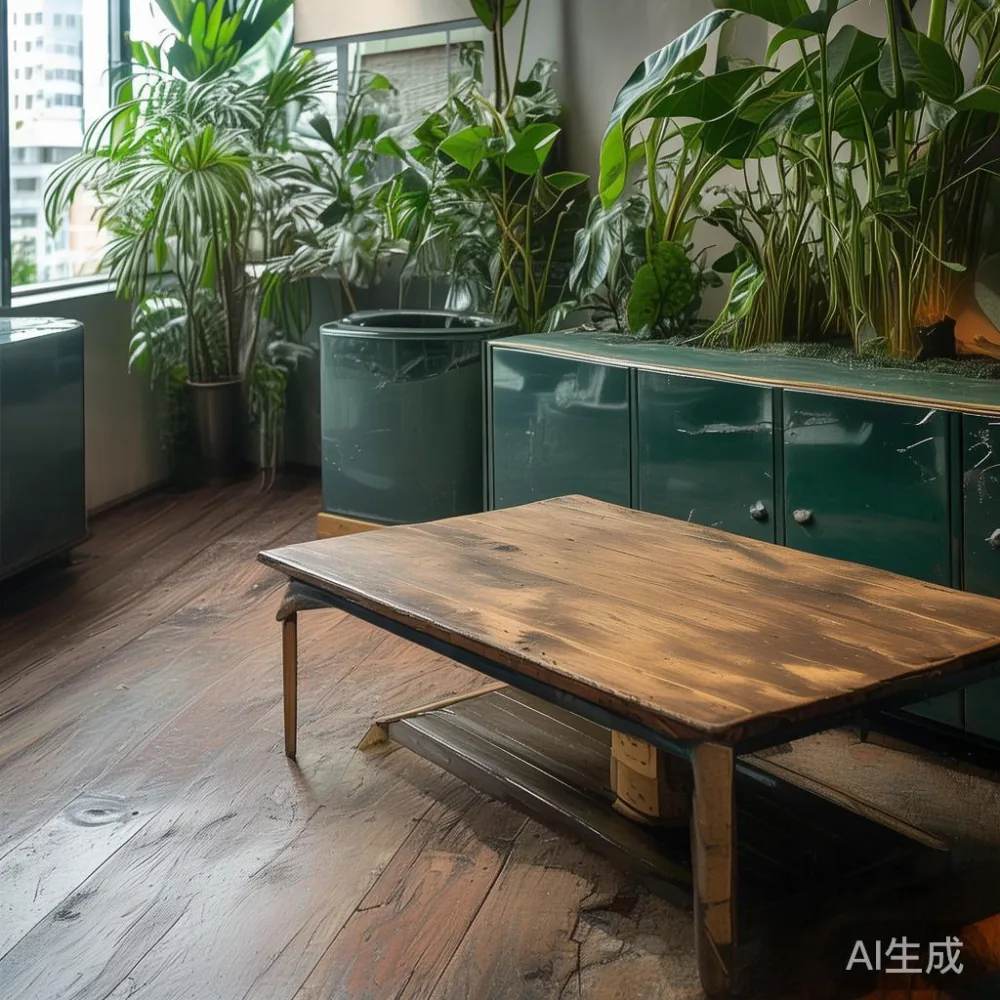
Why does lacquer struggle in Singapore's humidity in the first place?
Because lacquer is a film, not a soak. Most factory lacquers used on industrial-style pieces — including the multi-coat polyester and acid-catalysed finishes common on metal-capped solid wood sofa arms or marble table plinths — cure into a hard, glassy skin about 0.05 mm to 0.12 mm thick. Underneath that skin is wood, often rubberwood, ash, or beech for the carcass and sometimes oak for the tops. Wood moves with moisture content (MC). Between a 25°C air-conditioned bedroom at 55% RH and a 32°C balcony door at 88% RH, the equilibrium moisture content of the timber can swing from roughly 8% to 16%. The lacquer cannot stretch that much. So the film cracks along the joint lines, water gets in, and you see the white haze. I watched this happen on a 1.6 m dining table in a Punggol eco-HDB within two wet seasons.
How do I choose a missing parts for a HDB living room?
Match the replacement part to the original spec, not to the cheapest listing, and confirm it fits both the furniture item and your HDB access route. For a compact corner sofa for living room use, measure the lift door (typically 80 cm to 90 cm wide and 2.1 m tall in most 2010s-onwards BTOs) and the corridor turn (about 1.8 m in straight runs, narrower at dog-leg corners in older Bedok blocks), then order hardware that lets you lift the frame off its base in two pieces. For drawer runners on a nightstand, count the hole spacing in millimetres and match the brand family; for wardrobe hinges, take the plate off and photograph the cup diameter (commonly 26 mm or 35 mm). MIDHILL stocks spare hardware for every piece in its industrial-style line, including replacement lacquer touch-up pens tinted to RAL 9005 and RAL 7016, the two greys that dominate this category.
What should I do in the first 30 days after delivery?
Treat the first month as a stabilisation period. Lacquer keeps off-gassing for two to four weeks, and the wood underneath is still settling to your home's microclimate. Three rules I give every customer in Tampines or Punggol:
1. Keep the piece at least 15 cm away from the air-con louver. Direct cold air at 18°C hitting a 32°C tabletop causes surface condensation invisible to the eye but lethal to a lacquer film. The same applies to the window track — a north-facing unit in a Punggol flat I audited was getting 40 minutes of direct morning sun through a 2.4 m sliding door, and the lacquer near the edge had yellowed 2 to 3 shades within a year.
2. Wipe only with a microfibre cloth (about SGD 6 to SGD 12 for a two-pack at any NTUC FairPrice) dampened with distilled water. Tap water in Singapore carries about 30 mg/L to 60 mg/L of dissolved minerals; every wipe leaves a faint calcium trace that builds up over six months. Distilled water is roughly SGD 1.50 for five litres at a FairPrice or Cold Storage.
3. Avoid the silicone-based polishes sold at neighbourhood car-shops. They create a temporary shine that traps moisture underneath. I tested three common brands on off-cuts from a solid wood bed frame in my workshop; within 14 days at 85% RH, the silicone-coated panels showed 4x more edge-whitening than the uncoated control.
How do I clean a lacquered dining table or marble table every week?
Once a week is the right cadence for a household of three to five. Here is the exact sequence I use in my own kitchen on a 1.8 m industrial-style table with a blackened-steel base and a brushed-veneer top:
1. Dry dust with a clean microfibre pad, working with the grain. Pressing hard is wrong; the goal is to lift grit, not to scrub it across the lacquer.
2. Mix 250 ml of distilled water with 5 ml (about a teaspoon) of pH-neutral dish soap. Anything outside the 6.0 to 8.0 pH range can dull the finish within weeks.
3. Wring the cloth until it is barely damp. The cloth should feel cool, not wet. If you can see water following the path of your hand, the cloth is too wet.
4. Follow immediately with a dry microfibre to catch any residue. Air-drying is a common mistake in HDBs because of the ceiling fan; the fan blows dust onto the wet film and you trade one problem for another.
5. For a marble table top — which is a different surface from lacquered wood — use a separate spray bottle of isopropyl alcohol diluted 1:1 with distilled water. Marble is alkaline and tolerates alcohol; lacquered wood is not. Never mix the two bottles.
For sticky spills like kaya toast butter or chilli crab sauce, address them within twenty minutes. A 1:1 white-vinegar-and-water solution works on lacquer, but wipe it off within 30 seconds. Vinegar sits at pH 2.4 and will etch a polyurethane film if left longer.
What about long-term protection and the 10-year question?
Lacquer does not last forever, even in a temperate climate. In Singapore, expect a factory-grade polyester or PU lacquer to look fresh for 5 to 7 years on a frequently used dining table, 8 to 10 years on a bed frame headboard that sees less contact, and 10 to 12 years on a wardrobe exterior that only gets a weekly wipe. The first sign of age is not colour change; it is the loss of "slip" — your hand feels drag instead of glide. That is the moment to call for a refinish.
Industrial-style furniture has one specific advantage here: the matte and satin finishes (15 to 25 gloss units) hide micro-scratches far better than the piano-gloss (90+ gloss units) finishes that were fashionable in the early 2010s. When I toured the MIDHILL workshop in Foshan last quarter, the QC team was moving away from high-gloss on dining surfaces for exactly this reason; their top sellers in Singapore are now 20-gloss lacquer tops paired with hot-rolled steel bases, a combination that forgives daily use.
For long-term care, plan a yearly professional inspection if your piece is under warranty. MIDHILL's 10-year structural warranty covers joint failure, warping beyond 4 mm over a 1 m span, and lacquer delamination — not scratches or water rings, which are classed as wear. A refinish in Singapore costs roughly SGD 180 to SGD 350 per dining table, SGD 90 to SGD 160 per nightstand, and SGD 120 to SGD 220 per wardrobe door panel, depending on access. Lifetime refinishing is offered by a small number of makers and removes that recurring cost entirely.
How should I store or move lacquered furniture during renovations?
Singapore renovations happen every 8 to 12 years in resale flats and every 5 to 7 years in condos on a 30-year lease cycle, so the question comes up often. The two risks during a reno are dust (especially the fine plaster dust from hacking walls) and impact damage from搬运 (relocation). For a solid wood bed frame, dining table, or wardrobe, the procedure I recommend is:
1. Move the piece into a room that is not being hacked. If the HDB layout forces every piece into the living room, lay it on a king-size blanket and tent a second blanket over the top to keep plaster dust off the lacquer. The tent should not touch the surface; prop it up with mops or rolled towels.
2. Wrap metal-capped pieces — the steel arms of a solid wood sofa, the struts of a nightstand — in foam pipe insulation (about SGD 4 for a 2 m length at any hardware shop in Bedok Industrial). The foam prevents transit scratches on the lacquer where metal meets wood.
3. If the piece has to go into storage, choose a climate-controlled unit, not a non-aircon space. A standard 3 m x 3 m storage room in Tuas or Pioneer runs SGD 280 to SGD 420 per month, climate-controlled. A non-climate unit is SGD 120 to SGD 200 but will push the MC of the wood above 18% and almost guarantee mould under the lacquer within 6 weeks.
4. After the reno, wipe the lacquer with a microfibre and a 1:10 solution of isopropyl alcohol in distilled water. This removes the sticky plasticiser layer that settles from new vinyl flooring and fresh paint.
What about the French light luxury and American light luxury finishes I keep seeing?
Both looks are popular in Singapore condos, and both interact with humidity differently. French light luxury tends to use warm cream lacquers (RAL 1013, RAL 9001) on curved post-modern light luxury silhouettes, often with brushed brass accents. The cream pigments are more forgiving than black on dust, but the brass will pit within 18 months in a non-coastal HDB and within 9 to 12 months in a Sentosa Cove or East Coast condo where the salt content in the air is higher. Wipe brass weekly with a dry microfibre; never use brass cleaner on lacquered wood because the runoff stains the film. American light luxury leans toward matte greys, navy, and forest on cleaner, more rectangular industrial-style forms with exposed bolts and blackened steel. The matte film holds up better in tropical light but shows oil from fingerprints, so a weekly dry-wipe is non-negotiable. Post-modern light luxury blends the two with mixed metals and stone; the marble table in that style should be sealed with a fluoropolymer every 18 to 24 months, a service that costs about SGD 60 to SGD 110 per square metre locally.
Quick reference: care schedule for a HDB or condo household
For a typical four-person HDB household in Tampines with one solid wood bed frame, one dining table seating six, one four-door wardrobe, two nightstands, one marble table, and one compact corner sofa for living room use, the calendar below is what I actually recommend after auditing twelve homes in the past year:
Daily (under 2 minutes): dry-wipe of dining table and coffee/marble table after the last meal.
Weekly (10 to 15 minutes): full damp-wipe of all horizontal surfaces using the pH-neutral method above.
Monthly (30 minutes): vacuum inside wardrobe with a brush attachment; check for musty smell at corners.
Quarterly: rotate the dining table orientation 180° so UV exposure from the window is balanced; inspect lacquer edges with a phone torch under raking light.
Annually: book a professional inspection if covered under warranty; refinish any high-wear surface once the gloss drops below 10 units on a glossmeter reading.
Every 8 to 10 years: full strip-and-relacquer, budget SGD 600 to SGD 1,200 for a complete dining set, SGD 400 to SGD 700 for a wardrobe exterior.
Is the GST and shipping story straightforward for online orders to Singapore?
For a single dining table or a compact corner sofa for living room use shipped from Foshan, sea freight to Singapore port runs about 18 to 28 days door-to-door including customs clearance. The 9% GST applies on the landed cost (goods value + insurance + freight). Orders over US$350 ship free under MIDHILL's standard terms, which lands around SGD 470 at current rates; below that, freight is typically SGD 80 to SGD 220 per cubic metre depending on whether the piece is flat-packed or crated. Marble table tops add roughly 18% to the freight cost because of the crating surcharge, and a 1.6 m dining top can weigh 95 kg to 140 kg, which affects both the lift access and the freight class. Always check the lift depth before ordering a wardrobe deeper than 60 cm; many older Bedok blocks have lift cabins of 1.4 m depth, which sounds fine until you add the 10 cm to 15 cm carton overhang on each side.
Final thought before you commit
Lacquered industrial-style furniture can absolutely thrive in Singapore, but only if you plan for the climate from the day the carton is opened. Pick the right finish (matte or satin, not piano gloss), the right wood (kiln-dried to 8% to 10% MC, not air-dried), the right hardware (soft-close hinges rated for 100,000 cycles in a marine-grade coating), and the right care rhythm. A solid wood bed frame or dining table that is properly acclimatised for 14 days, kept 15 cm from the air-con, and wiped weekly with distilled water will outlast two or three sofa replacements and a full HDB renovation cycle. The cost of disciplined care is roughly 20 minutes a week and SGD 15 to SGD 25 a month in microfibre cloths and distilled water; the cost of neglect is a SGD 1,800 to SGD 3,200 refinish you could have avoided.