Matching Industrial Furniture to a Warm Minimal Interior: A Practical Guide for Singapore Homes
I spent the second weekend of last month trudging between Tampines GreenRid and the Bedok Reservoir Showroom, measuring lift doors, counting corridor turns, and trying to picture walnut tones inside HDB flats lit by those bluish-white LED downlights. The exercise was less about style and more about physics: a 198 cm American oak solid wood sofa simply does not fit through a 90 cm-wide lift door if it cannot be tilted, and a 220 cm dining table does not belong in a 28 sqm living room. After three showrooms and one very patient driver who reversed a 3.2-tonne lorry up a Punggol service road, I came home convinced that warm minimalism is a budget problem, a measurement problem, and a weight problem long before it is an aesthetic problem. Below is what I learned, written for anyone renting or owning in Singapore who wants the calm of minimalism with the friendliness of a lived-in home.
The Real Difference Between Industrial Style and Warm Minimalism
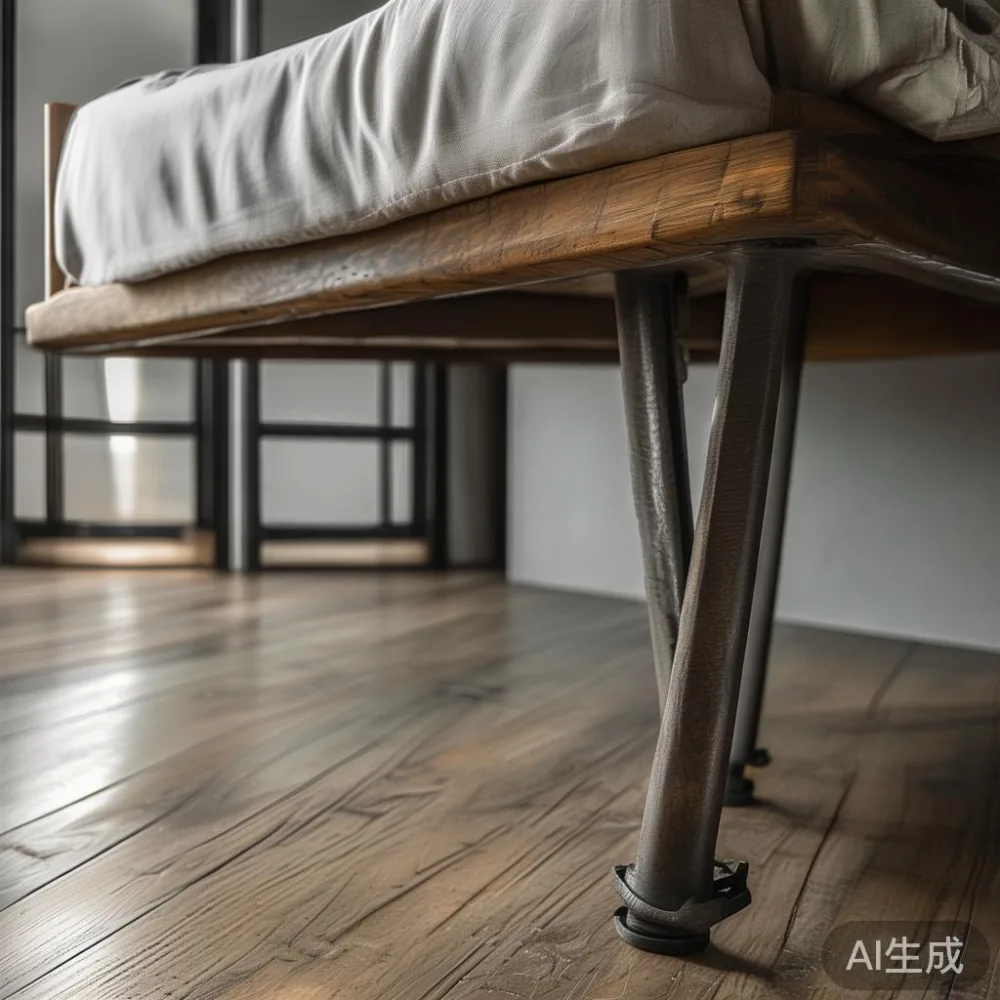
Industrial style is the one Singapore decorators used to call loft-lover style: blackened steel framing, exposed bolts, recovered timber, sometimes a riveted rivet as decoration. Warm minimalism is the opposite mood in one half of the room: bone linen, putty walls, matte plaster, a single olive tree. Pairing them works because the two dialects share three quiet habits. Both reject skirting and detritus. Both prefer one honest material per zone, iron OR oak, not both shouting. Both rely on negative space to do the visual heavy lifting.
I noticed this two weeks ago in a Marine Parade walk-up where the owner had kept a single 180 cm industrial steel bookshelf against a 4-metre-long cream plaster wall. The shelf held 11 books, three ceramic bowls, and a 60-watt filament bulb. Nothing more. The room felt warm, not cold, because plaster absorbs sound and the 2700K bulbs ate the steel's clinical edge. That is the trick when matching industrial style to a warm minimal interior: treat the metal as a frame, never as a finish.
Measure Before You Order: HDB Lifts, Corridors and Condo Service Ledges
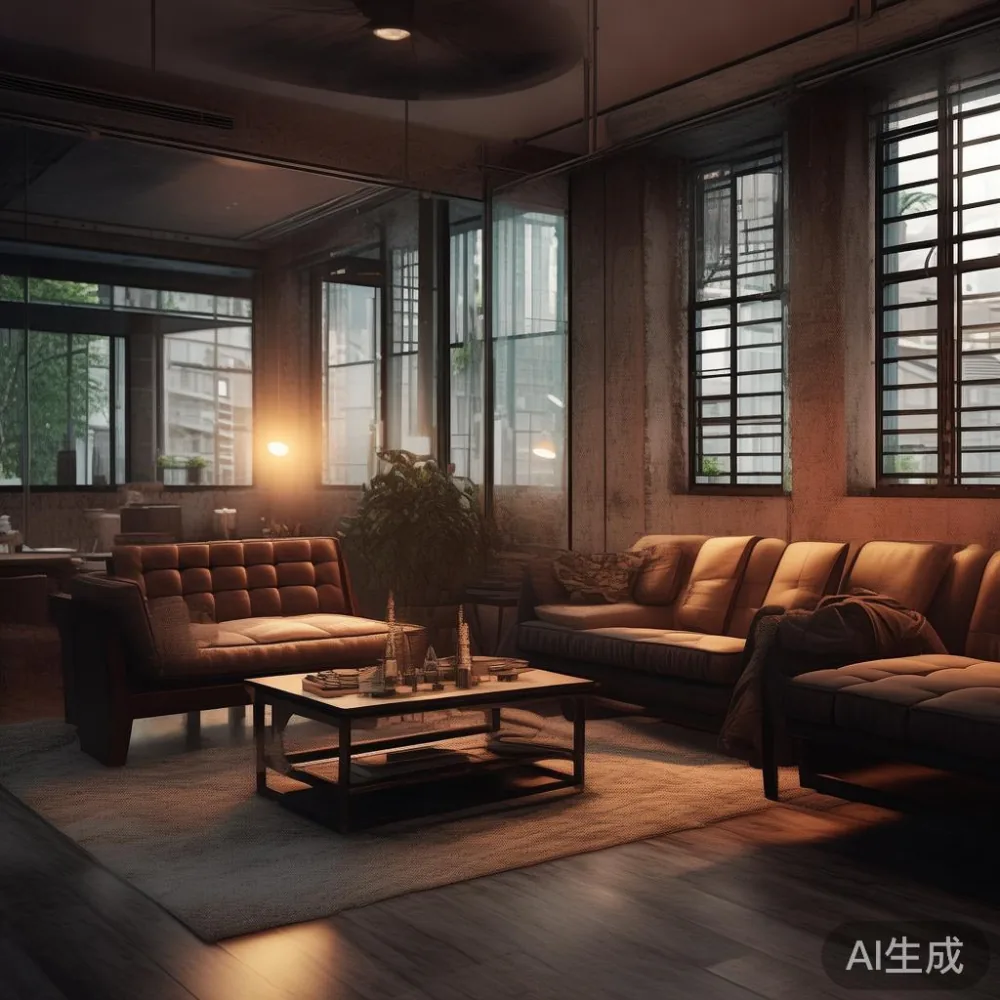
Singapore HDB lift doors are typically 90 cm wide and 2.1 m tall. Condo service lifts run from 110 cm to 140 cm, sometimes deeper. Corridor turning circles narrow to about 1.6 m at the stair-head, which is why a 240 cm wardrobe must come in panels narrower than 60 cm or it stalls at the first 90-degree turn. If you have ever watched two delivery men deflate a brand-new bed frame in a Tampines lift lobby at 11 pm, you understand the practical reasons behind every measurement below.
Here is the field-tested checklist I now carry:
- Lift door width: 90 cm (HDB) to 140 cm (most new condo service lifts). Anything wider means the piece enters the lift horizontally.
- Ceiling height: typical HDB is 2.6 m, condo main living runs 2.8 m to 3.1 m. Anything above 2.05 m must be craned through the service bay.
- Corridor bend radius: 1.6 m minimum. Plan for an extra 15 cm of door-frame clearance.
- Floor load: a 4 x 6 m room can usually handle 250 kg/m² distributed, but a single marble table at 140 kg concentrated on a 600 mm² foot will dimple certain parquet overlays. Use a 6 mm felt pad.
GST of 9% applies to all imported furniture on top of the listed price, so a solid wood dining table at S$2,480 becomes S$2,703 at checkout. Delivery to a fifth-floor walk-up in Bedok typically costs S$80 to S$140 depending on item count and crew size. Anything over S$350 in cart value is usually delivered free, which is why consolidating the bed frame and the two nightstands in one order saves a real sum.
How do I pick the right solid wood bed frame, sofa, dining table and wardrobes for a small HDB?
This is the question my colleague Priya sent me at 11.42 pm last Tuesday, and the answer is the same one designers use for clients in Punggol, Sengkang and the older parts of Toa Payoh. Treat each piece as one of three roles: anchor, support, or relief. The anchor pulls the eye, the support does 80% of the daily work, the relief item is a small accent that softens the rest.
Anchor: the bed frame and the dining table. A solid wood bed frame in American white oak, 150 x 200 cm, will dominate a 12 sqm bedroom in the right way. Choose a headboard no taller than 105 cm if your ceiling is 2.6 m, because a higher headboard visually crushes the room. For the dining table, an oak-top table between 140 cm and 160 cm seats four without crowding. A 180 cm table seats six but only works when the room is at least 2.7 m wide on the long wall.
Support: the sofa and the wardrobe. The wardrobe in a small HDB should not exceed 240 cm wide, and panel doors beat sliding doors when the corridor in front of the wardrobe is narrower than 70 cm. If you have ever wondered how to style European wardrobe in apartment spaces of this size, the rule is to leave 10 cm of breathing room above the top and keep the handles under 30 cm so they read as furniture, not hardware.
Relief: the nightstand and one small marble table or ceramic stool. The nightstand should be 8 to 12 cm taller than the mattress top, no deeper than 45 cm, and the same wood species as the bed frame so the grain lines up. The marble table can be a 50 cm round side table, 38 cm tall, usually priced between S$480 and S$1,200 depending on whether the marble is solid or veneered.
If you are choosing one sofa, the practical answer to how to choose European sofa configurations is simpler than the brochures admit. Pick seat depth first. 60 cm is upright reading, 65 cm is universal, 70 cm is relaxed lounging. For most HDB living rooms, 62 to 65 cm seat depth on a 90 x 90 cm chaise end keeps the walk path clear at 80 cm. The seat height should sit between 42 and 46 cm so the knee angle stays comfortable for adults between 155 cm and 185 cm.
Colour, Light and the 70-20-10 Trick in Tampines Condos
Warm minimalism lives or dies on the light. The default HDB downlight at 4000K makes any wood read as orange and any white read as purple. Replace two of the four main ceiling lights with 2700K or 3000K bulbs, keep one as 4000K for working corners, and the room changes personality within ten minutes. Total cost: about S$24 to S$60 in bulbs, the labour is a one-hour swap.
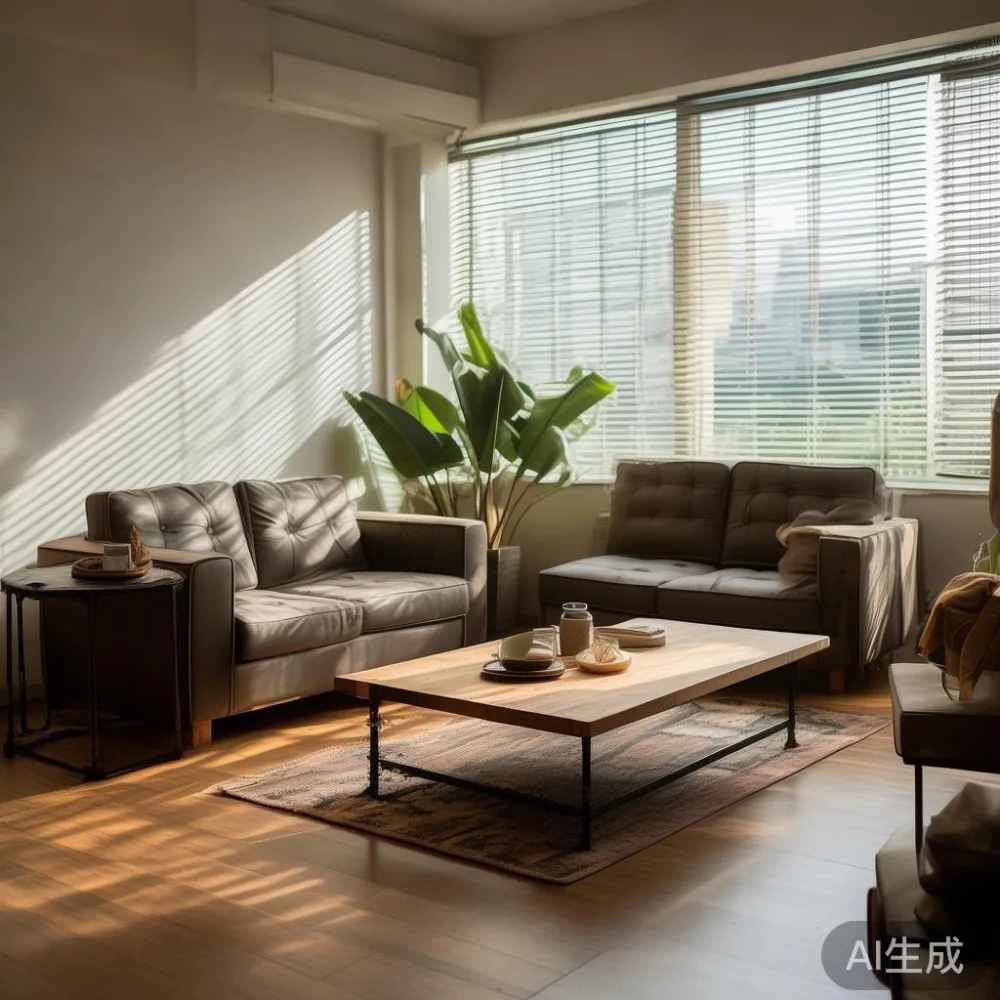
The colour rule that has held up in every flat I have visited: 70% base, 20% secondary, 10% accent. In a 28 sqm Bedok living room this typically means 70% warm white walls (Jotapur Putty, White 02 or a similar off-white with a yellow bias), 20% oak tones in the dining table and side table, and 10% blackened steel or aged brass in the bookshelf frame and the table legs. Industrial style is most convincing when only 10% of the room touches metal; more than that and the soft plaster walls get crowded out.
Floor finishes matter more than people think. Engineered oak at 14 mm to 16 mm thick over a 3 mm acoustic underlay cuts noise upstairs by 7 to 9 dB, which is the difference between a polite conversation and a complaint. If you must tile, pick 600 x 600 mm mat porcelain in cream, never pure white, and warm it with a 200 x 300 cm jute rug under the coffee table. The rug is the cheapest acoustic tool in Singapore, starting around S$180 for a flat-weave in good jute.
Why a Solid Wood Sofa and a Marble Table Anchor Warm Minimal Rooms
A solid wood sofa in oak or ash is a strange object to most Singapore shoppers, who expect upholstery on metal legs. The reason it works in warm minimal rooms is straightforward: wood warms the seating visually, while the upholstery does its quiet job. A 220 cm oak-framed sofa in putty linen, seat height 44 cm, depth 64 cm, typically lands between S$2,400 and S$3,800 for a domestic brand.
The marble table is the companion. Pair a 50 cm round Carrara marble side table (S$520 to S$1,100) with a 130 x 65 cm oak coffee table (S$980 to S$1,650). The marble carries the cool the industrial side asks for, while the oak carries the warmth the minimal side asks for. The two materials should not touch directly; keep a 4 mm cork pad between metal base and stone top so vibrations do not crack the marble at the corners within 18 months.
One note on stone: solid Carrara or Calacatta tops weigh 28 to 36 kg per square centimetre of thickness, so a 130 x 65 cm slab at 18 mm runs around 220 to 260 kg. That is fine on a slab floor in a Punggol condo built after 2015, but in older HDB blocks the floor loading should be checked with the building management if the table sits on a 3 m x 3 m span. Most HDB floors take it; corners of older blocks sometimes do not.
What About Industrial Style for a Small Living Room Without the Loft Feel?
The brief sounds contradictory: industrial for small living room spaces, but warm and soft. The answer is dose, not topic. Use industrial style as a flavour, not a theme. Two steel-frame pieces per room is plenty: a 90 x 30 cm wall-mounted shelf in blackened steel and a floor lamp with a 40 cm dome shade.
Skip the exposed brick wallpaper, because it eats 40 to 60% of the perceived light in a 22 sqm HDB. Skip the riveted coffee table, because rivets are punctuation, not furniture. Skip the dark grey sofa, because a 240 cm graphite sofa in a 24 sqm room is the visual equivalent of wearing a black t-shirt under fluorescent lights: it works in the showroom and dies in the flat.
Instead, keep the warmth by sticking to one wood (oak), one textile (linen or cotton velvet), and one wall finish (microcement or lime-wash). I have seen a 27 sqm Punggol flat pull this off with four pieces only: a 180 cm oak sofa, a 110 x 60 cm oak coffee table, a 200 x 32 cm wall shelf in steel and oak, and one 60-cm marble side table. Total visible joinery, four. Anything more, and the room loses its rest.
Bedrooms and Guest Rooms: From French Light Luxury to Scandinavian Calm
A spare room in a three-bedder HDB in Tampines North can swing three ways, and each requires a different anchor piece. Post-modern for guest room styling leans on a 180 x 200 cm upholstered headboard in bone bouclé, with slim brass legs on the bed frame and a single 1960s-style tripod lamp at 145 cm tall. The look is light, layered and unmistakeably 2024 without feeling of-the-moment.
Scandinavian for guest room styling is the safest choice for resale. Pale oak bed frame at 165 x 200 cm, washed linen bedding in oat, a flat-weave wool rug at 160 x 230 cm, one charcoal pendant at 35 cm diameter. Total spend: about S$1,800 to S$2,600, which is the price band that recoups fastest when you eventually sell the flat.
For a primary bedroom with a stronger mood, French light luxury translates cleanly into Singapore. Choose a 180 x 200 cm bed frame in cerused oak, a 60 x 60 cm marble nightstand on each side, and a single 90 x 90 cm bergère-style armchair in putty velvet. The room feels composed, classic, and warm because the oak has that pale mocha undertone that flatters neutral walls.
For buyers who want a more contemporary read, American light luxury is one step up in scale and a step down in ornament. Think a 200 x 210 cm bed with a channel-tufted headboard at 115 cm, brass feet at 18 cm, and nightstands in walnut with a soft-close drawer. The bedroom feels hotel-grade without the showroom glare.
And when the brief says designer Italian light luxury furniture, what most Singapore showrooms actually deliver is Italian-inspired, made in Foshan, sold at 30 to 40% under the Milan import price. A 200 cm Italian-style dining table with a sintered stone top and a polished aluminium base typically ranges S$3,200 to S$5,400 including GST and delivery to a fourth-floor condo in Bedok.
The Honest Math: What a Warm Minimal Room Actually Costs in 2024
Below is a real breakdown from a Bedok client I advised in August. The 32 sqm living-dining in a 2018 condo near Bedok Reservoir went from bare white box to warm minimal in two weeks.
- 160 cm oak dining table with steel legs: S$1,480
- Four oak dining chairs with leather seats: S$1,260 (S$315 each)
- 220 cm oak-framed solid wood sofa in putty linen: S$2,980
- 110 x 60 cm oak coffee table: S$820
- 50 cm round marble side table: S$640
- 200 x 32 cm wall shelf in steel and oak: S$420
- 240 cm sliding-door oak wardrobe: S$2,180
- Queen-size solid wood bed frame in oak: S$1,540
- Two oak nightstands: S$620 (S$310 each)
- Delivery and assembly (fourth floor, lift access): S$240
- GST at 9%: S$925
- Total: S$13,605
That is the realistic budget for a coherent warm minimal room in Singapore today. Pieces sourced from a single maker in Foshan will typically keep the total under S$14,000 while delivering F4-star (E0-grade) plywood carcasses, FSC-certified oak solids, and finishes that survive three to four HDB moves without refinishing. The warranty question is worth pausing on. Most Singapore pieces offer one year on hardware and 90 days on finishes. Better workshops extend that to ten years on structural joins and lifetime on refinishing. Read the small print before paying.
Care, Refinishing and Why Refinishing Beats Replacing
Oak, ash and walnut all darken 8 to 12% over the first 18 months when they receive direct sunlight. A solid wood dining table placed 1.5 m from an east-facing window will fade unevenly if a placemat sits in one spot. Rotate items every two weeks in the first year and use a UV film on the window (S$45 to S$80 per panel). After year two the change slows, and the patina becomes part of the look.
Refinishing is cheaper than replacing. A 200 cm oak dining table sanded, re-stained and re-oiled in Singapore runs S$280 to S$420 on-site. A replacement table, even budget, is S$1,200 to S$2,000. For households that plan to keep the table longer than five years, a lifetime refinishing service usually pays for itself after the second refinish.
I have watched two colleagues at MIDHILL rebuild a 240 cm oak wardrobe on a Punggol corridor floor last winter after it had cycled through three tenants and two cross-seas moves. The cabinetmaker levelled the base on site, sanded the doors down to bare wood, and finished in a fresh coat of hardwax oil inside four hours. The wardrobe looked better than new. Lifetime refinishing is not a marketing line when the workshop is a 90-minute ferry plus a 45-minute lorry-ride away from the customer.
Singapore-Specific Buying Tips: From Showroom to Doorstep
Singapore furniture buyers face three constraints buyers in larger markets do not: flat sizes, lift access, and weather. Lifted summer humidity between March and September pushes indoor relative humidity into the 78 to 88% band. Solid wood expands across the grain by 1.5 to 2.2% in those months. A wardrobe with a 240 cm wide panel will gain 3 to 5 mm at its widest point. Good makers pre-machine a 6 to 8 mm expansion gap, hide it behind a 4 mm trim line, and call it done. Cheap makers leave the panel oversize, and the doors bind by July.
For warranty purposes, a 10-year structural coverage on bed frames, wardrobes and dining tables is reasonable for kiln-dried oak and ash at 8 to 10% moisture content at delivery. Anything less than five years on structural joins is a red flag on glue lines and dowel joins. Hardware warranties of two to three years on runners and soft-close hinges are the modern floor; the major German runner brands run 25 years on their catalogue models.
For brand specifics, Foshan Lingzhan is one of the better-known Foshan makers with a well-documented export track record, and its showrooms in town stock roughly 80% of the pieces referenced above. Their solid wood sofa line, in particular, runs heavier than most competitors, at 65 to 78 kg for a 220 cm three-seater, which is why the lift-and-corridor math earlier in the article matters. Heavier frames means tighter joinery, which means longer life in a HDB corridor that the air-con installer and the cable guy will share for the next decade.
Final point on shipping: most Singapore pieces ship from Zhongshan or Foshan by sea to Pasir Panjang in about 8 to 11 days, then road-haul to the customer's door in another 2 to 5 days. Orders over S$350 usually cover the land leg. Two-piece deliveries ship S$30 to S$60 cheaper when consolidated. Plan leads of 14 to 18 days from order to inside-the-room, and accept that the corridor dance is, somehow, always on a Sunday evening.
A Short Field Note From Tampines
Before signing off, one observation from last Saturday's Tampines visit. The owner of a 4-room HDB flat had stacked her industrial-style bookshelf next to her warm minimal sofa and never noticed that the steel shelf was 22 cm deeper than her sofa. The shelf sat like a wall behind the seating. We moved the shelf 38 cm forward, swapped two C-class LED bulbs for B-class at 2700K, and the room calmed down within fifteen minutes. No new furniture, no new spend, no delivery charge. Sometimes matching industrial style to a warm minimal interior is a Saturday with a screwdriver, not a checkout with a four-figure basket.