How Humidity in Southeast Asia Affects Wood Furniture (And What Singapore Owners Can Do About It)
Singapore sits one degree north of the equator, and the air never really lets your furniture forget it. Morning humidity routinely pushes past 85% in Tampines, Bedok, and Punggol HDB flats, and even with the air-con humming 22 hours a day, the moisture content in a solid wood dining table quietly drifts through the year. I learned this the hard way last March when a friend in a 4-room HDB at Bedok Reservoir called me over to look at his 1.8 m solid wood dining table. Three of the planks had cupping along the edge, and the drawer faces on his oak wardrobe sat 4 mm proud on the left side. He swore nothing had spilled. Nothing had. The wood had simply drunk the air.
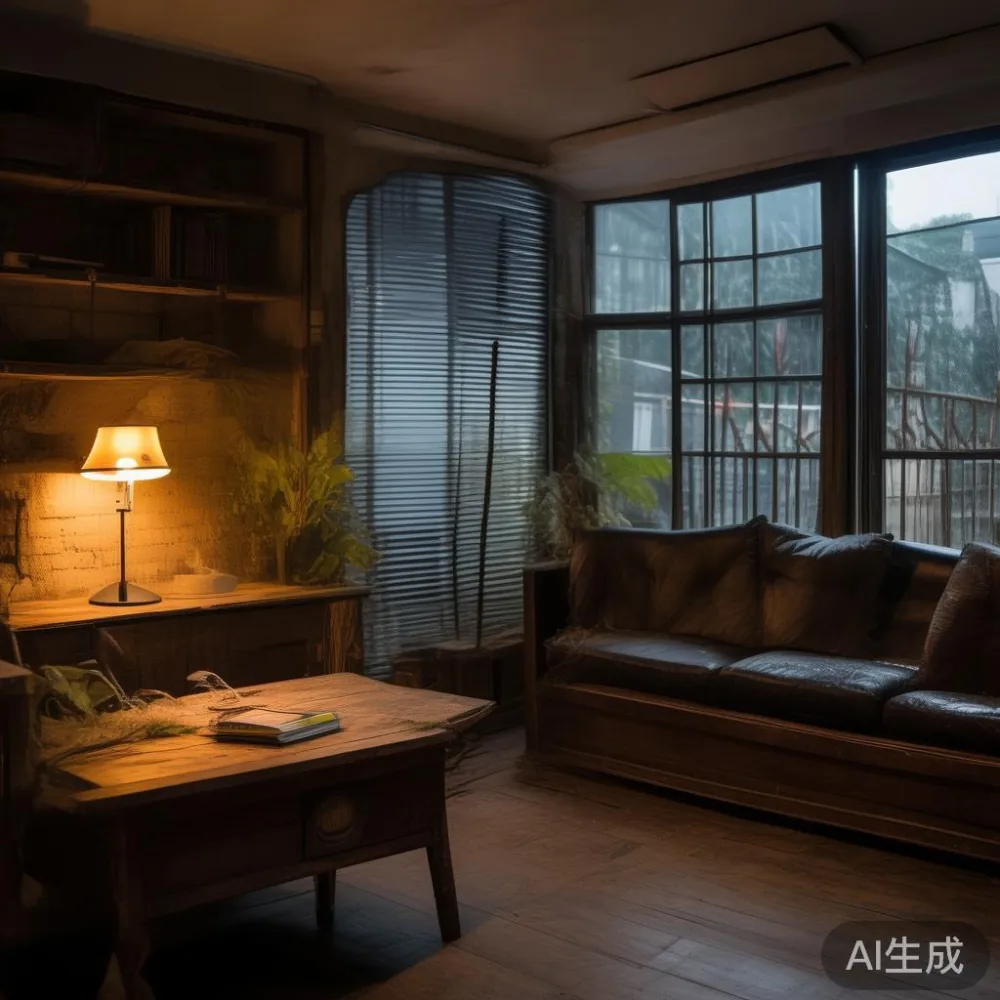
Wood is hygroscopic. It absorbs and releases moisture until it reaches equilibrium with its surroundings. When the relative humidity climbs from 60% (a typical office afternoon) to 90% (a typical HDB kitchen at 6 a.m. before the windows open), the moisture content of an unprotected oak board can rise by 4-6 percentage points. That sounds harmless on paper, but on a 200 cm long plank it translates into roughly 6-8 mm of lateral movement across the grain. A solid wood bed frame, a wardrobe side panel, a marble-top dining table with a wooden apron — all of them are quietly breathing while you sleep.
Why is Singapore humidity such a problem for solid wood furniture?
Singapore humidity is a problem for solid wood furniture because the year-round 70-90% relative humidity keeps wood perpetually above its ideal 8-12% moisture content, causing continuous expansion, contraction, and surface movement that engineered panels and poor finishes cannot hide. Most kiln-dried factory stock is calibrated to 9-11% MC for temperate markets. Drop that same board into a Punggol condo where the corridor stays at 28°C and 82% RH overnight, and within eight weeks the wood has crept up to 14% MC. It does not need a flood. It just needs time, and time is one thing a 99-year lease gives you plenty of.
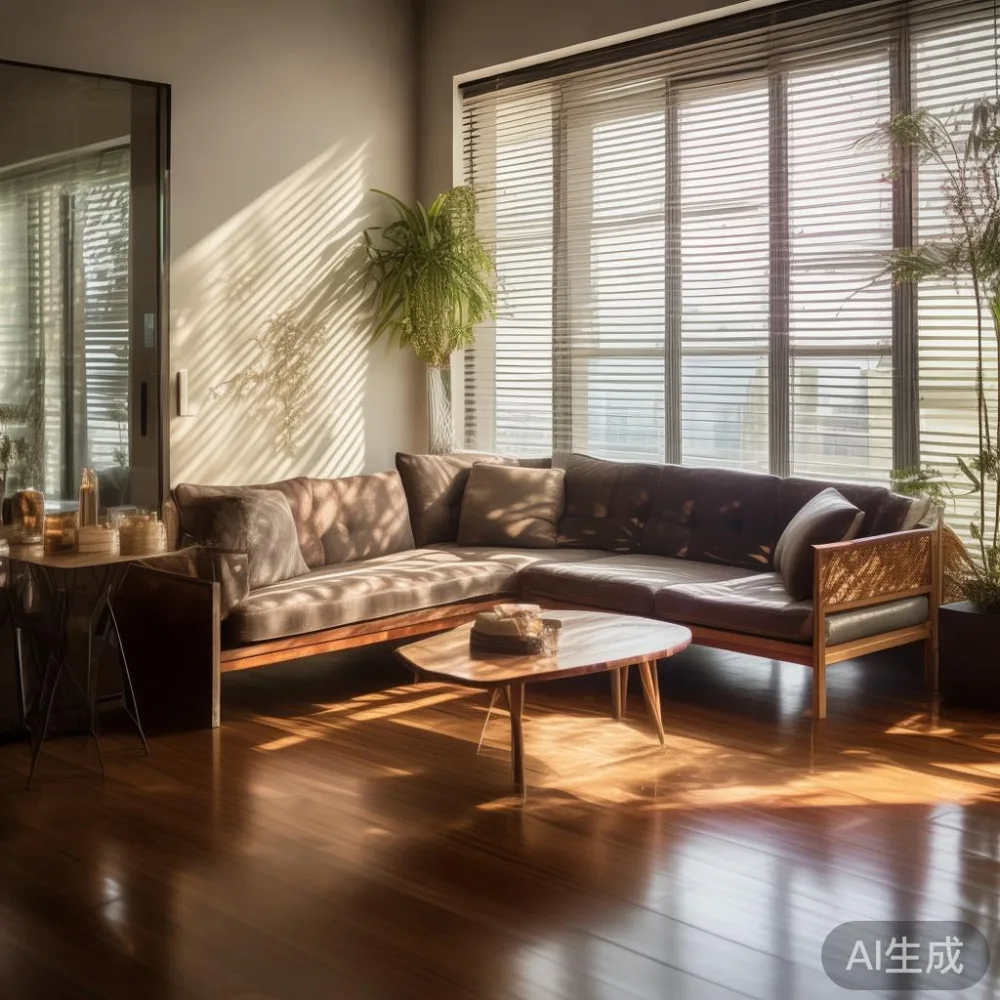
Industrial-style pieces — blackened steel frames bolted to thick oak or ash slabs — look tough, but the wood still does all the moving. The steel forgives nothing. A 2 mm change in the timber shows up immediately as a squeak at the bolt joint or a hairline gap between two planks on a 2.4 m dining table. That is why joinery choice matters more than species choice in this climate. Floating tenons, slotted adjusters, and elongated bolt holes give the wood somewhere to go. Glue-only joints do not.
What humidity does to a solid wood sofa, bed frame, and wardrobe over 12 months
Picture a brand-new solid wood bed frame installed in a master bedroom on the 14th floor of a Punggol EC. Day one: every joint is tight, every panel sits flush. Month three: the headboard has bowed forward by 3 mm at the centre because the back face absorbed moisture slower than the front (the back sits against a feature wall with poor airflow). Month six: the side rails show a 2 mm gap at the foot-end dowel pins. Month twelve: those gaps stabilise at 3-4 mm once the wood finally finds equilibrium with the bedroom's 24°C, 65% RH microclimate.
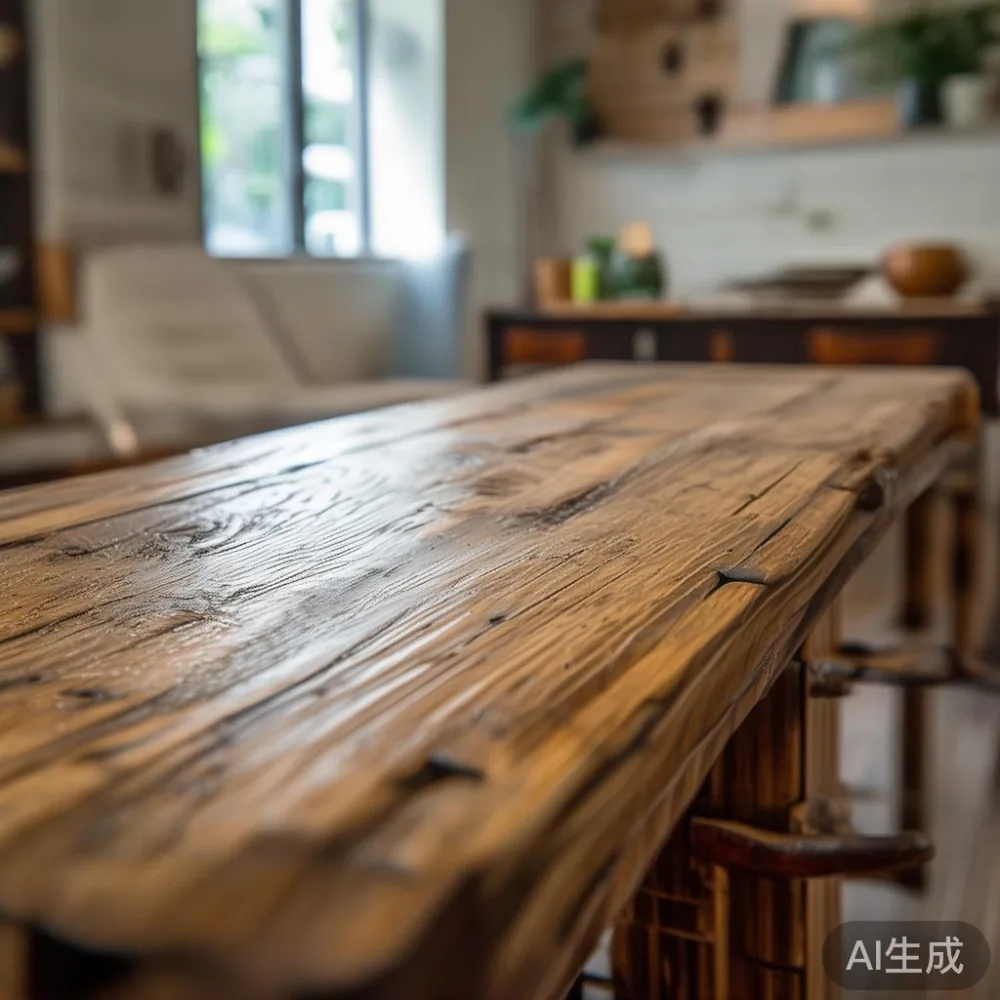
I visited a showflat in Tampines last month where three different wardrobe styles had been installed for a six-month trial. The flat-pack engineered-veneer unit (MDF core with 0.6 mm oak skin) had begun to peel along the top edge where the wardrobe met the ceiling — the skin expanded faster than the substrate. The second unit, a mid-range solid rubberwood wardrobe at S$1,490, had one cracked panel where the manufacturer had glued a centre support too tightly across the grain. The third unit, an industrial-style solid ash wardrobe on a blackened steel base, had no cracks but showed a 2 mm shadow line at one shoulder because the carcass was built with traditional frame-and-panel construction — the panels had simply floated into their seasonal position. None of this is a defect. It is wood behaving like wood.
The same applies to a solid wood sofa. The hardwood frame is fine — kiln-dried ash or beech is dimensionally forgiving — but if the sofa sits within 1.5 m of a balcony door that gets opened three times a day, the front legs will absorb 1-2% more moisture than the back legs. Over six months the seat will feel like it leans 1°. Lift the front legs 5 mm with felt pads and you buy yourself five years of even wear.
Which wood species and finishes actually survive Singapore air?
For Southeast Asian humidity, white oak, Burmese teak, and reclaimed Chengal perform best because their tight grain and natural oils resist rapid moisture exchange; rubberwood and pine, while affordable at S$600-S$900 for a 1.6 m dining table, move more visibly and need stricter climate control. The finish matters as much as the species. A pure hardwax oil (Osmo, Rubio Monocoat) lets the wood breathe and is repairable on site — important when a 60 cm dining chair scuff can be buffed out in 10 minutes. A thick polyurethane seal looks glassy on day one but traps moisture underneath, and when it eventually blisters in year four the only fix is a full sand-back. That is why Foshan workshops exporting to the region have largely shifted to hand-applied oil-and-wax systems on industrial-style collections.
There is also a finish vocabulary worth knowing. A "Japandi rattan wood finish" — a low-sheen oil over a wire-brushed surface, paired with cane panels on wardrobe doors or headboards — has become popular in 4-room HDBs because the matte texture hides the tiny seasonal movement that would otherwise telegraph as a sheen change along a polished edge. The rattan itself is breathable and holds up well, though it does darken 10-15% over the first 18 months in direct afternoon sun through a west-facing window. The Japandi rattan wood finish looks the same in a Punggol condo and a Parisian loft, which is part of its appeal for owners who want post-modern light luxury without the upkeep of a piano-gloss French provincial piece.
How do I style a French provincial master bed in a small apartment?
You style a French provincial master bed in a small apartment by choosing a queen-size frame under 215 cm long with a low footboard, finishing it in a chalk-painted off-white or a smoked-oil grey, and anchoring it against a plain wall so the carved details read as a focal point instead of crowding the room. In a 4-room HDB master bedroom measuring roughly 3.4 m × 3.2 m, a 1.6 m × 2.0 m bed leaves a 70 cm walkway on each side — narrow but workable for daily making. Lift the mattress onto a 12 cm solid ash platform so under-bed storage drawers can roll on 4 mm felt tracks, and keep the headboard under 110 cm tall so it does not collide with a wall-mounted air-con ledge. Skip the full canopy. A pair of slim steel reading sconces (warm 2700 K, 3 W each) replaces the visual weight and uses 90% less electricity than a Chinese-style chandelier.
Industrial-style nightstands work better here than matching provincial ones — a 45 cm blackened-steel cube with one oak drawer breaks the formality and gives the bed a contemporary anchor. Budget roughly S$1,850-S$2,400 for a French provincial bed frame in solid mahogany or beech, plus S$420-S$580 for a pair of industrial-style nightstands. MIDHILL ships both in one consolidated container from Foshan, which keeps the freight cost down to about S$140 for a Singapore door-to-door delivery in 18-22 working days, including 9% GST.
What does a humidity-proof delivery and setup actually look like in Singapore?
A humidity-proof delivery in Singapore should include a 7-10 day on-site acclimatisation period before assembly, a moisture-meter reading on every panel above 12%, and a delivery crew that knows the lift and corridor geometry of your block. Older HDB blocks along Bedok Reservoir and Tampines Street 21 have passenger lifts with internal dimensions of about 1.1 m × 1.4 m and door openings of 0.9 m wide — tight for a flat-pack 2.4 m dining table that has not been pre-cut. A 1.5 m × 0.6 m marble table top will not fit through a 90 cm door on its long edge unless the supplier offers a knock-down base, so always ask. MIDHILL's Singapore agents have started carrying a 30 cm digital caliper and a sleeve-style moisture meter on every van because two wrong measurements have historically meant an extra S$180 return-trip fee.
During delivery, insist on three things. First, leave the packaging unsealed for 48 hours so the wood can breathe off any condensation picked up in the container. Second, place the panels flat in the room where they will live, not in the store room or the kitchen. Third, run the air-con at 24-26°C for the first week rather than the usual 22°C. A 2°C drop in temperature typically pulls relative humidity up by 8-10 percentage points, and a new piece of furniture does not need that shock. After week two, normal household habits resume. A S$45 hygrometer on the bedside table is the cheapest insurance you can buy — anything reading above 75% RH for more than six hours a day means a dehumidifier cycle.
Maintenance schedule that actually works in HDB and condo settings
A realistic maintenance schedule in Singapore runs on a quarterly cycle, not an annual one. Every three months, wipe down all solid wood surfaces with a damp (not wet) microfibre cloth, then apply a maintenance coat of hardwax oil — about 5 ml per square metre, buffed in with a lint-free pad. Budget S$35-S$55 per 500 ml bottle, which covers a four-seat dining table, a queen bed frame, and a two-door wardrobe. Once a year, check all bolt joints on industrial-style pieces and snug them a quarter turn with the supplied Allen key. Wood movement loosens fasteners over time, not because the bolts are bad, but because the wood has shifted 1-2 mm around the thread.
For rattan inserts on wardrobe doors or headboards, vacuum monthly with a soft brush at under 800 Pa suction — a typical household vacuum on medium setting is fine — and keep the rattan out of direct afternoon sun, which dries the cane fibres and causes cracking within 18-24 months. A wardrobe positioned 80 cm from a west-facing window should be shaded by a linen curtain, not blackout fabric. Blackout fabric traps heat and creates a 4-6°C differential between the front and back of the wardrobe, which is a recipe for warping. A 60-second curtain pull in the morning closes the gap.
Common mistakes Singapore owners make with imported solid wood
The most common mistakes are treating the furniture like engineered MDF, placing pieces directly against air-con condensers, and assuming warranty covers movement-related cracking. Warranty from any Foshan-based manufacturer typically covers structural defects for 10 years — joints that fail under normal load, hardware that breaks — but it does not cover the natural 2-4 mm seasonal movement of solid wood. That distinction matters when a customer at an HDB in Punggol Point tries to claim on a 3 mm gap that opened in February. The gap is the wood talking, not the wood failing.
Two more practical mistakes. First, owners of light luxury collections often apply silicone-based polishes for shine. Silicone sinks into the grain and prevents future oiling from bonding properly. Use only the maker-recommended wax or oil. Second, owners assume marble tables are humidity-proof. Marble is porous at the microscopic level and will etch within 20 minutes under lemon juice or cola — humidity is not the issue, but the care routine is. A S$280 marble dining table is no more scratch-resistant than a S$2,800 one, because the surface chemistry is the same.
Where to start if you are furnishing a new Punggol or Bedok flat this year
Start with the three pieces that anchor humidity stress: the bed frame, the dining table, and the wardrobe. A solid wood bed frame in ash or white oak (S$1,650-S$2,200 for a queen), an industrial-style solid wood dining table at 1.6-1.8 m (S$1,350-S$2,100), and a three-door wardrobe with rattan panels (S$2,400-S$3,100) cover roughly 70% of the wood volume in a typical 4-room HDB. Add a 60 cm marble side table (S$420-S$560) for the living room, a pair of steel-and-oak nightstands (S$380-S$520), and a bench for the dining end (S$290-S$420), and you are looking at a S$7,500-S$10,500 furniture budget before GST. Shipped consolidated from a single Foshan supplier, that order clears Singapore customs in about 5 working days and lands at your door in 18-22 working days with white-glove installation included over US$350 equivalent.
One last observation from the Tampines EC visit last month. The homeowner had bought three separate furniture brands over six months. Each arrived on a different day, each required a different installer, and the floors were scratched twice during separate deliveries. Consolidating to one supplier eliminated that risk and shaved roughly S$620 off the total — a number worth remembering when you are comparing line-item quotes. MIDHILL's regional agents in Singapore now offer a single-van delivery window for any consolidated order, which is the kind of operational detail that does not appear on a price tag but matters once 180 kg of solid wood is floating in your corridor at 9 a.m. on a Saturday.