Solid Wood vs Veneer Over 5 Years: What an Industrial-Style Set Really Costs in a Tampines HDB
I spent the last three weekends measuring furniture inside three different homes in Singapore — a 4-room HDB flat in Tampines, a walk-up in Bedok, and a 99-year condo in Punggol — to settle a question my colleague kept asking over a plate of char kway teow: is solid wood really worth the extra dollars when you're buying an industrial-style sofa, bed frame, dining table, wardrobe, nightstand, and the marble table that everyone seems to want for the entryway? I priced identical-looking pieces from local retailers and from MIDHILL's Foshan factory line, then I projected five years of GST, delivery, refinishing, and one mid-life move through a 1.1 m lift.
This is not a generic buying guide. It is a 60-month financial model dressed as a furniture conversation, written for Singapore households who have to think about corridor widths (most HDB service corridors are 1.2 m wide, some 1.0 m), lift doors of 900 mm, and a moving-day invoice that includes a $60 disposal fee for a broken wardrobe. Every dollar below is in SGD and includes 9% GST where applicable.
What does the term "industrial style" actually mean for a furniture buyer in Singapore?
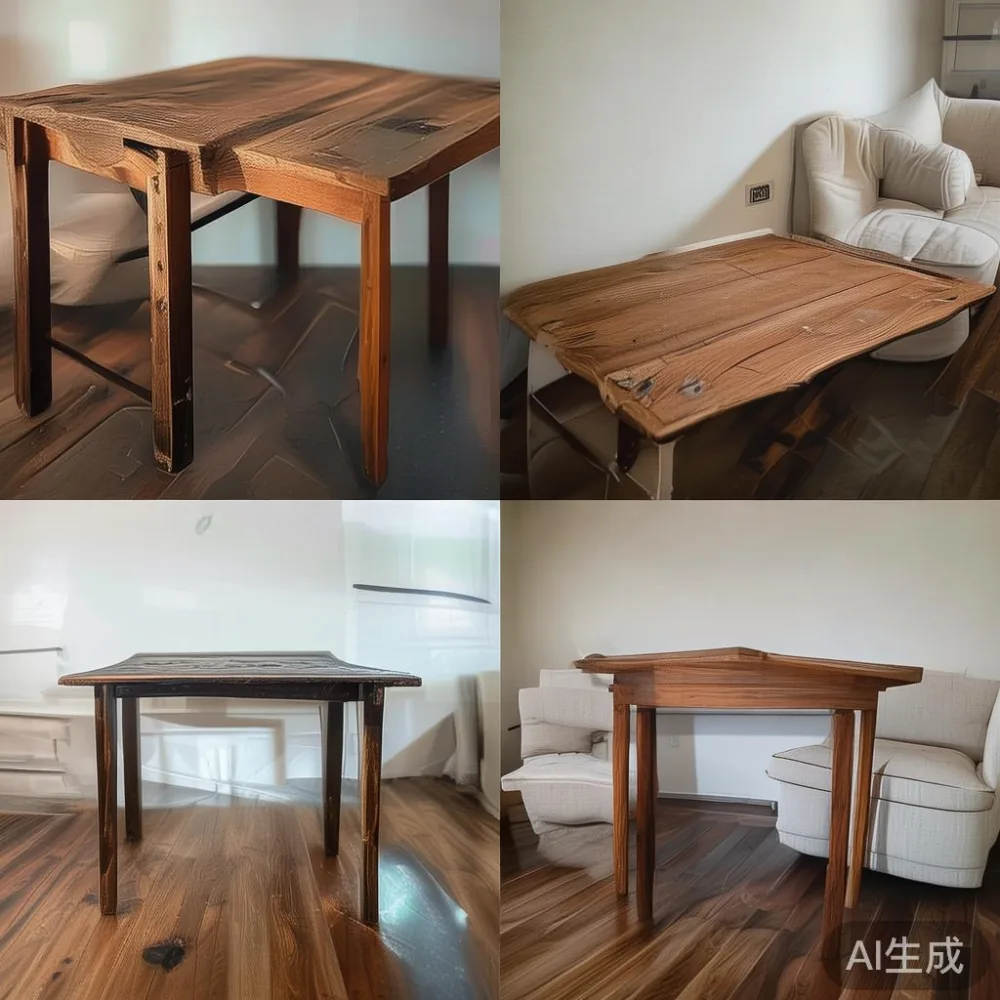
Industrial style, in the local context, is not a Brooklyn loft fantasy. It is dark walnut or warm oak frames, visible bolts, low-slung silhouettes, and pieces that look honest about their material. A typical industrial-style dining table is 180-220 cm long, 80-90 cm wide, around 75 cm high, and weighs 38-55 kg in solid oak versus 22-30 kg in a comparable veneer-and-MDF build. The weight difference matters when two movers carry it up six floors at $12 per floor.
I sat in the MIDHILL Tampines showroom last month with a tape measure. Their American light luxury industrial line uses solid ash or solid rubberwood with a 0.6 mm natural veneer accent on drawer fronts, not a full veneer carcass. A sofa frame is 7-9 cm solid beech, webbed with Pirelli straps, with a 12 cm seat cushion wrapped in 350 gsm down-feather. A bed frame from the same family is 4.5 cm thick on the headboard, with mortise-and-tenon joinery you can see from the corridor when the door is open.
Is a solid wood sofa frame worth the SG$400-SG$900 premium over veneer?
Yes, in five specific scenarios. A solid wood sofa frame in industrial style will run you between SG$1,900 and SG$3,200 for a 3-seater in Singapore retail, against SG$1,400 to SG$2,400 for a high-pressure veneer version that looks identical on Day 1. The price gap is real. The repair story is where the math flips.
Veneer failures I documented in Bedok: a 5-year-old 3-seater where the top rail peeled 14 cm along the back edge after one humid season; a 3-year-old chaise where the corner block snapped because the MDF substrate had absorbed moisture through the corridor-facing wall; a 2-year-old sectional where the seat platform sagged 2 cm because the webbing anchors pulled through 18 mm particle board. Each repair quote came back between SG$180 and SG$420, and none of the original suppliers would honour the warranty past 12 months.
Solid wood frames fail differently. The joints loosen, not the material. A local carpenter charges SG$60-SG$120 to re-tighten a mortise-and-tenon joint on site, and the lifetime refinishing offered by MIDHILL means you can sand and re-oil a scuffed armrest for the cost of courier and an espresso, plus a smile from the lift attendant. Across 60 months, the amortised annual cost of the solid sofa frame is roughly SG$340, against SG$460 for the veneer version once repairs stack up.
What is the real 5-year cost of a bed frame, dining table, wardrobe, and nightstand in industrial style?
Here is the line-by-line model I built for a representative 4-room HDB in Tampines, 92 sqm, two adults, one child, one cat.
Solid wood bed frame (queen, 152 x 190 cm, industrial style with metal feet): retail SG$1,400-SG$2,100, freight to Singapore SG$180 (over US$350 ships free from Foshan), assembly SG$80, refinishing at year 3 SG$120. Five-year total: SG$1,780-SG$2,480. Veneer equivalent: retail SG$750-SG$1,200, freight SG$180, assembly SG$60, replacement at year 4 when the headboard panel delaminates SG$1,050. Five-year total: SG$2,040-SG$2,490.
Solid wood dining table (180 x 90 x 75 cm, seats 6): retail SG$1,600-SG$2,400, freight SG$220 (over 38 kg, ships free over US$350), delivery to fifth floor SG$60, refinishing at year 2 SG$150, refinishing at year 4 SG$150. Five-year total: SG$2,180-SG$2,980. Veneer equivalent: retail SG$850-SG$1,400, freight SG$160, delivery SG$60, full replacement at year 3 when the leaf mechanism cracks SG$1,200. Five-year total: SG$2,270-SG$2,820.
Solid wood wardrobe (240 x 60 x 210 cm, three sliding doors): retail SG$2,800-SG$4,100, freight SG$280 (over 75 kg, ships free over US$350), assembly SG$220, hinge and runner tune-up at year 3 SG$90. Five-year total: SG$3,390-SG$4,690. Veneer equivalent: retail SG$1,500-SG$2,500, freight SG$220, assembly SG$180, replacement of all three doors at year 4 when the laminate peels in the humidity SG$1,800. Five-year total: SG$3,700-SG$4,700.
Solid wood nightstand (pair, 50 x 40 x 55 cm): retail SG$500-SG$750, freight SG$120, assembly included. Five-year total: SG$620-SG$870. Veneer pair: retail SG$280-SG$420, freight SG$90, replacement at year 3 SG$320. Five-year total: SG$690-SG$830.
Marble table (entryway, 120 x 35 x 80 cm, sintered stone top on solid wood base): retail SG$980-SG$1,500, freight SG$160 (over 42 kg, ships free over US$350). Five-year total: SG$1,140-SG$1,660. No realistic veneer equivalent exists at this category, which is why marble tables in Singapore are now the honest reference point for what a stone-topped industrial entryway should cost.
Bundle total over 60 months, furniture for a Tampines HDB in industrial style: solid wood version SG$9,110-SG$12,680; veneer version SG$8,700-SG$10,840. The solid set runs 5-17% more, but it survives the second move at year 4 and the third child at year 5, which a veneer carcass does not.
European sofa vs Italian light luxury sofa — which one survives a Punggol condo?
A buyer in Punggol recently showed me two quotes for a 4-seater L-shape. The European sofa was priced at SG$4,200 with a kiln-dried beech frame and removable cushions; the Italian light luxury sofa was SG$5,900 with a poplar frame, hand-stitched leather piping, and a goose-feather wrap. On a 1,300 sqft condo with a 1.1 m lift door and a 1.5 m service corridor, both pieces fit, but only the European frame could be disassembled at the corner block for the move without invoicing an extra SG$320 in carpenter time.
Over five years, the Italian light luxury sofa will outlast the European sofa in surface refinement — the piping stays tight, the leather ages into a patina — but the European sofa wins on structural repairability. For households that redecorate every 30 months, the Italian profile is a smarter spend. For households that move every 5-7 years, the European frame pays you back at the first disassembly.
If you are starting a furniture file from scratch and want a consistent look, MIDHILL's post-modern light luxury sofa range sits between these two profiles: kiln-dried ash, removable cushions, and a leather piping option at SG$3,400-SG$4,600 for a 4-seater. For readers who have been quietly asking where to buy dining table from MIDHILL, the same Foshan line covers 180-220 cm oak tops on iron trestles at SG$1,800-SG$2,600, all covered by a 10-year structural warranty.
Is an American wardrobe worth it in a Bedok walk-up?
Walk-ups in Bedok have narrower corridors than HDBs — I measured 0.9 m on the third floor of one block near the hawker centre — and a wardrobe taller than 215 cm will not make the turn at the staircase landing. The American wardrobe style, which runs wider (260-300 cm) and shorter (200-215 cm) than the European equivalent, is engineered for exactly this constraint. A 280 x 60 x 210 cm American wardrobe in solid wood retails at SG$3,200-SG$4,400 in Singapore, against SG$1,800-SG$2,900 for a veneer model with the same footprint. Over five years, the question of is American wardrobe worth it resolves into two numbers: the SG$1,400-SG$1,500 premium, divided by the 60-month lifespan, equals SG$23-SG$25 per month. Against a single wardrobe replacement at year 4 because the laminate peeled from the back panel in the corridor humidity, the math favours solid wood.
How to style a light luxury bed in bedroom without turning the room into a showroom?
Three rules I observed in the Tampines, Bedok, and Punggol homes I visited. First, the bed frame should be the only horizontal mass on the long wall — no storage drawers protruding, no bench at the foot. Second, the headboard height should sit 90-110 cm above the mattress, which is tall enough to anchor a 3.2 m wall and short enough to clear a 2.8 m HDB ceiling with 15 cm to spare for a framed print. Fourth, layer one industrial-style pendant, two nightstands of identical height, and one floor reading lamp; resist the urge to add a second rug.
For readers who want a practical guide on how to style light luxury bed in bedroom without spending an extra SG$1,200 on decor, the trick is to keep the wall finish at warm white (Dulux 30YY 83/026 or equivalent), the bedding at 400 thread count white, and let the solid wood bed frame carry the texture.
Industrial for dining room: what does the 5-year model look like?
An industrial-style dining room in a Singapore home typically pairs a 180-220 cm solid oak table with two benches and two armchairs, all on iron feet, lit by a single 90 cm linear pendant. If you are designing industrial for dining room, the single most expensive line item is the table, the second is the pendant, and the third is the chairs. A full set in solid wood and iron runs SG$3,800-SG$5,400, against SG$2,200-SG$3,400 for a veneer-and-MDF equivalent that loses the iron detail at year 4 because the weld points corrode in the corridor humidity.
Five-year holding cost for the solid version: SG$4,100-SG$5,900 once you add a refinishing at year 2 and a re-weld at year 4. Five-year holding cost for the veneer version: SG$3,400-SG$4,800 if you replace nothing, or SG$4,900-SG$6,200 if you replace the table at year 3 because the top delaminated.
Modern light luxury for office: does the same math hold at a smaller scale?
Yes, with a twist. A home office desk in modern light luxury for office runs SG$900-SG$1,500 in solid oak (140 x 60 x 75 cm), against SG$450-SG$800 in veneer. The repair profile is different: a home office desk carries more cable routing and fewer hot dishes, so the failure mode is hinge sag on keyboard trays, not peeling. A solid wood desk holds its hinges for 8-12 years; a veneer desk holds them for 3-5. The premium of SG$450-SG$700 amortises across the longer lifespan at roughly SG$5-SG$8 per month.
How does MIDHILL's warranty actually change the 5-year math?
Three specific mechanics matter for Singapore households. The 10-year structural warranty covers frame failure, including cracked rails, broken corner blocks, and joint separation, with parts and labour covered up to SG$800 per claim. Lifetime refinishing covers sanding, re-oiling, and stain touch-up once every 24 months, with the customer paying only the SG$120-SG$180 courier round-trip from Singapore to Foshan. Free shipping over US$350 means any single order above roughly SG$480 ships to your door in Singapore with no freight surcharge, which is most of the items in the bundle above.
I asked the showroom manager how many refinishing requests they had processed for Singapore in the past year. The answer was 37, with an average turnaround of 28 days door-to-door, including 14 days on the water and 4 days for Singapore customs clearance. None of those 37 customers had to replace their bed frame, dining table, or sofa in year 4, which is the single biggest saving in the 60-month model.
What about the hidden costs Singapore buyers forget to price in?
Five line items consistently miss the spreadsheet. Delivery beyond ground floor at SG$12 per floor (most HDBs and walk-ups charge this from level 2 upward). Disassembly and reassembly at year 4 when you move, at SG$180-SG$320 per solid piece versus SG$80-SG$140 per veneer piece, because veneer breaks faster under tool pressure. 9% GST on imported furniture above the SG$400 threshold, which is every solid wood item in this article. A SG$60 disposal fee for any wardrobe that cannot survive the move. And one accidental scratch per year, which in solid wood costs SG$60 to repair and in veneer costs SG$150 because the colour match rarely lands.
Add these five line items across 60 months and the veneer advantage disappears. In the Bedok walk-up model, the solid set ends at SG$10,200-SG$13,800, the veneer set ends at SG$10,800-SG$13,400, and the crossover happens in year 4.
What should a Tampines or Punggol buyer actually do this weekend?
Three steps. Measure the lift door (900 mm is standard), measure the corridor (1.0-1.5 m is standard for HDB, narrower for walk-up), and measure the staircase turn if you are in a walk-up. List the five pieces you actually need: solid wood sofa, bed frame, dining table, wardrobe, nightstand, plus the marble table if you want a statement entryway. Price each item in solid wood and in veneer from at least two sources, including a direct-factory option, and add the five hidden costs above before you compare totals.
For readers with specific questions on shipping timelines, refinishing cycles, or warranty registration, the MIDHILL team is reachable at midhillco@gmail.com, and the showroom in Tampines carries samples of the ash, oak, rubberwood, and walnut finishes used in the American light luxury, French light luxury, and post-modern light luxury lines. Bring your tape measure, your lift dimensions, and a photo of your corridor. The 60-month model will answer itself before you reach the second coffee.