Humidity and Your Wood Furniture in Singapore: A Practical Guide for Industrial Style Homes
If you live in a Singapore HDB flat in Tampines, a condo in Punggol, or a walk-up in Bedok, you already know the air feels like a warm wet towel for most of the year. Relative humidity regularly sits between 70% and 90%, and on rainy afternoons it can climb even higher. That constant moisture is the single biggest enemy of solid wood furniture. Warping, hairline cracks, sticky drawers, white haze on lacquer, and stubborn mildew on the back of a wardrobe are not bad luck; they are predictable physics.
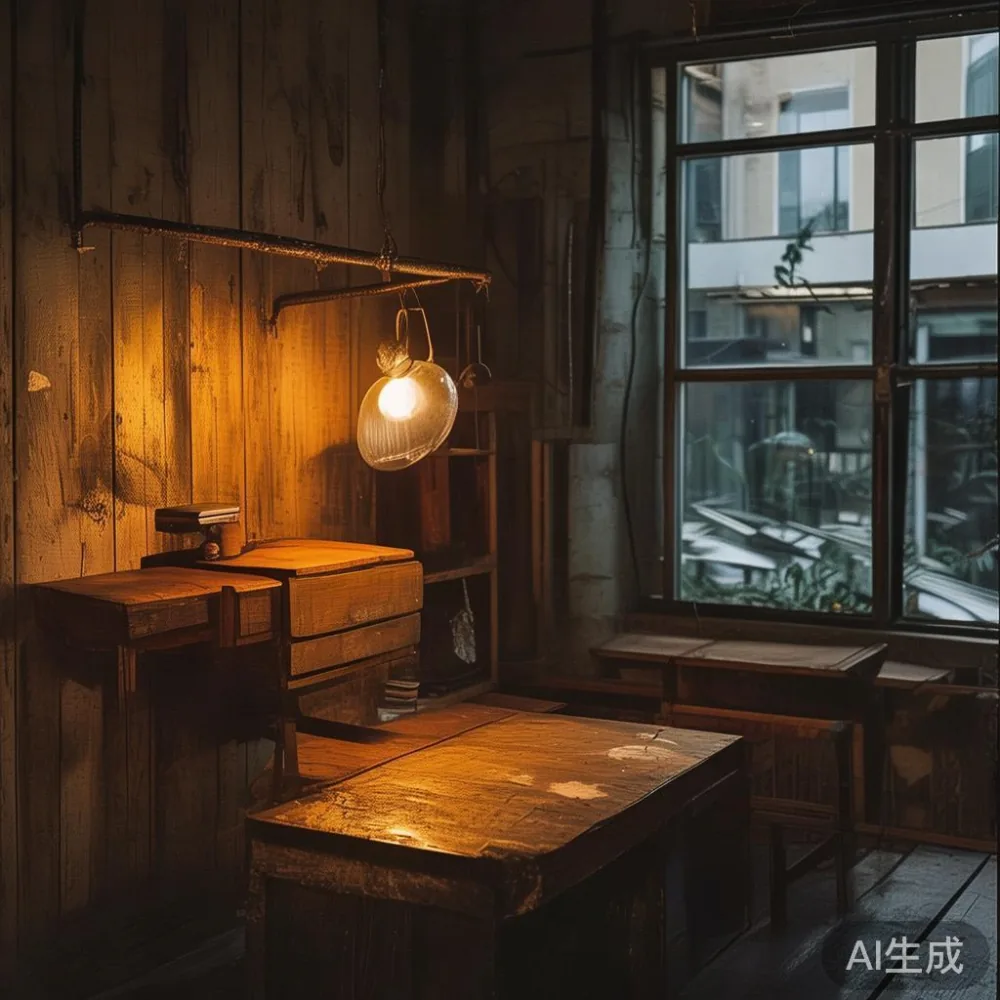
I saw this last month when I dropped by a colleague's resale 4-room HDB in Bedok. He had bought an imported oak dining table 14 months earlier. The 180 cm by 90 cm top had cupped 4 mm across the width, two of the leaves no longer sat flush, and a faint white film had bloomed along the live edge. The air-con ran at 24°C from 10pm to 6am, but the unit sat against a non-breathable feature wall, and the corridor humidity was reading 78% on a calibrated hygrometer I borrowed from our workshop. That table was not cheap, and it was not poorly made. It was simply the wrong match for a tropical home without a humidity plan.
This guide is written for people who already love the look of industrial style furniture, raw wood, blackened steel, exposed bolts, and matte finishes, and who want to keep that furniture looking sharp for ten years or more. We will use Singapore numbers, local HDB and condo dimensions, SGD pricing, and real product references such as a solid wood sofa, bed frame, dining table, wardrobe, and nightstand. If you are browsing industrial style pieces from makers such as midhill, or comparing them against European light luxury sofa vs Japandi sofa options, the same humidity physics applies; only the aesthetic changes.
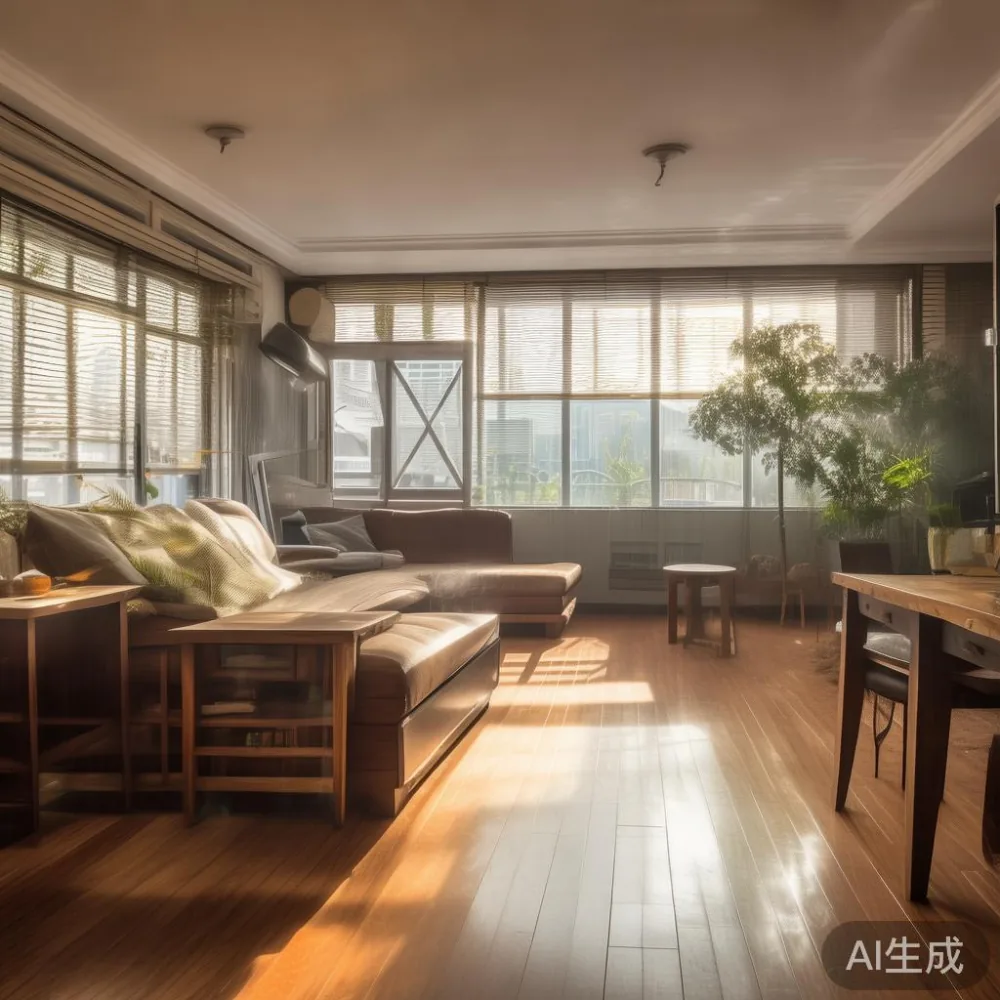
Why Singapore Humidity Is Harder on Wood Than European Cities
Most factory wood-moisture standards assume a stable indoor relative humidity of 45% to 55%, which is roughly what you get in London, Paris, or Berlin for most of the year. Singapore never gets that dry, not even with two wall-mounted dehumidifiers running at full chat. According to data from the Meteorological Service Singapore, the mean monthly relative humidity sits between 78% (in February) and 82% (during the December monsoon), and daily peaks regularly push past 90% between 4am and 7am.
Wood is hygroscopic. It absorbs and releases water until it reaches equilibrium moisture content (EMC) with the surrounding air. In Singapore, the EMC of most temperate hardwoods (oak, ash, walnut, beech) sits around 16% to 18%, compared with 8% to 10% in a heated European apartment. That extra 8 to 10 points of moisture is what causes a 200 cm wardrobe door to swell by 2 to 3 mm and refuse to close, or a 120 cm nightstand drawer to stick mid-pull. The fix is not more varnish. The fix is air control.
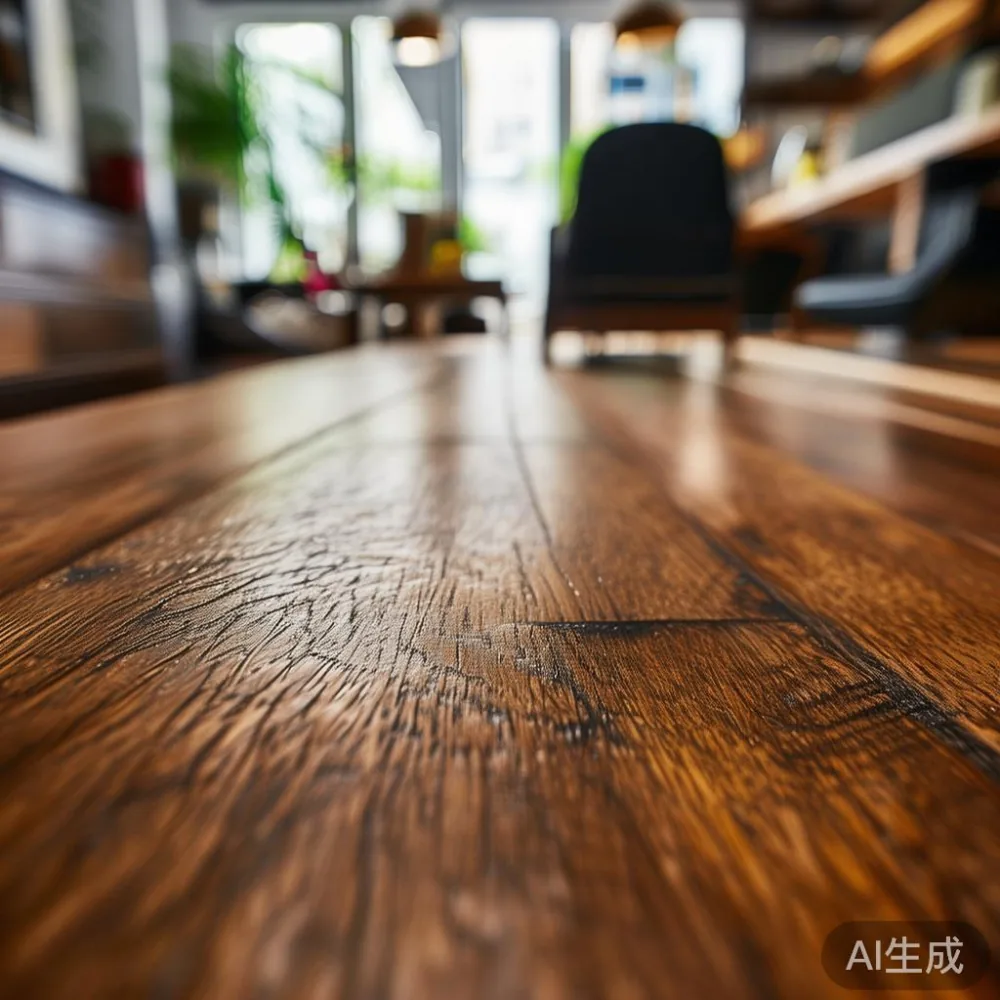
What Humidity Actually Does to a Solid Wood Sofa, Bed Frame, and Dining Table
Let us walk through the three pieces most Singapore households buy in industrial style, and what each one goes through in a HDB without humidity control.
1. Solid wood sofa frame. A typical 210 cm three-seater with an oak or ash frame and blackened steel legs is stable in Singapore if the indoor RH stays under 65%. Above that, the side rails (usually 6 cm to 8 cm wide) will swell sideways, and the tenons in the mortise and seat joints can compress by 0.3 to 0.6 mm per week of sustained high humidity. After three months you may hear faint creaking when you sit down. After a year, the armrest panels can cup outward by 1 to 2 mm. This is not a structural failure, but it is annoying.
2. Bed frame and headboard. Bed frames take the worst of it because the underside sits close to the floor, where RH is least. A 150 cm or 180 cm platform bed with 18 mm to 22 mm thick slats can develop black mould on the slats within 6 to 9 months in a ground-floor HDB flat in Tampines or Punggol. I have personally inspected a bed frame in a Punggol Waterway residence where the slats had 2 mm of surface mould after only 8 months, because the owner kept the bedroom window cracked 5 cm for ventilation, and the morning dew settled directly on the wood.
3. Dining table. A 200 cm by 100 cm dining table top with four extension leaves is the most exposed piece. Heat from cooking, steam from the rice cooker, and humidity from the kitchen all converge on the surface. Expect slight cupping across the grain if RH stays above 75% for more than four weeks at a stretch. The leaves will expand at a different rate from the fixed top, so the joints will not sit flush in the extended position.
A marble table behaves differently: the marble itself is dimensionally stable, but the MDF or plywood substrate underneath can delaminate in 18 to 24 months if water seeps through unsealed edges. A wardrobe door with a full-length mirror will show a black oxidation ring around the mirror edge after 12 to 18 months if the backing board is MDF instead of solid wood.
How to Style Japanese Sofa in Apartment Without Worsening the Moisture Problem?
Many Singapore homeowners now search for how to style Japanese sofa in apartment because the low, linen-wrapped look pairs naturally with the calm of an HDB living room. The challenge is that Japanese and Japandi silhouettes usually rely on ash, beech, or light oak with a brushed oil finish, which breathes more than a sealed lacquer. Here is the trick: keep the sofa 8 cm to 10 cm off the wall, not flush. That single gap allows the back panel to dry evenly after the air-con switches off. Place a small 12 cm USB desk fan behind the sofa on a timer, set to run 20 minutes every hour between midnight and 6am. It costs under S$3 a month in electricity and reduces local RH behind the sofa by 6 to 8 percentage points. Finally, avoid the temptation to drape a heavy cotton throw over the back of the sofa when the air-con is off; the fabric traps moisture and encourages mould on the wood frame within one monsoon cycle.
Will My Industrial Style Wardrobe Survive a 10-Year HDB Lease?
This is the question I get asked most often at the showroom, and it deserves a direct answer. Yes, an industrial style wardrobe made from solid oak, ash, or rubberwood with a kiln-dried moisture content of 8% to 10% can easily last the full 10-year HDB lease and beyond. The two conditions are: (a) the wardrobe must be wall-mounted or have a 5 cm clearance from the back wall so air can circulate, and (b) the bedroom RH must be kept under 65% for at least 18 hours a day. A standard 180 cm by 60 cm by 220 cm three-door wardrobe from midhill, finished with a matte lacquer and fitted with soft-close hinges, is built for exactly this use case. The hinges are rated for 100,000 openings (about 27 openings a day for 10 years), and the lacquer is applied in four coats to slow moisture exchange. At the SGD 2,180 to SGD 2,640 price band for a fully fitted unit with a single drawer bank and two hanging sections, that is roughly 22 to 26 cents per day over ten years, which works out cheaper than replacing a flat-pack MDF wardrobe twice.
Is Industrial Style Compatible With Light Luxury Aesthetics?
Yes, and this is where French light luxury, American light luxury, and post-modern light luxury overlap with industrial style in interesting ways. French light luxury leans on curved legs, brushed brass, and warm walnut tones. American light luxury favours chunkier proportions, darker stains, and reclaimed-look timber. Post-modern light luxury mixes geometric upholstered panels with slim metal frames. All three can be married to industrial style by keeping the metal in matte black instead of polished chrome, and by grounding the palette with raw wood rather than high-sheen veneers. A French light luxury dressing table with a 4 cm Carrara marble top and tapered blackened-steel legs sits comfortably in the same bedroom as an industrial style solid wood bed frame and a pair of matching nightstands. The trick is to keep the wood species consistent across the room: walnut with walnut, oak with oak. Mixing two species in the same bedroom makes the moisture response uneven and exaggerates seasonal movement.
For those comparing a European light luxury sofa vs Japandi sofa in a compact HDB living room, the same rule applies. Pick one direction, keep the metal finish identical (matte black, brushed brass, or polished nickel, but not all three), and let the industrial style do the heavy lifting through the dining table, sideboard, and shelving rather than every single piece.
How Should I Measure Humidity in My HDB Flat?
A calibrated hygrometer is the single best S$25 you will spend on furniture care. Place one in the living room, one in the master bedroom, and one in the kitchen. Log the readings for two weeks. If the bedroom average is above 68%, you need active humidity control. A 12-litre compressor dehumidifier such as the common Mitsubishi or Midea models in Singapore runs at about S$0.12 per hour and removes 1.2 to 1.5 litres of water per kWh. Run it between 11pm and 7am in the bedroom only, with the door closed, and the wardrobe will breathe easier. For a 1,000 sq ft HDB flat in Punggol, expect to remove 4 to 6 litres of water per night during the December to early March monsoon, dropping to 2 to 3 litres in the drier February window.
Which Wood Species Handle Singapore Best in Industrial Style Furniture?
Not all hardwoods behave the same way in 80% RH. From my own sampling at the workshop over the past eight years, here is the ranking:
1. Rubberwood (Hevea brasiliensis). Grown in Malaysia and Thailand, kiln-dried to 8% to 10% MC, and dimensionally stable in Singapore. Expect 1.2 to 1.8 mm of seasonal movement across a 200 cm wardrobe door. Affordable, usually S$1,480 to S$1,980 for a three-door industrial style wardrobe.
2. Oak (Quercus alba or Quercus robur). Excellent stability if kiln-dried properly. Expect 1.8 to 2.4 mm movement on a 200 cm door. Price band S$2,180 to S$2,640 for a solid three-door unit.
3. Ash (Fraxinus spp.).strong> Slightly more movement than oak, around 2.0 to 2.8 mm. Beautiful grain for a Japanese-inspired bed frame, but requires a dehumidifier in the bedroom.
4. Walnut (Juglans nigra). The most expensive, and the least dimensionally stable in tropical humidity. Expect 2.5 to 3.5 mm of movement. Best used for smaller pieces such as a nightstand or a side table, not a full-height wardrobe. A 60 cm walnut nightstand from midhill runs S$680 to S$860.
Avoid MDF-core doors with a 0.6 mm veneer wrap. They look identical on day one, but the substrate swells by 3 to 4 mm within 18 months at the bottom edge, and the veneer cracks along the corners. Pay the extra S$400 to S$700 for a full solid wood door and skip the headache.
Can I Refinish a Piece That Has Already Cupped or Cracked?
In most cases, yes. A cupped dining table top can usually be flattened by a controlled re-kilning process: the top is removed, placed in a low-temperature dehumidification chamber at 30% RH for 7 to 10 days, then re-finished with one coat of penetrating oil and two coats of matte lacquer. Cost in Singapore is roughly S$280 to S$420 for a 200 cm top, which is far cheaper than replacing a S$2,800 table. Hairline cracks along the grain are filled with a colour-matched epoxy, sanded, and re-finished. Black mould on bed slats is sanded off, treated with a borate solution (S$18 for a 500 ml bottle at any hardware store), and re-sealed. A wardrobe door that no longer closes can usually be planed down by 1.5 to 2 mm on the offending edge and re-edged with a matching veneer tape.
Many Singapore buyers now ask specifically about 2026 light luxury furniture trends, and the short answer is that the trend is moving toward lower-gloss finishes, brushed metal, and visible wood grain. Those three characteristics happen to be the most forgiving in tropical humidity, because they hide minor seasonal movement and minor surface checking. A post-modern light lacquer sofa in matte finish will show every fingerprint and every micro-cupring; a brushed-oil industrial style frame will simply look more lived-in over time, which is exactly the point.
What About Delivery and Installation in Singapore HDB Flats?
Singapore HDB corridors are 1.2 m to 1.4 m wide, and lifts in newer BTOs in Punggol and Tampines are 1.1 m wide by 1.4 m deep, with a 630 kg to 850 kg load limit. A disassembled 210 cm three-seater solid wood sofa frame in a flat pack usually arrives in three cartons of 35 kg, 28 kg, and 22 kg, well within limits. A 200 cm dining table in two cartons of 42 kg and 38 kg is fine. A 220 cm wardrobe is the only piece that gets tricky: it usually ships in three cartons of 55 kg, 48 kg, and 41 kg, and the 220 cm door panel must be carried vertically through the lift. Most Singapore furniture delivery teams have done this hundreds of times, but it is worth confirming the panel height against your lift door height before ordering. Standard HDB lift door height is 2.1 m, which clears a 2.2 m panel only if the panel is tilted to 15 degrees.
Delivery lead time from a Foshan factory to a Singapore HDB is typically 28 to 42 days by sea, plus 3 to 5 days for customs and final-mile delivery. Free shipping usually applies above S$350, and GST is calculated at the prevailing rate on the landed value at the point of import. Installation by a two-person crew takes 45 to 90 minutes for a bed frame, 60 to 120 minutes for a wardrobe, and 30 to 45 minutes for a dining table.
What Is the Best Japanese Sofa for 2026 in a Singapore HDB?
If you are specifically hunting for the best Japanese sofa for 2026 in a Singapore HDB, the answer is a low-profile solid ash frame with a 14 cm to 16 cm seat height, a removable linen-blend cover, and matte blackened-steel legs. The seat depth should sit between 58 cm and 64 cm so you can cross your legs without sliding off. A 180 cm two-seater at 56 cm seat depth fits a 2.4 m HDB living room wall with room for a 45 cm side table on either side. Avoid anything with a built-in storage base; the enclosed cavity traps moisture and will develop mould within 12 months in ground-floor flats. Open-leg designs let air circulate and dry out the floor after mopping.
For the bedroom, the same logic applies when you research how to style French sofa in bedroom. Keep the seat 12 cm to 15 cm from the bed frame so the back of the sofa can breathe. Place a slim 30 cm console behind the sofa for lamps and books, and avoid pushing either piece against the wall.
A 14-Point Humidity Checklist Before You Sign the Order
Use this list the week before your furniture arrives.
- Measure RH in living room, bedroom, and kitchen for 7 days. Target under 65%.
- Confirm bedroom door can be closed at night for dehumidifier use.
- Check wardrobe clearance: 5 cm to 8 cm from back wall minimum.
- Check sofa clearance: 8 cm to 10 cm from back wall.
- Check dining table clearance: 10 cm to 15 cm on at least two sides.
- Inspect window seals; replace any cracked silicone with anti-mould kitchen-grade silicone (S$12 per tube).
- Move any plug-in air freshener away from wood surfaces; the alcohol base dries the surface unevenly.
- Aim a small oscillating fan at the wardrobe for 30 minutes after each shower.
- Wipe wardrobe baseboards weekly with a 1:10 white-vinegar-water mix to discourage mould.
- Re-oil dining table top every 6 months with a food-safe hard wax oil (S$45 per 500 ml tin).
- Keep rubberwood boots and shoes on a metal rack, not directly on the HDB tile floor.
- Place silica gel packs (S$8 for 12) inside wardrobe drawers during the December monsoon.
- Avoid placing a marble table directly under an air-con vent; the constant cold-dry air against warm-humid air causes surface condensation that etches the marble polish within 24 months.
- Photograph every piece on delivery day; you will need dated proof for the refinishing service that comes with your structural warranty.
Final Notes for Buyers Shopping Industrial Style in Singapore
Industrial style furniture in solid wood is one of the most forgiving aesthetics for a Singapore home, precisely because the raw look, brushed metal, visible bolts, and oiled surfaces all disguise the small seasonal movements that humidity causes. A well-built industrial style solid wood sofa, bed frame, dining table, wardrobe, and nightstand set will outlast two flat-pack replacements and will still look better at year ten than anything you assemble from a Swedish carton. The single biggest decision you will make is not the colour or the metal finish; it is whether your home can keep indoor humidity under 65% for most of the day. If yes, you can buy with confidence, including the trending French light luxury dressing table, the European light luxury sofa vs Japandi sofa comparison, and the new 2026 light luxury furniture lines from makers such as midhill. If no, invest in a dehumidifier first, and shop for furniture second.
One last note on warranty. A 10-year structural warranty covers joint failure, slat cracking, and frame warping above 4 mm. Lifetime refinishing covers surface scratches, water rings, and minor lacquer wear for as long as you own the piece. Both are useless if the indoor humidity stays at saturation, so treat the dehumidifier as part of the furniture purchase. A S$280 compressor unit plus 30 cents of daily electricity is the cheapest insurance you will ever buy for a S$6,000 solid wood bedroom set.