Humidity, HDB Corridors, and Industrial Solid Wood: A Practical Guide for Singapore Buyers
I still remember the afternoon my colleague Priya called me from her new 4-room HDB flat in Punggol. She had just unboxed a beautiful solid wood dining table from a regional warehouse, set it under her window of Zara Home artwork, and within three weeks two of the planks had developed a faint, cloudy bow she could feel with her palm. Relative humidity inside her flat had been hovering around 82% for most of July, the AC was running only at night, and the table was sitting roughly 40 cm from a north-facing glass panel. None of those numbers are extreme by Singapore standards. They are, in fact, ordinary.
This guide is built from that kind of fieldwork, not from a brochure. Singapore sits in a climate belt where the average year-round relative humidity sits between 78% and 85%, monsoon surges push indoor moisture past 90% in October and November, and the difference between a corridor-air-conditioned condo and a corridor-passage HDB flat on the 14th storey is enough to change how a solid wood bed frame, dining table, or wardrobe behaves across a single year. If you are furnishing a Tampines, Bedok, or Punggol home with industrial style pieces, the wood itself is only half the story. The other half is the room.
MIDHILL has been producing solid wood furniture from Foshan since 2008, shipping to more than fifteen countries and standing behind a ten-year structural warranty plus lifetime refinishing on every piece. That kind of long view only matters if the wood survives the climate it lands in. So below, I will walk through the physics of humidity in solid wood, the specific constraints of an HDB flat or condo in Singapore, the product categories where moisture shows up first, and the practical steps that keep an industrial style solid wood bed frame, wardrobe, or marble-topped dining table looking the way it looked in the showroom. You will also find answers to the questions buyers actually send us, such as how to choose an entryway piece that doubles as a work-from-home station.
Why Southeast Asian humidity is genuinely harder on wood than European or North American indoor climates
Wood is hygroscopic. It absorbs and releases moisture until it reaches equilibrium with the surrounding air, and along the way it expands across the grain, contracts across the grain, cups, bows, and occasionally checks at the end of a plank. A solid wood dining table that was kiln-dried to an 8% moisture content for a dry Beijing or Toronto living room will arrive in a 78% to 85% environment and quietly start to grow. Across the width of a 90 cm plank, a 4% moisture gain can translate into roughly 3 to 5 mm of expansion. That sounds small until it shows up as a stuck drawer, a rubbing door, or a joint that the factory never opened.
Three factors stack against the wood in this region. First, outdoor relative humidity rarely drops below 65% for long stretches, even with air-conditioning, because the building envelope breathes through corridor air, lift shafts, and bathroom exhaust. Third, monsoon surges in November and December push indoor humidity past 90% for days at a stretch, and the wood responds with visible cupping on wide tabletops. Add GST on replacement pieces, the hassle of disposing of a 60 kg wardrobe down a 1.2 m wide corridor, and the maths of prevention start to look very different from the maths of replacement.
How do I choose a work from home for a entryway?
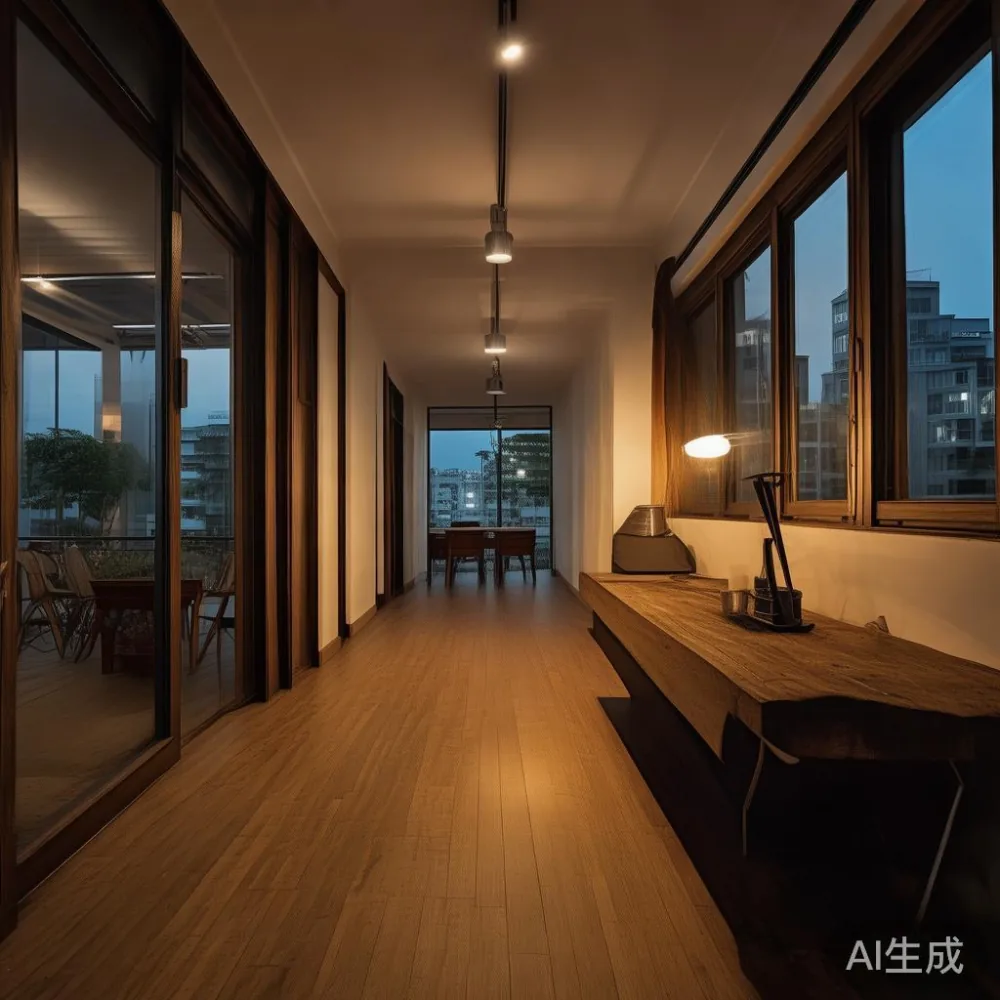
Choose a slim industrial style console table no deeper than 35 cm, in solid acacia or rubberwood, with a steel base that lets air circulate under the drawers, and place it at least 25 cm away from the entryway door so monsoon humidity does not soak the back panel every time the door opens. That single sentence is the short answer for buyers who message us from HDB flats in Tampines and Bedok, where the entryway is often the only stretch of wall long enough for a workstation and the only surface that catches afternoon cross-ventilation from the corridor.
The longer version is about constraints. Most entryways in a 4-room HDB flat measure between 28 cm and 40 cm deep once you account for the door swing, and lift interiors in many 1990s blocks are roughly 1.1 m wide by 2.1 m deep, which means any piece above 1.9 m tall has to be tilted and angled to clear the ceiling light. A solid wood sofa-frame style console, paired with a slim 28 cm deep drawer unit on one side, lets you run a 24-inch monitor, a laptop stand, and a cable tray without pushing the table deeper than your corridor allows. At the same time, the open steel base means humid corridor air can pass under the drawers rather than pool against a sealed plywood back.
For a 3-room condo in Punggol with a slightly wider entry, a 90 cm wide version of the same console gives you room for a second small marble table surface at one end, useful as a key tray or a wireless charger landing spot. Industrial style, in this context, is not a decorative choice. It is a structural answer: powder-coated steel legs tolerate the 80% humidity swings that would rust a chrome base within two monsoon seasons, and visible bolts mean you can tighten the frame once a year in five minutes with an Allen key, rather than calling a carpenter at SGD 80 to SGD 120 per visit.
What does humidity actually do to a solid wood bed frame, dining table, or wardrobe over 12 months?
Last month I visited a 5-room HDB flat in Bedok where the owner had installed a solid wood bed frame and a six-door wardrobe from the same shipment, both finished in the same factory stain. The bed frame, which sat in an air-conditioned bedroom running at 24 degrees Celsius for roughly eight hours a night, had moved less than 1 mm across the headboard. The wardrobe, sitting 3 m away in a corridor-linked dressing area with no direct AC, had a 2 mm gap open up on one of the upper doors by the end of week ten. Same wood, same finish, two different outcomes, because the rooms were two different microclimates.
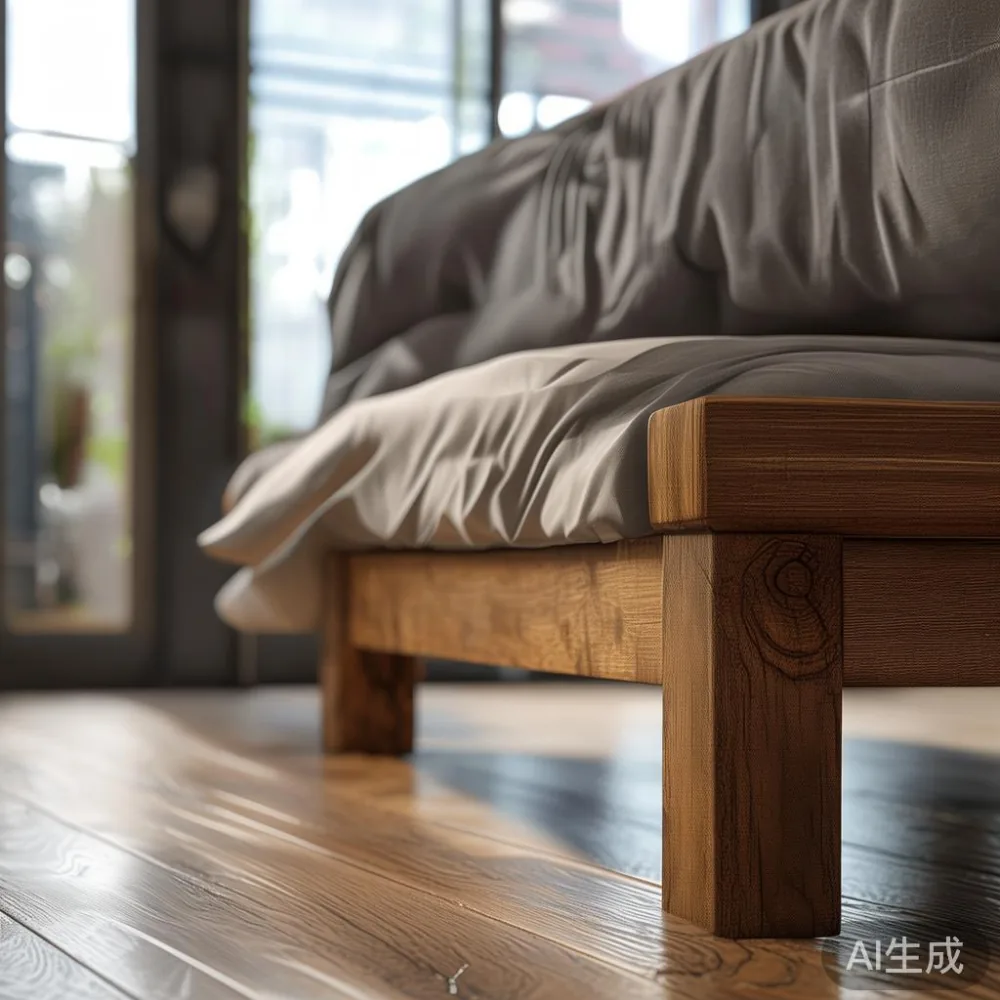
The pattern repeats across product categories. A solid wood dining table is most at risk on its top surface, where a 90 cm wide plank can cup upward by 1 to 3 mm at the edges during a wet spell and flatten back during a dry AC week. A solid wood bed frame shows movement in the slats and the headboard-to-side-rail joint, and the slats are where you usually hear the first creak. Wardrobes show movement in the door gaps, the drawer fronts, and any panel above 1.2 m wide. Nightstands, because they are smaller and lighter, are usually the last piece in a set to show visible change, but they are also the piece most likely to feel sticky in the drawers during a humidity spike.
This is also where industrial style earns its keep. French light luxury and American light luxury tend to hide the joints behind smooth panels and soft-close covers, which looks refined but leaves you guessing when something shifts. Post-modern light luxury with industrial style details, on the other hand, exposes the bolts, the steel brackets, and the wood grain itself, so a 1 mm gap is something you see early and tighten in a minute, rather than discover when a drawer stops closing.
Industrial style details that actually help in a Tampines or Punggol HDB flat
Industrial style is often described as a look, but for a humid climate it is also a maintenance plan. A powder-coated steel base, exposed bolt heads, and a wood top with a hand-rubbed matte finish behave very differently from a closed, glossy, MDF-clad piece in the same flat. The steel does not absorb moisture, the bolts can be re-tensioned, and the matte finish shows water rings as marks you can buff out rather than as swelling you have to sand.
If you are choosing pieces for a Florida interior style inspired home, or a French light luxury inspired space with American country touches, the practical checklist is short. First, ask for kiln-dried solid wood with a factory moisture content between 8% and 10%, not the 12% to 14% that some regional warehouses accept. Second, prefer pieces where the top is made from planks no wider than 12 cm, because narrower planks cup less than wide planks in the same room. Fourth, leave at least 10 cm between the back of a wardrobe and the wall so air can move, especially in a HDB flat where the rear wall can run 2 degrees cooler than the front of the room and condense moisture behind a sealed back panel. Fifth, treat any marble table top with a stone sealer once a year, because humidity plus cooking vapour plus a polished marble surface is the recipe for dull etching within a season.
MIDHILL's ten-year structural warranty covers the joinery, and the lifetime refinishing service means a small scratch, a sun fade, or a dulled finish can be sent back to the Foshan workshop rather than replaced. That matters in Singapore because the cost of disposal for a 90 kg piece down a 1.1 m wide lift can easily reach SGD 120 to SGD 180, and the cost of a replacement solid wood dining table at retail is several multiples of that.
A practical 12-month care plan for an industrial style solid wood dining table or bed frame
I keep a short, written care plan taped inside the wardrobe door of my own flat, and it has kept a five-year-old industrial style solid wood bed frame looking close to new. Month one through three, the new piece is acclimatising, so leave the AC running for a few hours each day even when you are out, and pull the piece 5 cm away from any exterior wall for the first four weeks. Months four through nine, wipe the surface with a barely damp microfiber cloth every two weeks, then a dry cloth, and avoid placing a wet cup or a hot pot directly on the wood. Months ten through twelve, during the November to January monsoon, run a dehumidifier set to 55% relative humidity in the room with the wardrobe, and budget 30 minutes to re-tighten the visible bolts on the bed frame, the dining table, and the nightstand.
Numbers to keep in mind: solid wood prefers 40% to 60% relative humidity, a hygrometer costs roughly SGD 18 to SGD 35 at any Tampines or Bedok mall, and a 12-litre dehumidifier suitable for a 4-room HDB bedroom can be picked up for around SGD 160 to SGD 220. Free shipping over US$350 (roughly SGD 470 at today's rate) from the Foshan maker side means a full dining set, bed frame, and wardrobe can be ordered without the SGD 80 to SGD 150 local delivery surcharge per piece, which is often the line item that decides whether a buyer replaces a piece or restores it.
If you are weighing an American country bed frame for small apartment against a sleeker post-modern light luxury frame, the climate answer is the same: kiln-dried solid wood, narrow planks, exposed joinery, and a matte finish that lets you see and fix small movement before it becomes a structural issue. A flat in Tampines, a condo in Punggol, or a resale in Bedok will all behave more like Priya's place than like a temperate-climate brochure, so buy the piece that lets you maintain it.
Frequently asked questions from Singapore buyers about humidity and solid wood furniture
Does air-conditioning alone protect solid wood furniture in a HDB flat? Air-conditioning helps a lot, but it does not protect pieces stored in rooms that are rarely cooled, such as a corridor-facing dining area or a service yard wardrobe. A hygrometer and a dehumidifier set to 55% relative humidity are the reliable pair, with AC as a bonus.
Is industrial style solid wood furniture harder to maintain than closed-panel pieces? The opposite, in my experience. Exposed bolts and steel bases invite the owner to tighten and wipe, which is the actual protection. Glossy closed panels hide movement until it is too late to fix with an Allen key.
Can a marble table top survive a HDB kitchen? Yes, with one habit: seal the marble with a penetrating sealer once a year, wipe spills within ten minutes, and never place a hot pan directly on the stone. In a small apartment kitchen, a 90 cm round marble table is a forgiving size because it has no long plank to cup.
How long should I let a new solid wood dining table acclimatise before sealing or waxing? Four weeks is the minimum in Singapore, eight is safer, especially if the piece is delivered during the November to January monsoon. Sealing too early traps the factory moisture inside and encourages mould at the joints.
What is the realistic lifespan of an industrial style solid wood bed frame in a HDB flat? With the care plan above, fifteen to twenty-five years is a reasonable expectation, and the lifetime refinishing service that comes with the piece covers the cosmetic refreshes along the way.
What a Singapore buyer should do this week, regardless of which room you furnish next
Buy a hygrometer, pick a room, and measure for seven days. Write down the morning and evening readings, note how often the AC runs, and note whether the room faces the afternoon sun or the corridor. That single log will tell you more about your furniture than any product page, and it will tell you whether a 90 cm wide solid wood dining table is a calm purchase or a future phone call to the workshop. From there, choose industrial style pieces with kiln-dried solid wood, exposed joinery, and a matte finish, leave air gaps behind wardrobes, keep marble tabletop wide and in marble, and run a dehumidifier through the monsoon months. The wood will outlast the warranty, the warranty will outlast the trend, and the flat will feel like the home you actually live in rather than a humid storage room that happens to contain furniture.