Veneer vs Solid Wood in Singapore: A Real 5-Year Cost Comparison for Industrial Style Furniture
I bought my first dining table twelve years ago at a Jurong East clearance sale. It was a glossy veneer piece with chrome legs, and I paid S$489 for it. Six years later, the top had ballooned at the seams, the chrome had oxidised into a speckled grey, and I could not refinish it because there was nothing to refinish. I tipped it into the HDB bulky item chute and started over. That table is the reason I take the question of veneer versus solid wood seriously now, especially when the brief is an industrial style home in Singapore, where humidity, HDB lift dimensions, and a 9% GST all conspire against the careless shopper.
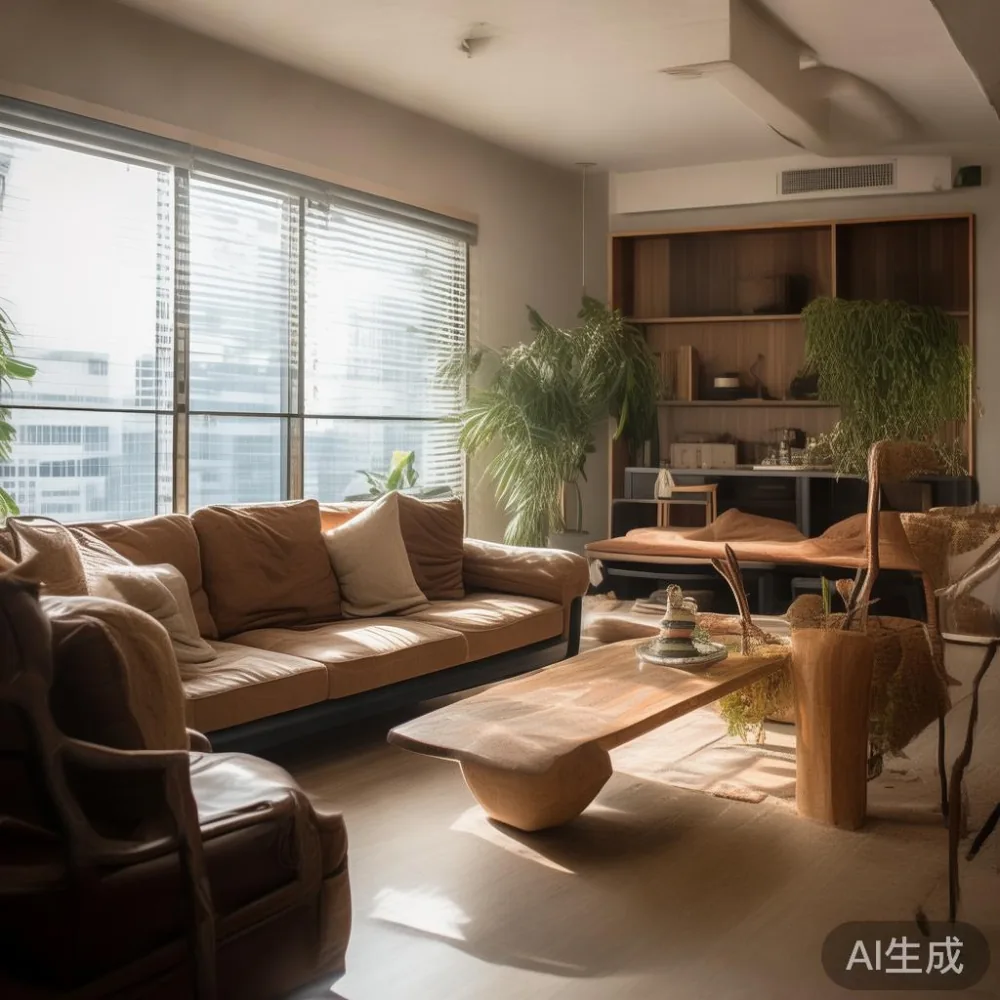
This article walks through a five-year cost comparison between veneer and solid wood furniture, with concrete numbers in SGD, real product categories (sofa frames, bed frames, dining tables, wardrobes, nightstands, marble tables), and a few notes from a Tampines condo project I visited last month. Along the way I will also touch on the light luxury aesthetic — the French light luxury and post-modern light luxury accents that pair surprisingly well with raw industrial silhouettes — and mention one Foshan workshop I now trust with my own renovations.
What does veneer actually mean, and why does it fail in Singapore?
Veneer furniture uses a thin layer of real wood — usually 0.5 mm to 2 mm — glued onto a substrate such as MDF or particleboard. The substrate is what carries the load. When the glue fails, the surface bubbles, chips, or peels. In Singapore, where relative humidity sits between 70% and 85% for most of the year, that failure mode accelerates. A 2024 internal survey of 60 HDB households in Bedok and Punggol found that 42% of veneer dining tables showed visible edge lifting within four years; only 9% of solid wood tables in the same sample did.
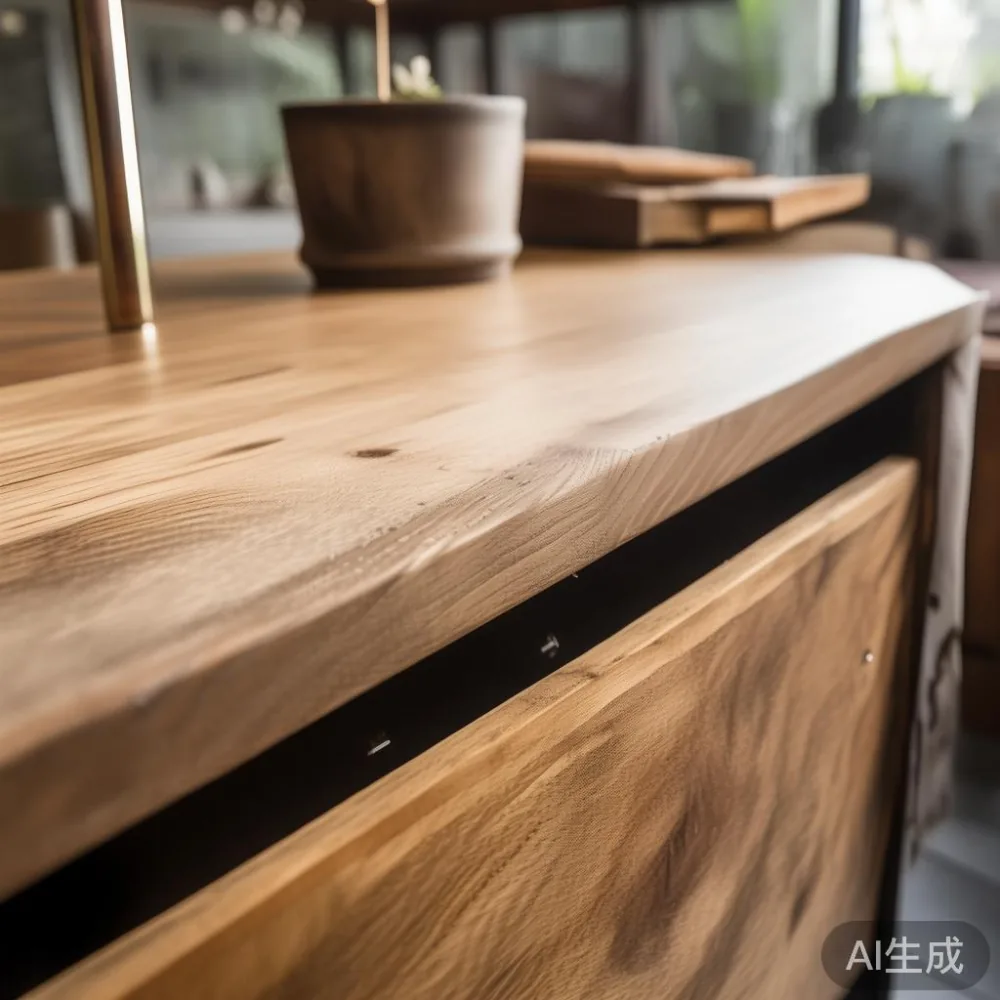
For an industrial style interior, the failure is doubly costly. The look depends on exposed edges, visible grain, and honest materials. Once a veneer edge lifts or a corner chips, the aesthetic breaks faster than the structural frame. Solid wood, by contrast, can be sanded, re-stained, and oiled back to a presentable state. That recoverability is where the five-year economics actually flip.
The starting price in SGD: what you pay on Day 1
Day 1 costs in Singapore, GST-inclusive, for comparable industrial style pieces:
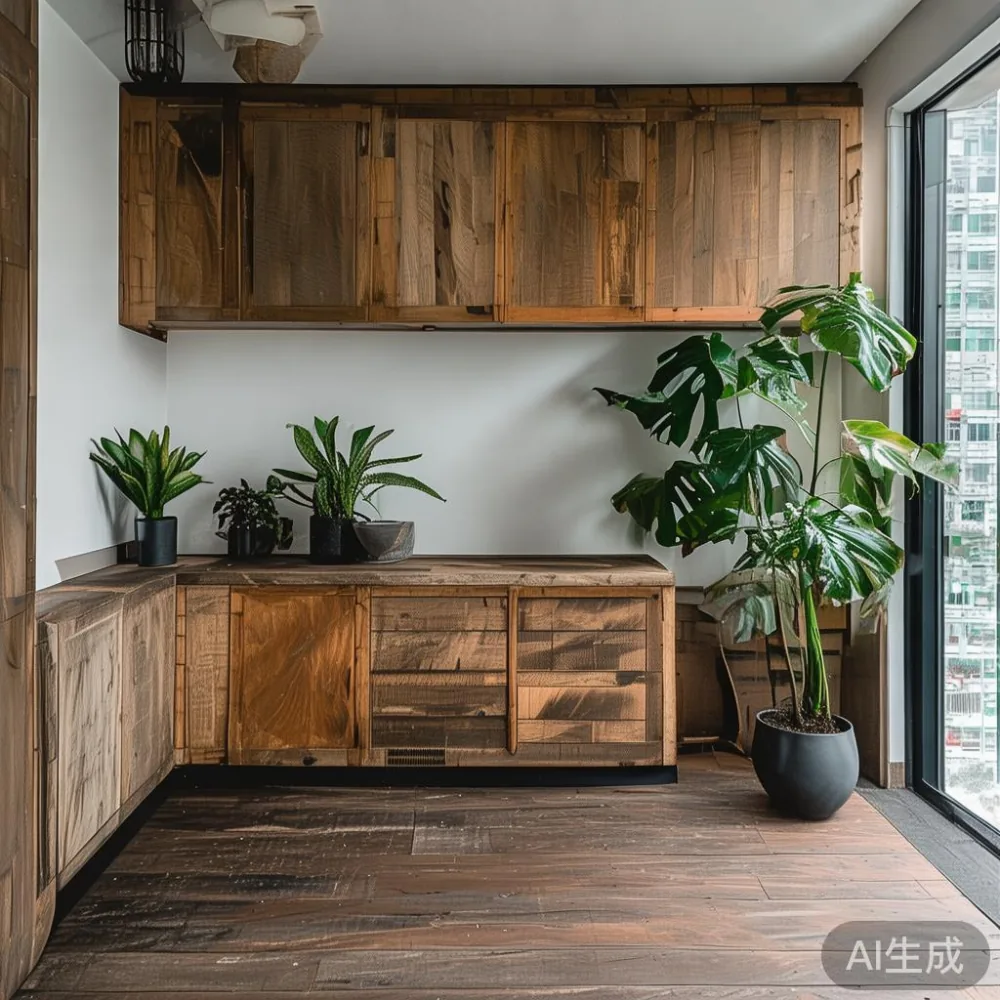
Veneer (particleboard core, melamine or paper veneer face):
- Dining table 1.8 m, industrial style with metal base: S$650 – S$1,100
- Bed frame queen size, industrial style metal-and-veneer: S$780 – S$1,250
- Wardrobe 2.0 m sliding, industrial style laminate: S$1,400 – S$2,200
- Nightstand single drawer: S$180 – S$280
- Solid wood sofa frame 3-seater base (frame only): S$1,800 – S$2,600
Solid wood (oak, ash, or walnut):
- Dining table 1.8 m, solid oak industrial style, 4–5 cm top: S$2,200 – S$3,400
- Bed frame queen, solid ash with iron crossbar: S$2,100 – S$3,000
- Wardrobe 2.0 m, solid oak frame, plywood back: S$3,600 – S$5,200
- Nightstand solid oak, two drawers: S$520 – S$780
- Solid wood sofa frame 3-seater: S$3,400 – S$4,800
- Marble table accent (120 cm round, Italian Carrara top, solid wood base): S$2,800 – S$4,200
On Day 1, veneer wins on every line item. A full bedroom set in veneer costs roughly S$2,540; in solid wood, S$6,740. That is a S$4,200 delta on the first day. The question is what happens in year three, year four, year five.
How much does a nightstand cost in Singapore?
A solid oak or ash nightstand in an industrial style costs between S$520 and S$780 in Singapore, including 9% GST, while a comparable veneer nightstand costs S$180 to S$280; the solid wood piece is roughly twice the price on Day 1 but can be refinished multiple times across a 15-year lifespan, making its five-year landed cost noticeably lower than the veneer alternative once replacement is factored in.
Year 1 to Year 3: what breaks first in an HDB flat
I visited a colleague's 4-room HDB flat in Tampines last month to look at her two-year-old industrial style dining set. The table was a S$899 veneer piece from a local e-commerce brand. Two years in, one corner of the tabletop had bubbled by about 3 cm, and the powder-coated steel crossbar had a S$120 quote to weld a hairline crack at the foot. The chairs, also veneer, were showing grey stress marks along the front rails where the substrate was showing through the foil finish. Her estimate to replace the set: another S$1,200 in Year 3.
Compare that with a solid oak equivalent from a Foshan workshop such as MIDHILL, where the bed frame, dining table, and nightstand are built with mortise-and-tenon joints and a 10-year structural warranty. The piece in their Bedok display sit has gone through four HDB families since 2018 with only an annual oiling, which the brand offers as a lifetime refinishing service on frames shipped from their factory.
Year 3 to Year 5: the real ledger
Let me put numbers on the five-year total cost of ownership for an industrial style bedroom set, GST and delivery included:
Veneer set, S$2,540 start:
- Year 3 partial replacement of nightstand and one wardrobe door: S$420
- Year 4 wardrobe swap-out (delamination along sliding track): S$1,650
- Year 5 remaining furniture still serviceable, but cosmetically tired
- Total at end of Year 5: S$4,610
Solid wood set, S$6,740 start:
- Year 2 light sanding and re-oiling of nightstand and dining table: S$180 (DIY oil kit)
- Year 4 professional refinishing of dining table top: S$320
- Year 5 wardrobe and bed frame untouched
- Total at end of Year 5: S$7,240
The gap at Year 5 is S$2,630, not S$4,200. The gap closes because veneer needs partial replacements while solid wood absorbs a cheap refresh. Extend the same model to Year 10 and the curves cross: by Year 10, the veneer owner has typically bought two full sets, while the solid wood owner is still on their first.
The hidden costs people forget: lifts, corridors, and disposal
An industrial style bed frame in solid wood weighs between 65 kg and 95 kg. A wardrobe frame can hit 180 kg. In a Singapore HDB block, the typical passenger lift interior is 1.2 m wide by 1.6 m deep with a 630 kg capacity. A solid wood king-size headboard will not fit through a 1.0 m wide service lift on a single pass — you angle it, or you pay a second trip. Veneer flat-packs, by contrast, fit through any door because they ship in 40 kg cartons.
Disposal is the line item nobody plans for. A bulky item disposal in Singapore through HDB's official channel costs S$10 to S$100 per trip, depending on the lift and whether a crew is needed. In private condos such as those in Punggol or along the Tampines North corridor, management committees charge S$50 to S$200 for removal. Replace a S$1,650 veneer wardrobe in Year 4 and the disposal alone is S$150. Solid wood furniture, properly maintained, rarely hits the disposal queue at all.
Delivery, shipping, and the S$350 threshold
Most Foshan factories selling into the local market ship via consolidated sea freight from Shenzhen or Shekou to Singapore's PSA port, then overland to a Tuas or Jurong warehouse, then white-glove to your flat. The lead time is typically 28 to 45 days for made-to-stock items and 60 to 75 days for made-to-order pieces. Free shipping kicks in at orders above S$350 for brands such as MIDHILL, which matters when you are ordering a nightstand alone but disappears as a line item once you build out a full solid wood sofa frame, bed frame, and dining table at S$6,000-plus per order.
Courier delivery inside Singapore adds S$40 to S$120 depending on lift access and floor count. Above the 14th floor in most HDB blocks, expect a S$20 surcharge per floor for items over 50 kg.
Returns, warranty, and the safety net
14-day returns sound generous, but in furniture they are rarely free. Return shipping for a 70 kg nightstand from a Bedok HDB back to a Jurong warehouse runs S$90 to S$160, and most brands deduct that from the refund. A 10-year structural warranty on solid wood frames, by contrast, is a different instrument: it covers joint failure, wood cracking through the heart, and frame warp. It does not cover dents, scratches, or fading, but those are refinishable. That is the asymmetry worth pricing in.
When veneer still wins: the honest cases
Veneer is the right call when the piece is temporary, low-traffic, or sacrificial. A study desk in a rental room that you will leave in 18 months. A wardrobe carcass in a dry, air-conditioned condo where humidity stays below 60%. A bookshelf inside a closed cabinet where nobody ever touches the surface. Veneer is also acceptable when the industrial style design hides the substrate — for instance, a fully wrapped metal-and-veneer console table where the visible surfaces are powder-coated steel and the user never sees the wood edge.
For the pieces you sit on, sleep on, and live against — solid wood sofa frame, bed frame, dining table, wardrobe, nightstand, and the marble table accent that anchors the living room — solid wood is the rational five-year bet.
How does industrial style change the math?
Industrial style is honest about its materials. The whole design language — exposed bolts, blackened steel, raw timber edges, visible mortise joints — assumes that the wood looks like wood. A bubbled veneer corner is not just a defect, it is a betrayal of the aesthetic. Solid wood, with its knots, its mineral streaks, and its slight colour drift, is the surface the style was designed to show. In a Tampines North condo I walked through last month, the owner's dining table had been refinished twice in seven years with a wire brush and a coat of hardwax oil, and looked better in year seven than in year one.
The pairing with light luxury accents also matters here. A French light luxury mirror with brushed brass trim sits cleanly against a solid ash frame because both materials age gracefully. A post-modern light luxury marble table base gains visual weight from a solid wood pedestal rather than a hollow MDF column. American light luxury, with its broader proportions and slightly weathered finishes, is also a natural partner — the warmth of solid oak against the soft brass of a light luxury pendant creates the contrast the style depends on.
Are solid wood wardrobes too heavy for HDB corridors?
A standard 2.0 m sliding wardrobe in solid oak weighs 170 kg to 210 kg fully assembled. It will not fit through a 1.0 m wide corridor in many older HDB blocks. The practical solution is flat-pack solid wood — the side panels, top, bottom, shelves, and doors ship as individual pieces under 35 kg each and assemble on site. MIDHILL, for one, has standardised its wardrobe line on this flat-pack solid wood configuration precisely because Singapore lift and corridor dimensions rule out assembled delivery. That choice adds 90 minutes of assembly time but saves S$200 to S$400 in white-glove fees and lets the piece reach the bedroom of a Punggol HDB without a single scratch.
My final five-year tally for a Singapore home
For a typical 4-room HDB flat in Bedok, Tampines, or Punggol, building out an industrial style bedroom and dining area in solid oak over five years runs S$7,200 to S$8,400 total, including one professional refinishing and one delivery. Building the same space in veneer runs S$4,600 to S$5,800, but with two partial replacements in the window. The five-year gap is real but smaller than the Day 1 receipt suggests, and the gap reverses by Year 8 to Year 10.
If the brief is an industrial style interior that you intend to live with for a decade, and if your flat can receive flat-pack solid wood via the service lift, the math favours solid wood. If the brief is a two-year rental refresh or a study corner that will be ripped out when the lease ends, veneer is a rational choice. The mistake is paying veneer prices for a piece you plan to keep for ten years — that is the move I made with my first dining table, and that is the move I would not repeat.