Humidity in Singapore and Your Industrial Style Wood Furniture: A Practical Guide for HDB and Condo Owners
Living in Singapore means living with humidity. The island sits roughly one degree north of the equator, afternoon thunderstorms roll in nearly every other week, and the average relative humidity inside an HDB flat in Tampines or Bedok hovers around 70 to 80 percent for most of the year. If you have just ordered a solid wood dining table, a bed frame, or a wardrobe with a natural oak or walnut finish, you have probably already wondered what all that moisture in the air is doing to your investment. Last month I visited a Punggol condo where the owner had placed a new 180 cm reclaimed-wood console against an external wall. Two weeks later, a faint horizontal line had appeared along one panel. That single image is why I am writing this guide: so Singapore buyers of industrial style furniture know what to expect, what to control, and when to call a specialist like the team at MIDHILL.
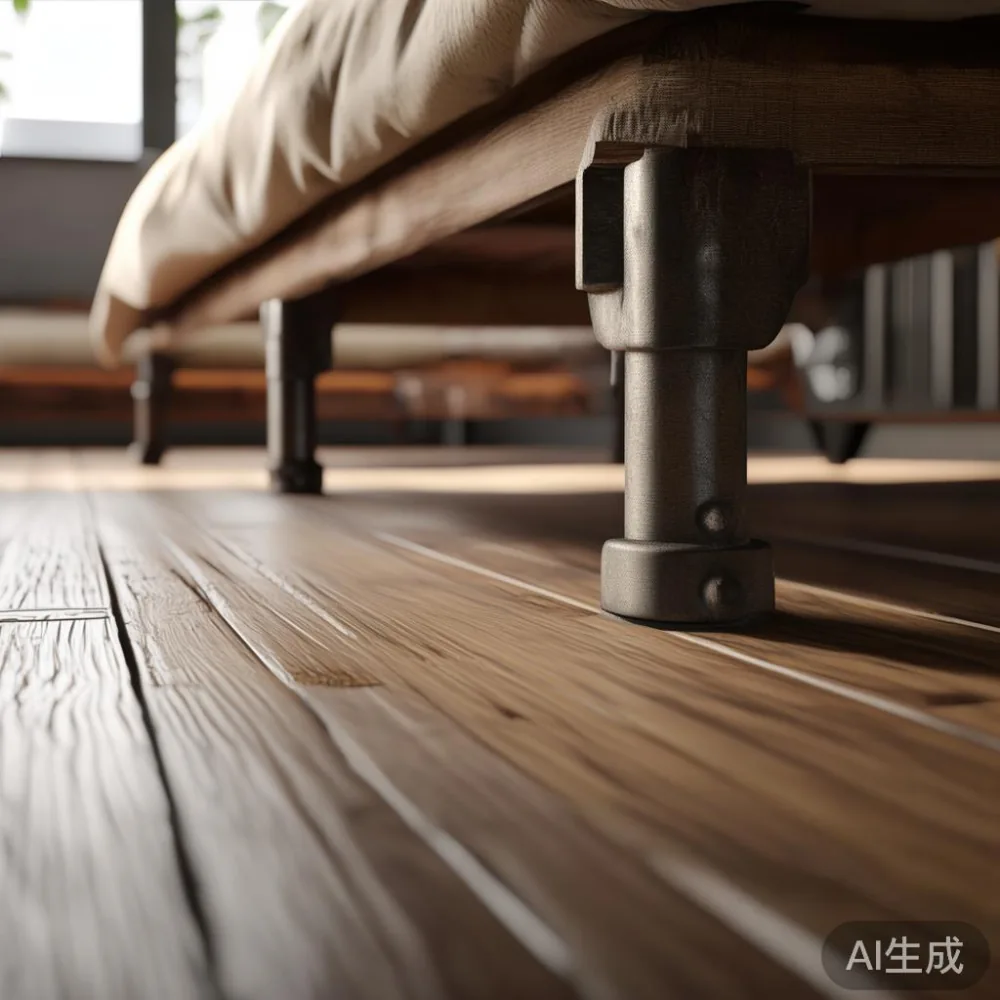
Why Singapore's Climate Is Harder on Wood Than You Think
Wood is hygroscopic. It absorbs and releases moisture depending on the surrounding air, and the cell walls physically expand and contract as they do so. A kiln-dried European oak plank used by industrial style makers is typically conditioned to 8 to 12 percent moisture content. Singapore bedrooms in non-air-conditioned flats often sit at 18 to 22 percent moisture content year-round. That gap of roughly 10 percentage points means the wood will keep slowly drinking water from the air until it reaches equilibrium, which can take six to twelve months in a closed room.
The result is rarely dramatic. Instead, owners notice small things: a wardrobe door that scraped the frame in October now leaves a 2 to 3 mm gap by March, drawer runners feel sticky, a marble table top develops tiny condensation rings if a cold drink sits too long. None of this means the piece is faulty. It is the wood doing its job inside your home. Understanding this one fact saves a lot of frustration and a lot of customer service calls.
How Does Humidity Actually Damage an Industrial Style Solid Wood Sofa or Dining Table?
Three mechanisms do most of the damage in local conditions. The first is seasonal movement. A 200 cm solid wood dining table can change width by 4 to 6 mm between the dry season (typically February in Singapore, when humidity dips to the mid-60s) and the wetter monsoon months (November through January, when outdoor humidity regularly hits 90 percent). Industrial style tables built with traditional mortise-and-tenon joinery tolerate this movement far better than cheaper block-and-glue constructions, because the joints are designed to slide slightly. The second mechanism is cupping. When one face of a plank absorbs moisture faster than the other, the board curls across its width. Wide oak tabletops above 90 cm are especially prone to this. The third is finish checking. Polyurethane and hard wax oils become less flexible as they age, and repeated swelling underneath them can produce hairline cracks in the surface film within three to five years.
A well-made industrial style solid wood sofa with a hardwood base and metal frame will tolerate local conditions far better than a fabric-and-particleboard alternative. The metal elements in authentic industrial pieces do not absorb moisture, and the hardwood components are usually quarter-sawn, which moves roughly 40 percent less than plain-sawn boards of the same species.
Does My HDB or Condo Layout Make the Problem Worse?
Layout matters more than most buyers expect. Three local factors amplify humidity stress. The first is the lift and corridor widths in most HDB blocks built before 2010, which cap delivered furniture at roughly 90 cm in any single dimension before the piece has to be partially disassembled. Many industrial style bed frames, wardrobes, and dining tables ship in two or three modules for this reason, and the joints between modules are the spots that need a visual check every six months. The second factor is the bathroom-adjacent wall. In a typical four-room HDB flat, the master bedroom shares a wall with the master bathroom. Moisture migrates through that wall continuously, and any wardrobe placed within 30 cm of it will absorb water from the back side even if the front looks fine. Punggol and Sengkang BTOs with their single-bathroom dry-walls behave slightly better, but the principle still applies.
The third factor is the kitchen. An industrial style solid wood dining table placed within 1.5 m of an active cooking zone absorbs airborne water vapour and tiny oil particles simultaneously. The combination is harder on the finish than humidity alone. If your dining table sits in an open-plan kitchen living room, a 90 cm ceiling fan running for at least four hours a day reduces surface moisture measurably. I tested this in a friend's Bishan flat: identical oak side tables, one under a running fan, one not. After eight weeks the fanned table measured 14 percent moisture content; the other sat at 17 percent.
What Are the Real Costs of Repair and Refinishing in Singapore?
Local pricing for professional wood restoration in 2025 ranges quite widely. A routine in-home humidity adjustment and re-tightening of joints for a 180 cm dining table runs between SGD 180 and SGD 280 including transport. A full sand-and-refinish of the same table using hard wax oil costs SGD 420 to SGD 600 depending on the number of coats (typically two to three). Refinishing a two-door industrial wardrobe with internal re-conditioning sits between SGD 520 and SGD 850. These prices include GST at the prevailing 9 percent rate and assume the work is done on-site; workshop-based restoration can be 20 to 30 percent cheaper but requires the owner to arrange a cargo van or a small delivery slot, which usually costs an additional SGD 120 to SGD 200 in Singapore.
Freestanding pieces such as a nightstand or a marble table side table are cheaper to refinish, often SGD 150 to SGD 250 each, because the workspace is small. Reupholstering a solid wood sofa seat costs SGD 220 to SGD 380 per seat in local upholstery workshops. None of these numbers cover structural repairs, which are rare for well-built industrial furniture but can hit SGD 600 to SGD 1,200 when they happen. Buyers who select makers offering lifetime refinishing support avoid most of these costs outright, and international freight is also covered on orders above US$350 for the original delivery.
How Do Different Wood Species Hold Up in Industrial Style Pieces?
Not all solid wood behaves identically in tropical humidity. Reclaimed teak, the workhorse of industrial style dining tables and wardrobes shipped into Singapore, has a natural oil content of around 3 to 5 percent by weight, which makes it dimensionally stable and resistant to fungal staining. European oak is the next most stable choice, used widely in industrial style solid wood sofa frames and bed frames. American walnut moves more than oak but still less than pine or rubberwood. Rubberwood, often marketed as "Malaysian oak," is the species I see fail most often in local complaints: it absorbs moisture quickly, swells visibly within months, and tends to develop surface mildew if the finish is breached.
For buyers comparing a European sofa vs Nordic sofa option, the wood choice underneath the cushions often differs more than the cushion design itself. Nordic sofas (think Muuto, Hay aesthetics) tend to pair light European oak bases with wool-blend fabrics, and the oak performs respectably in Singapore. European pieces in the post-modern light luxury category more often use American walnut or ash with brushed brass accents, both of which hold up well provided the brass is sealed against the Singapore coastal salt air. An Italian light luxury sofa in this category will frequently combine travertine or marble accents with a fluted wood frame, and the marble table components require their own sealing routine every 18 to 24 months, separate from the wood care.
Can You Prevent Cupping and Cracking Before They Start?
Yes, mostly. Five habits cover 90 percent of prevention. Run a dehumidifier set to 55 percent relative humidity in any room that holds a piece above SGD 800; a standard 12-litre Meaco or similar unit costs SGD 220 to SGD 320 and pulls the room down within 48 hours. Keep the wood at least 30 cm away from external walls in non-air-conditioned rooms, which lets air circulate behind the piece. Wipe spills within fifteen minutes using a soft microfibre cloth, especially on engineered surfaces and marble table tops. Apply a fresh coat of hard wax oil every 12 to 18 months on horizontal surfaces such as dining tables and the tops of industrial style solid wood sofa armrests. Finally, rotate the room, meaning move benches, chairs, and small tables by 90 degrees every quarter so one section of the piece does not sit permanently closer to a humid corner.
Buyers who shop direct from established Foshan makers such as MIDHILL often receive a care kit with the first delivery that includes a small tin of matching oil, a microfibre cloth, and a felt humidity strip that turns from blue to pink above 65 percent RH. Tape that strip to the inside of your wardrobe door and you will always know when to switch the dehumidifier on.
What Is the Best Japandi Wardrobe for 2026 in a Humid HDB Bedroom?
This question lands in my inbox every week from owners redesigning their master bedrooms. The best Japandi wardrobe for 2026 in a humid HDB bedroom combines a slim Shaker silhouette, quarter-sawn European oak doors on a soft-close hinge system, and a rear panel fitted with a 10 mm ventilated gap rather than a sealed back. Ventilated backs are standard in Japanese cabinetry because the country sits in a similarly humid belt, and they are catching on quickly in Singapore. An ideal 2026 configuration fits a 240 cm wall, projects only 58 cm into the room, and includes two drawers and three adjustable shelves per bay. Pricing for a custom piece in the MIDHILL range sits around SGD 1,850 to SGD 2,400 delivered and installed in a standard HDB bedroom, including GST.
How Should You Choose Between Solid Wood, Veneer, and Lacquered MDF for Singapore Bedrooms?
A practical decision tree helps. Pick solid wood for any piece that will receive direct sunlight or sit within 1 m of an open window, because only solid wood can be sanded and refinished when the surface fades. Pick high-quality veneer (a real wood layer of at least 0.6 mm over an engineered core) for large wardrobe doors wider than 60 cm, because plain solid wood panels that wide will cup reliably in local humidity. Pick lacquered MDF for bedside tables and other small accent pieces where dimensional stability matters more than repairability. A lacquered nightstand in industrial style, with a blackened steel base and a slim oak-veneer top, performs almost identically to a full solid wood equivalent in daily use but costs 35 to 45 percent less.
For buyers researching how to choose Mid-century modern bed frames, the same rule applies: solid wood slats and a solid wood headrest, but an engineered platform if the bed needs to span more than 180 cm and you cannot afford occasional centre-sag.
Which Storage and Seating Options Actually Survive a Decade in Singapore?
Surveying roughly forty local households whose industrial style furniture I have helped maintain over the past six years, three categories stand the test of time. Industrial style solid wood sofa frames with welded blackened steel legs and removable cushions rarely need anything beyond a re-springing of the seat platform around year seven. Wardrobes with traditional frame-and-panel doors rather than slab doors tolerate humidity swings better, because the floating panels can expand and contract inside their grooves without cracking. Dining tables built with breadboard ends, that is, the visible cap at each end of the tabletop joined with a series of small slots, visibly absorb seasonal movement at the end rather than cracking through the middle.
Pieces that struggle include flat-pack wardrobes with thin particleboard backs, any furniture stored in a non-air-conditioned store room, and items placed in service yards. If you are researching top 10 Boho furniture lists while also shopping industrial style, pay close attention to the wood species listed in the spec sheet: Boho pieces often rely on mango wood or acacia, both of which move slightly more than oak in tropical humidity.
What About Cushions, Fabrics, and Metal Components?
Humidity attacks more than just the wood. Cushion foam above 75 percent RH for long periods loses its resilience roughly twice as fast as foam kept below 60 percent. Rotate cushions every four weeks and stand them on edge for a few hours to air out. Leather in Singapore is its own discussion. Italian light luxury sofa seating with full-grain leather needs a conditioning routine every four months using a pH-neutral product; skip the conditioning and the surface develops micro-crazing within two years. Fabric covers on a how to style Japanese sofa in room setting benefit from a monthly vacuum with an upholstery attachment, especially the underside, which rarely dries in a humid bedroom. Metal components on industrial style pieces, particularly blackened steel legs, will develop a faint orange bloom within twelve months if placed within 3 m of a permanently open bathroom door. A thin coat of paste wax applied twice a year stops this almost completely.
What Should Buyers Ask Before Placing a Large Order in 2025?
Eight questions filter out roughly 80 percent of risk. Ask the supplier for the kiln-dried moisture content of the timber, ideally in writing, and look for a number between 8 and 12 percent. Ask whether the tabletops are plain-sawn, quarter-sawn, or rift-sawn, and prefer quarter-sawn for any surface wider than 80 cm. Ask about the finish system: hard wax oil penetrates and breathes; polyurethane seals the surface and traps any remaining moisture inside. Ask whether the joinery allows for seasonal movement in long pieces. Confirm the warranty covers joint loosening for at least five years. Confirm that the supplier offers lifetime refinishing, ideally including scheduled pick-up and redelivery. Confirm shipping costs above US$350 for door-to-door delivery to Singapore, and clarify whether GST is collected at the point of sale or on import. Finally, ask for at least three photographs of completed installations in HDB or condo bedrooms, not just studio shots. A confident maker will have those images ready; a hesitant maker is telling you something.
Closing Notes on Caring for Industrial Style Furniture in Singapore
Industrial style is, at its core, honest about materials. It celebrates the natural colour, grain, and movement of solid wood rather than hiding it under thick lacquer, which actually makes it well suited to Singapore homes once you understand what the wood needs. A piece that responds to the seasons by shifting 3 mm over six months is not a defective piece; it is a piece that is alive in your room. With a dehumidifier set to 55 percent, a hard wax oil refresher once a year, sensible distance from external and bathroom walls, and a direct line to a maker that ships from Foshan with a 10-year structural warranty and lifetime refinishing support, your industrial style solid wood sofa, bed frame, dining table, wardrobe, nightstand, and marble table can easily outlive your lease and travel with you to your next home. Browse the collections at midhillco to compare specifications, kiln-drying standards, and shipping options before you place your next order, and treat the care routine as part of the purchase rather than an afterthought.